

1. Introduction
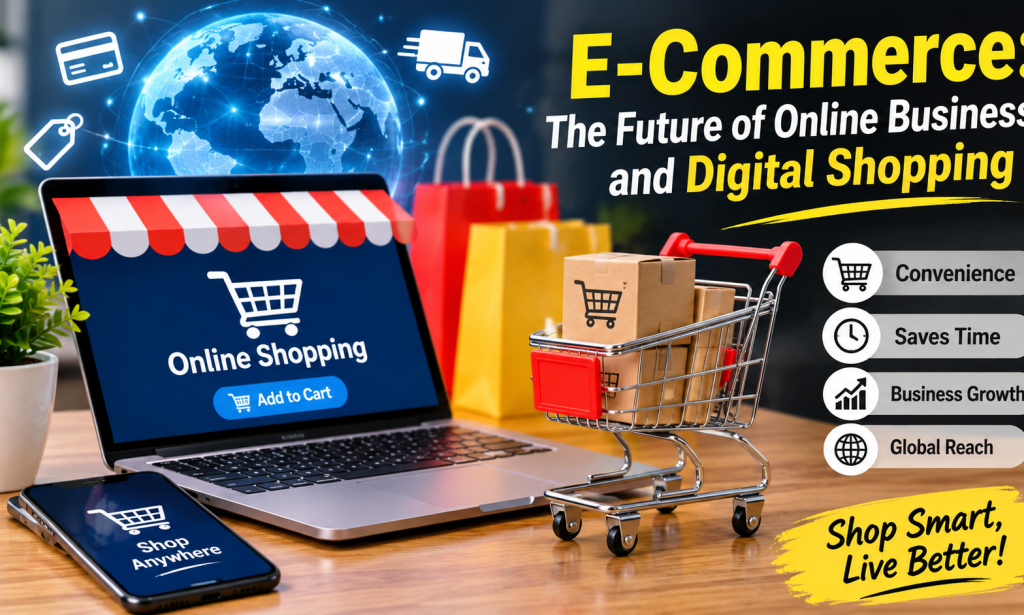
E-commerce, also known as electronic commerce, has become one of the most important parts of modern life. It refers to buying and selling products and services through the internet. Today, millions of people use online platforms to purchase clothes, shoes, electronics, groceries, beauty products, and many other items.
With the growth of technology and smartphones, online shopping has become easier and faster. People no longer need to visit physical stores because they can order products from the comfort of their homes. E-commerce has also created exciting opportunities for entrepreneurs and small businesses to reach customers around the world.
2. What Is E-Commerce?
E-commerce is the process of conducting business transactions online. It allows customers and businesses to exchange products, services, and payments through digital platforms.
Some popular e-commerce platforms include Amazon, Shopify, eBay, and Alibaba. These platforms help businesses create online stores, display products, receive orders, and communicate with customers.
E-commerce is not limited to large companies. Small businesses and individuals can also start selling products online with a suitable business plan and reliable platform.
3. How Does E-Commerce Work?
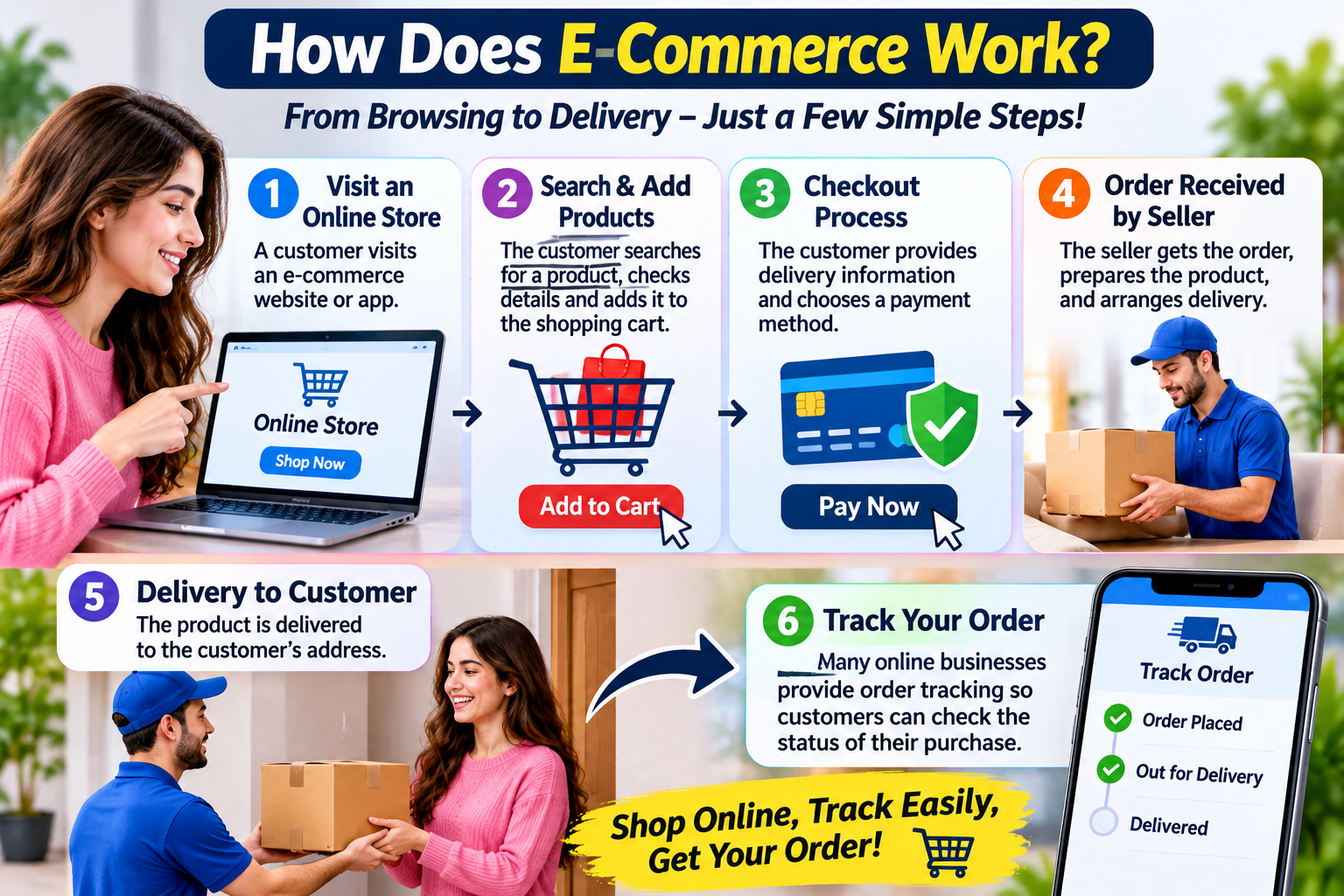
E-commerce works through websites, mobile applications, and online marketplaces. A customer visits an online store, searches for a product, checks its price and description, and adds it to the shopping cart.
After selecting the products, the customer completes the checkout process by providing delivery information and choosing a payment method. The seller then receives the order, prepares the product, and arranges delivery.
Many online businesses also provide order tracking so customers can check the status of their purchases.
4. Benefits of E-Commerce
E-commerce offers several benefits to customers and business owners.
Convenience: Customers can shop anytime and from almost anywhere without visiting a physical store.
Time-Saving: Online shopping saves time because customers can compare products and place orders within minutes.
Global Reach: Businesses can connect with customers from different cities and countries.
Lower Business Costs: Online businesses may have lower operating costs because they do not always need expensive physical shops.
More Choices: Customers can explore different brands, products, prices, and customer reviews before making a purchase.
These benefits make e-commerce an attractive option for modern consumers and entrepreneurs.
5. Popular E-Commerce Platforms
There are many platforms that help people start and manage online businesses.
Shopify: Shopify is a popular platform that allows entrepreneurs to create their own online stores without needing advanced programming skills.
Amazon: Amazon is one of the world's largest online marketplaces, offering products from thousands of sellers.
eBay: eBay allows individuals and businesses to sell new and used products through an online marketplace.
Alibaba: Alibaba connects businesses with manufacturers and suppliers, making it useful for wholesale buying and selling.
Each platform offers different features, so business owners should choose one according to their goals and budget.
6. How to Start an E-Commerce Business
Starting an e-commerce business can be an exciting opportunity. However, success requires planning and hard work.
First, choose a product or category that has customer demand. It could be clothing, accessories, electronics, home products, or beauty items.
Second, research your target audience and competitors. Understand what customers need and how other businesses sell similar products.
Third, select a suitable e-commerce platform, such as Shopify or another online marketplace.
Fourth, create an attractive online store with clear product images, descriptions, and prices.
Finally, arrange reliable payment and delivery methods. Good customer service is also important for building trust and encouraging repeat purchases.
7. The Importance of Digital Marketing
Digital marketing plays a major role in the success of e-commerce businesses. Creating an online store is not enough; people also need to know about it.
Social media platforms such as Instagram, Facebook, TikTok, and Pinterest can help businesses promote their products.
Businesses can use product photography, short videos, useful content, and advertisements to attract potential customers.
Search engine optimization (SEO) is another important strategy. It helps online stores appear in search engine results when people search for relevant products.
A strong marketing strategy can increase brand awareness, attract customers, and improve sales.
8. Challenges of E-Commerce
Although e-commerce offers many opportunities, it also comes with challenges.
One major challenge is competition. Many businesses sell similar products, making it difficult for new sellers to attract customers.
Another challenge is customer trust. Some customers worry about product quality, online payment security, and delivery problems.
Shipping delays, product returns, and poor customer service can also affect a business's reputation.
Online businesses must protect customer information, provide accurate product descriptions, and offer reliable support to build long-term relationships.
9. The Future of E-Commerce
The future of e-commerce looks promising because technology continues to improve.
Artificial intelligence is helping businesses recommend products and provide better customer support. Mobile shopping is also growing as more people use smartphones to purchase products.
Fast delivery services, secure digital payments, and personalized shopping experiences are making online shopping more convenient.
In the coming years, more small businesses may move towards online selling. E-commerce will continue to create opportunities for entrepreneurs and transform the global shopping experience.
10. Conclusion
E-commerce has changed the way people shop and businesses operate. It provides convenience, saves time, reduces certain business costs, and connects sellers with customers around the world.
Although online businesses face challenges such as competition, security concerns, and delivery issues, proper planning and customer service can help overcome them.
E-commerce is more than just online shopping; it is an important part of the digital economy. With continuous technological development, it will remain a powerful opportunity for businesses and entrepreneurs in the future.
Final Thought: The future of shopping is digital, and e-commerce is opening new doors for everyone who wants to explore the world of online business.E-commerce is creating new opportunities for people who want to start their own businesses. With the help of modern technology, anyone can sell products online, reach global customers, and build a successful brand. Online shopping is becoming more popular every day, making digital business an important part of our future.










Comments 0
Sign in to join the conversation.
No comments yet. Be the first to say something.