


Table of Contents
- Introduction to AI in Cybersecurity
- How AI Enhances Cybersecurity
- AI-Powered Cyber Threats and Risks
- The Role of Machine Learning in Threat Detection
- AI in Phishing and Social Engineering Attacks
- AI in Malware Detection and Prevention
- Ethical and Privacy Concerns of AI in Cybersecurity
- Future of AI in Cybersecurity
- Conclusion
1. Introduction to AI in Cybersecurity
Artificial Intelligence (AI) is revolutionizing the cybersecurity landscape, providing organizations with advanced tools to detect, analyze, and respond to cyber threats. As cybercriminals develop more complex attack strategies, AI plays a crucial role in automating security processes and identifying potential risks before they cause damage. However, while AI strengthens cybersecurity defenses, it is also being exploited by hackers to launch more sophisticated attacks. This dual role of AI presents both opportunities and challenges for cybersecurity professionals.

2. How AI Enhances Cybersecurity
AI-powered cybersecurity solutions help organizations protect sensitive data and networks through:
- Real-time threat detection: AI analyzes network traffic to identify unusual patterns that could indicate cyber threats.
- Automated responses: AI-driven security systems can instantly neutralize threats without human intervention.
- Predictive analysis: Machine learning (ML) models assess historical data to predict future cyber threats.
- Enhanced fraud detection: AI detects anomalies in transactions, reducing identity theft and financial fraud risks.
- Behavioral analysis: AI continuously monitors user behavior to identify suspicious activities.

3. AI-Powered Cyber Threats and Risks
While AI improves cybersecurity, cybercriminals are also leveraging AI to bypass security defenses. Common AI-driven threats include:
- AI-generated phishing attacks: Hackers use AI to craft highly convincing phishing emails and messages.
- Deepfake attacks: AI manipulates images, videos, and voice recordings to impersonate individuals and spread misinformation.
- AI-powered malware: Malicious software adapts and evolves to evade traditional security measures.
- Automated hacking tools: AI automates cyberattacks, enabling cybercriminals to launch large-scale attacks efficiently.
4. The Role of Machine Learning in Threat Detection
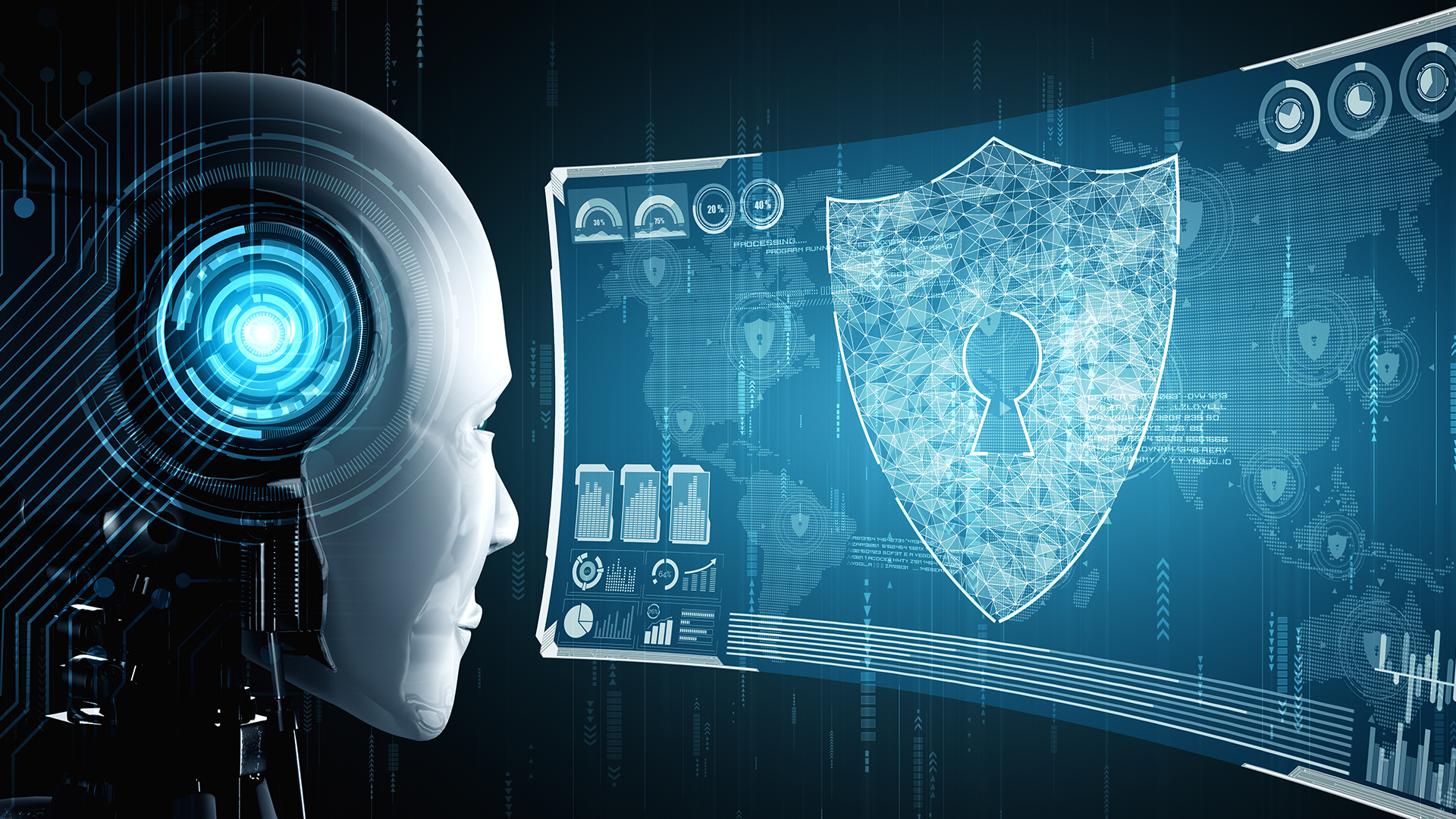
Machine learning, a subset of AI, is instrumental in detecting cyber threats. ML algorithms:
- Analyze massive datasets to identify hidden threats.
- Detect zero-day attacks by recognizing new patterns.
- Enhance intrusion detection systems (IDS) to filter out false positives.
- Improve endpoint security by identifying behavioral anomalies in devices.
Organizations worldwide rely on ML-powered security systems to detect and mitigate cyber threats in real time.

5. AI in Phishing and Social Engineering Attacks
Cybercriminals use AI to create convincing phishing emails and social engineering scams. AI enables attackers to:
- Personalize phishing messages by analyzing social media and email data.
- Generate fake websites that mimic legitimate ones.
- Use chatbots to trick users into revealing sensitive information.
To combat AI-driven phishing, organizations must implement AI-based email filters and educate employees about social engineering risks.
6. AI in Malware Detection and Prevention
Traditional malware detection methods rely on signature-based approaches, which can fail against evolving threats. AI-based solutions improve malware detection by:
- Identifying new and unknown malware strains.
- Analyzing behavioral patterns of malicious software.
- Detecting fileless malware that operates without traditional executable files.
Advanced AI-driven endpoint protection platforms (EPP) and extended detection and response (XDR) systems help prevent malware infections.

7. Ethical and Privacy Concerns of AI in Cybersecurity
The widespread use of AI in cybersecurity raises ethical and privacy concerns, such as:
- Bias in AI models: AI systems may unintentionally discriminate against certain users.
- Data privacy risks: AI requires access to large datasets, which can expose sensitive information.
- AI misuse: Governments and corporations could exploit AI for surveillance and unethical cyber practices.
Organizations must ensure responsible AI deployment by prioritizing transparency, fairness, and compliance with data protection regulations.
[Insert Image Here]
8. Future of AI in Cybersecurity
The future of AI in cybersecurity looks promising, with advancements in:
- AI-driven autonomous security systems that respond to threats without human intervention.
- Improved natural language processing (NLP) for detecting fake news and disinformation.
- AI-powered cybersecurity training to educate employees on emerging cyber risks.
- Quantum computing and AI to strengthen encryption techniques and secure sensitive data.
As AI technology evolves, cybersecurity professionals must stay ahead of emerging threats to ensure digital security.

9. Conclusion
AI has become an essential tool in the fight against cyber threats, helping organizations detect and prevent attacks more effectively. However, cybercriminals are also using AI to enhance their hacking capabilities, making it crucial to stay vigilant. By leveraging AI-driven security solutions while addressing ethical concerns, businesses and individuals can strengthen their cybersecurity posture and stay ahead of evolving threats.







Comments 0
Sign in to join the conversation.
No comments yet. Be the first to say something.