

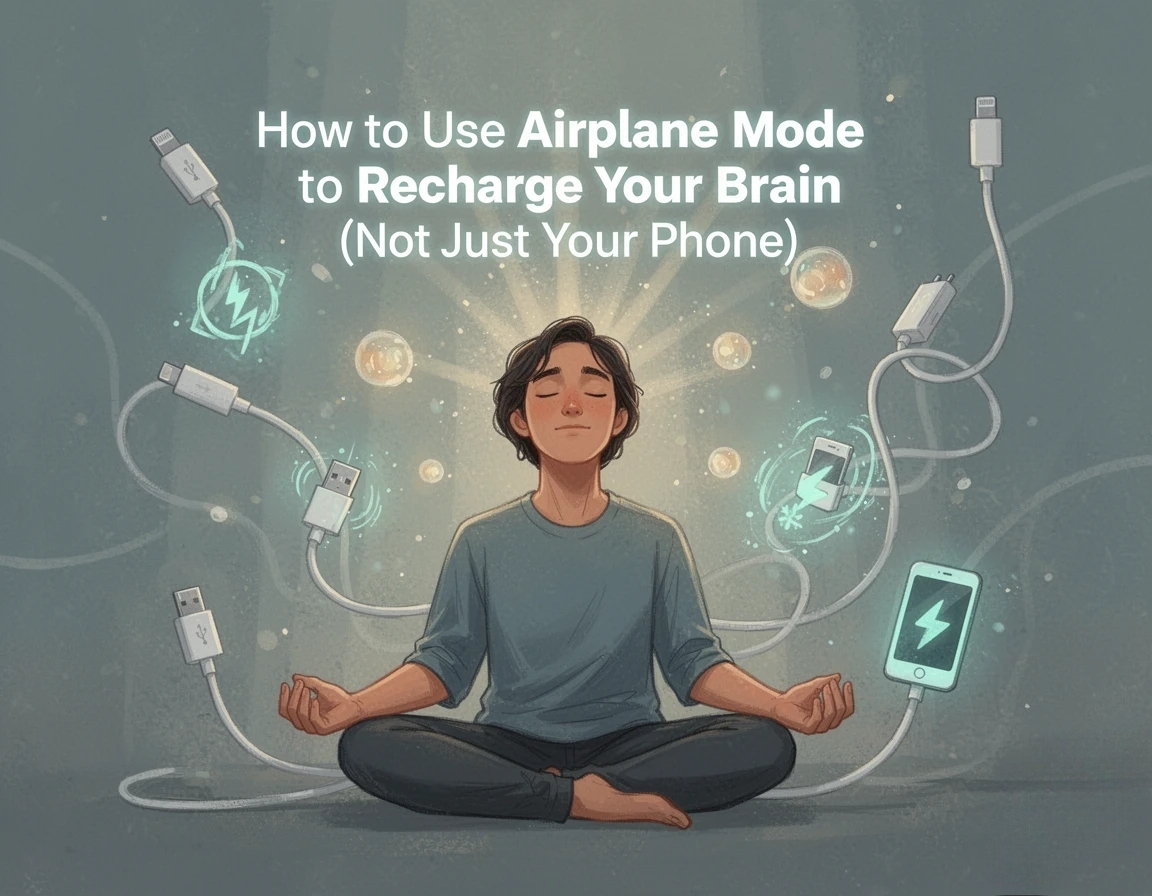
How to Use Airplane Mode to Recharge Your Brain (Not Just Your Phone)
Introduction
We live in a world where our phones never stop buzzing. Notifications, messages, emails, news alerts, social media updates—our brains are constantly pulled in a hundred directions. Even when we’re not actively using our phones, just knowing they’re nearby and online can create mental pressure. This nonstop digital noise drains our attention, increases stress, and quietly exhausts our minds.
Most people turn on Airplane Mode to save battery or avoid calls during flights. But what if you used Airplane Mode as a tool for mental recovery? Turning off connectivity, even for short periods, can help your brain reset, improve focus, and reduce anxiety. Think of it as a mini digital detox that fits into daily life without requiring you to disappear for weeks.
In this article, you’ll learn how to use Airplane Mode intentionally to recharge your brain—not just your phone. We’ll explore why your brain needs breaks from connectivity, practical ways to use Airplane Mode during your day, simple routines you can build, and common mistakes to avoid. By the end, you’ll have a realistic plan to reclaim your attention and mental energy in a hyper-connected world.
Why Your Brain Needs Breaks From Constant Connectivity
Our brains are not designed to handle constant interruptions. Every notification, vibration, or quick check of a message pulls your attention away from what you were doing. This “attention switching” comes with a mental cost. Even short distractions can reduce focus, increase mental fatigue, and make tasks feel more difficult than they really are.
Here’s what constant connectivity does to your brain:
Increases stress levels
When your phone is always on, your brain stays in a semi-alert mode. You’re unconsciously waiting for the next message or notification. This low-level stress adds up over time.
Reduces deep focus
Deep work—like studying, writing, or problem-solving—requires uninterrupted time. Frequent phone checks break your concentration and make it harder to enter a flow state.
Drains mental energy
Decision fatigue grows when you constantly choose whether to reply, scroll, or ignore notifications. Your brain gets tired from too many small decisions.
Disrupts emotional balance
Social media and news can trigger comparison, anxiety, or negative emotions. Constant exposure affects your mood even when you don’t notice it consciously.
Airplane Mode creates a protective bubble around your attention. By temporarily disconnecting, you give your brain space to relax and recover. It’s not about rejecting technology—it’s about using it on your terms.
What Happens When You Turn On Airplane Mode (Mentally)
When you switch on Airplane Mode, your phone disconnects from cellular networks, Wi-Fi, and Bluetooth (unless you manually turn some back on). But mentally, something powerful happens: the expectation of interruption disappears.
This shift changes how your brain behaves:
Your mind relaxes
Knowing that no messages or calls can reach you allows your nervous system to settle. You’re no longer on standby.
Your focus deepens
Without digital interruptions, your attention becomes more stable. Tasks feel smoother, and you can stay with one thought longer.
Your awareness improves
You start noticing your surroundings, your thoughts, and your emotions more clearly. Many people report feeling “present” again.
Creativity increases
Boredom and quiet moments allow your mind to wander productively. Some of your best ideas come when you’re not consuming content.
Even short sessions of Airplane Mode—10 to 30 minutes—can noticeably improve your mental clarity. Over time, these small breaks can rebuild your attention span and reduce digital stress.
Practical Ways to Use Airplane Mode in Daily Life
You don’t need to disappear for hours to benefit. The key is to use Airplane Mode intentionally at specific times in your day. Here are realistic ways to apply it:
1. During Deep Work or Study Sessions
If you’re studying, writing, coding, or working on something important, turn on Airplane Mode for a focused session.
How to do it:
Set a timer for 25–50 minutes (Pomodoro style).
Turn on Airplane Mode.
Work on one task only.
After the session, take a short break and check your phone if needed.
Benefits:
Faster progress
Fewer mistakes
Less mental exhaustion
2. During Meals
Eating while scrolling disconnects you from your body and the people around you.
Try this:
Turn on Airplane Mode before meals.
Eat slowly and mindfully.
Notice taste, texture, and hunger cues.
Benefits:
Better digestion
More satisfaction from food
Stronger connection with others
3. Before Sleep
Late-night notifications and scrolling overstimulate your brain and delay sleep.
Healthy routine:
Turn on Airplane Mode 30–60 minutes before bed.
Use that time to read, journal, or relax.
If you use your phone as an alarm, Airplane Mode is perfect for that.
Benefits:
Faster sleep onset
Deeper sleep
Calmer mind at night
4. During Walks or Breaks
Instead of using breaks to consume more content, use Airplane Mode to mentally reset.
Simple practice:
Take a 10–15 minute walk with Airplane Mode on.
Observe your surroundings.
Let your thoughts settle.
Benefits:
Reduced mental clutter
Better mood
Increased clarity
Building a Simple Airplane Mode Routine
To make this habit stick, create a small, repeatable routine. Here’s an example you can adapt:
Daily Mini Digital Detox Plan:
Morning (10–15 minutes):
Airplane Mode while planning your day or journaling.
Work/Study (1–2 sessions):
Airplane Mode during deep focus blocks.
Evening (30 minutes before bed):
Airplane Mode for winding down.
You can start with just one time slot per day. The goal isn’t perfection—it’s consistency. Over time, your brain will associate Airplane Mode with calm and focus.
Common Mistakes to Avoid
Using Airplane Mode is simple, but people often sabotage the habit. Watch out for these:
Turning it off too quickly
If you feel anxious, breathe through it. The discomfort fades after a few minutes.
Using it without intention
Don’t just turn it on randomly. Pair it with a purpose: focus, rest, or reflection.
Overcompensating afterward
Avoid binge-checking notifications for 30 minutes after reconnecting. Check what’s necessary, then move on.
Being too strict
You don’t need to be disconnected all day. Short, intentional breaks are enough to help your brain recover.
How Airplane Mode Supports Mental Health and Wellbeing
While Airplane Mode is not a medical solution, it supports mental wellbeing in practical ways:
Reduces anxiety triggers
Constant news and social media can increase worry. Temporary disconnection gives your emotions space to stabilize.
Improves emotional regulation
When you’re less reactive to notifications, you respond more thoughtfully instead of impulsively.
Encourages self-awareness
Quiet moments help you notice how you actually feel, not just how the internet makes you feel.
Supports mindfulness
Being offline makes it easier to stay in the present moment.
Small habits like this create a healthier relationship with technology over time.
Frequently Asked Questions
Is Airplane Mode the same as turning off notifications?
Not exactly. Turning off notifications still leaves your phone connected to the internet, which can tempt you to check apps. Airplane Mode fully disconnects your device, removing the option of instant online access. This makes mental rest deeper and more effective.
How long should I keep my phone on Airplane Mode?
There’s no perfect time. Even 10–20 minutes can help. For deep work, 25–50 minutes is ideal. For mental rest, 15–30 minutes works well. The key is consistency, not long sessions.
What if I miss an important call or message?
You can plan your Airplane Mode sessions during low-risk times, like studying, eating, or before bed. If you’re expecting something urgent, shorten your session or inform important contacts in advance.
Can students benefit from using Airplane Mode?
Yes, students benefit a lot. Airplane Mode reduces distractions during study time, improves memory retention, and helps build focus. Many students notice better grades and less stress when they study without digital interruptions.
Will using Airplane Mode make me less productive?
It usually increases productivity. By removing distractions, you finish tasks faster and with better quality. The small time you spend offline often saves much more time in the long run.
Conclusion
In a world where constant connectivity is the norm, your brain quietly pays the price. Notifications, endless scrolling, and digital noise drain your attention, increase stress, and make it harder to focus deeply. Airplane Mode, a feature designed for flights, can become a powerful everyday tool for mental recovery. By intentionally disconnecting for short periods, you give your mind permission to rest, reset, and regain clarity.
Using Airplane Mode during deep work, meals, walks, and before sleep helps reduce mental clutter and improve emotional balance. You don’t need extreme digital detoxes to feel better—small, consistent breaks are enough to protect your attention and wellbeing. Over time, these moments of disconnection build a healthier relationship with your phone and with your own thoughts.
Start with just one daily Airplane Mode session. Treat it as a gift to your mind, not a punishment. Your phone will still be there when you reconnect—but your brain will feel calmer, clearer, and more in control.







Comments 0
Sign in to join the conversation.
No comments yet. Be the first to say something.