
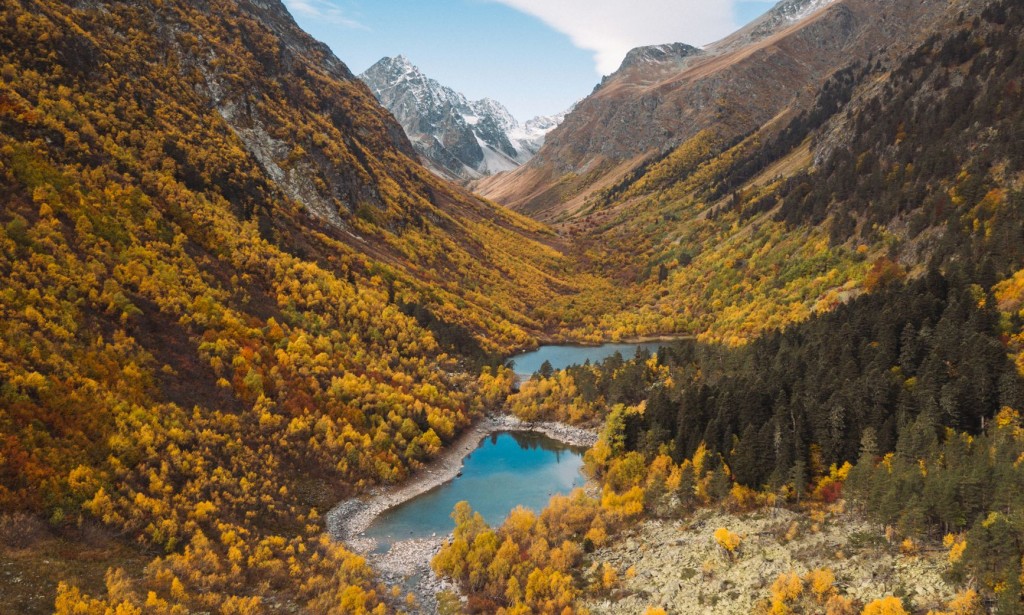
1948 War for Azad Kashmir’s Independence from India
The 1948 war, also known as the First Indo-Pakistani War, was a defining conflict between India and Pakistan, primarily fought over the princely state of Jammu and Kashmir. This war, which lasted from October 1947 to December 1948, led to the establishment of Azad Jammu and Kashmir (AJK) as a self-governing territory under Pakistan's administration.
Background of the Conflict
Before the partition of British India in 1947, princely states were given the choice to join either India or Pakistan, based on geographical, cultural, and religious factors. Jammu and Kashmir, ruled by Maharaja Hari Singh, had a Muslim-majority population but a Hindu ruler. Initially, the Maharaja wanted to remain independent, but he faced growing unrest within the state due to his oppressive policies and the aspirations of the Muslim population, which
wanted to join Pakistan.
. 
In response to reports of atrocities against Muslims in Jammu, armed tribal fighters from Pakistan's North-West Frontier Province (now Khyber Pakhtunkhwa) launched an incursion into Kashmir in October 1947. These fighters, supported by local Kashmiri rebels, aimed to liberate Kashmir from the Maharaja’s rule and integrate it with Pakistan. The situation escalated when the Maharaja sought military assistance from India. In return, he was forced to sign the controversial Instrument of Accession on October 26, 1947, allowing India to deploy troops in Kashmir.
The War Begins
Following the signing of the Instrument of Accession, Indian forces airlifted troops into Srinagar, the capital of Jammu and Kashmir, to repel the tribal fighters. This marked the beginning of full-scale war between India and Pakistan. The Pakistani government, although officially denying involvement, provided logistical and military support to the tribal forces.
The war saw intense battles in key areas such as Muzaffarabad, Uri, and Poonch. Despite initial successes by tribal forces, Indian troops managed to push them back, securing much of the Kashmir Valley, including Srinagar and Baramulla. However, the local population in western Kashmir and Gilgit-Baltistan continued their resistance against Indian forces.
In response to Indian advances, Pakistan deployed its regular army in May 1948. This intensified the war, leading to prolonged battles in areas such as Dras, Skardu, and Zoji La. The Pakistani army, along with Kashmiri fighters, successfully captured vast territories, leading to the formation of Azad Jammu and Kashmir.
The Role of the United Nations and Ceasefire
As the war continued, the international community intervened to prevent further escalation. The United Nations (UN) proposed a ceasefire, leading to the establishment of the Line of Control (LoC) in January 1949. This ceasefire agreement divided Kashmir into two parts: Indian-administered Jammu and Kashmir and Pakistan-administered Azad Jammu and Kashmir, along with Gilgit-Baltistan.
The 1948 war was the first major conflict between India and Pakistan, setting the stage for future confrontations over Kashmir. The war resulted in the establishment of Azad Jammu and Kashmir, a region that continues to hold strategic and political significance in South Asia. The Kashmir dispute remains unresolved, with both India and Pakistan maintaining their respective claims over the territory.







Comments 0
Sign in to join the conversation.
No comments yet. Be the first to say something.