

The Mystery of the Afterlife: What Happens Beyond Death?
The concept of the afterlife has fascinated humanity for centuries, sparking debates among religious scholars, scientists, philosophers, and spiritual seekers. While no one has returned with definitive proof of what lies beyond death, different cultures and beliefs have proposed various theories, ranging from eternal paradise to reincarnation or even complete nothingness. The afterlife remains one of life's greatest mysteries, and its exploration offers intriguing insights into human existence and our quest for meaning.
Religious Beliefs on the Afterlife
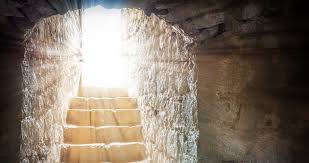
Religions worldwide offer different interpretations of what happens after death. In Islam, Christianity, and Judaism, the afterlife is often depicted as a continuation of existence, where one is rewarded or punished based on their deeds in this world. Muslims believe in Jannah (paradise) for the righteous and Jahannam (hell) for those who have sinned. Similarly, Christianity speaks of heaven and hell, where souls are judged according to their faith and actions. Hinduism and Buddhism, on the other hand, embrace the concept of reincarnation, where the soul is reborn into a new body based on its karma from previous lives.

Scientific Perspectives on the Afterlife
Science approaches the afterlife with skepticism, as there is no empirical evidence to support the idea of consciousness surviving after death. Neuroscientists argue that the human mind is a product of the brain’s activity, meaning that when the brain ceases to function, so does consciousness. However, some researchers have explored near-death experiences (NDEs), where people report seeing bright lights, meeting deceased loved ones, or experiencing a sense of peace. While skeptics attribute these experiences to chemical reactions in the brain, others believe they could provide glimpses of another realm.
Near-Death Experiences and Reincarnation Cases
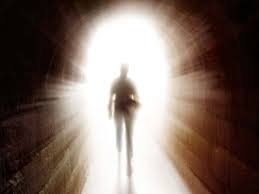
Numerous accounts of near-death experiences suggest that there may be more to the afterlife than science currently understands. Many individuals who have been clinically dead for several minutes describe floating above their bodies, traveling through tunnels, or encountering mysterious beings. Additionally, there have been documented cases of children recalling past lives with extraordinary detail, sometimes even identifying locations and people they have never met before. These cases have intrigued researchers, leaving open the possibility that consciousness may persist beyond death.
The Philosophical View of the Afterlife
Philosophers have long pondered whether death is truly the end. Existentialists like Jean-Paul Sartre argue that life has no inherent meaning and that death marks the ultimate end of existence. In contrast, thinkers like Plato believed in the immortality of the soul, suggesting that it transcends physical death and continues its journey in another realm. Some modern philosophers propose that consciousness might be part of a greater universal force, making death merely a transition rather than an end.
The afterlife remains an enigma, with interpretations ranging from religious beliefs to scientific inquiries and philosophical debates. Whether it is a realm of eternal bliss, reincarnation into a new form, or simply the cessation of existence, the mystery of what happens after death continues to captivate the human mind. Until there is undeniable proof, the question of the afterlife will remain one of the most profound and fascinating subjects of human thought

You must be logged in to post a comment.