

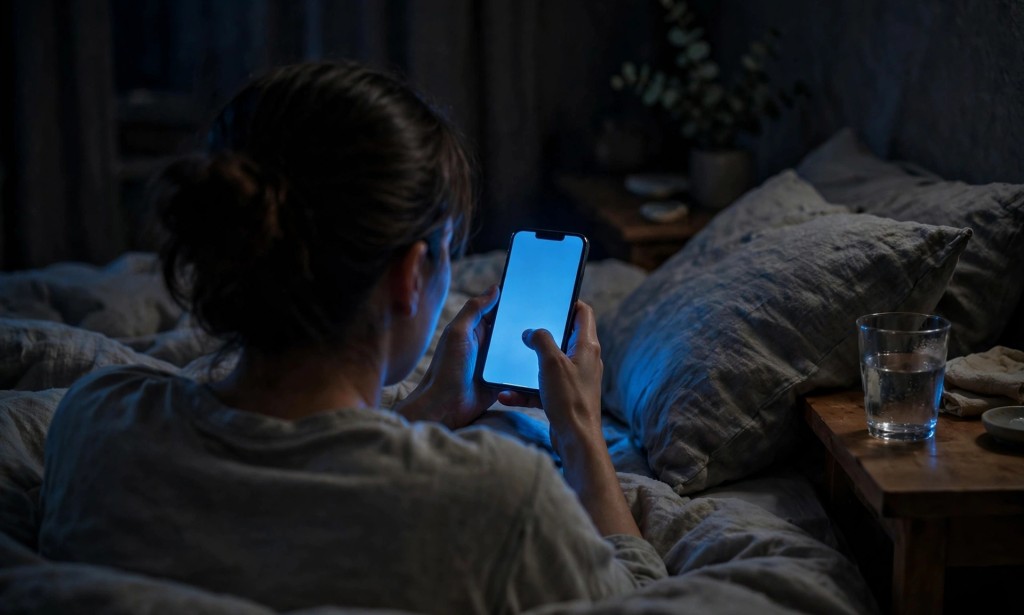
Do you have a habit of lying in bed at night, turning off all the lights, and scrolling through your mobile phone? If your answer is yes, then you are not alone. According to recent surveys, more than 95% of young people use their mobile phones in the dark before sleeping. It feels relaxing, it feels entertaining, but medical experts are now warning that this small habit is causing big damage to your health.
Many of us think that using a mobile phone at night is harmless. We do it every day. But doctors, especially eye specialists and sleep specialists, say that using your phone in the dark is one of the worst things you can do for your eyes, your sleep cycle, and your mental health. The main culprit is something called Blue Light.
What is Blue Light and Why is it Dangerous at Night?
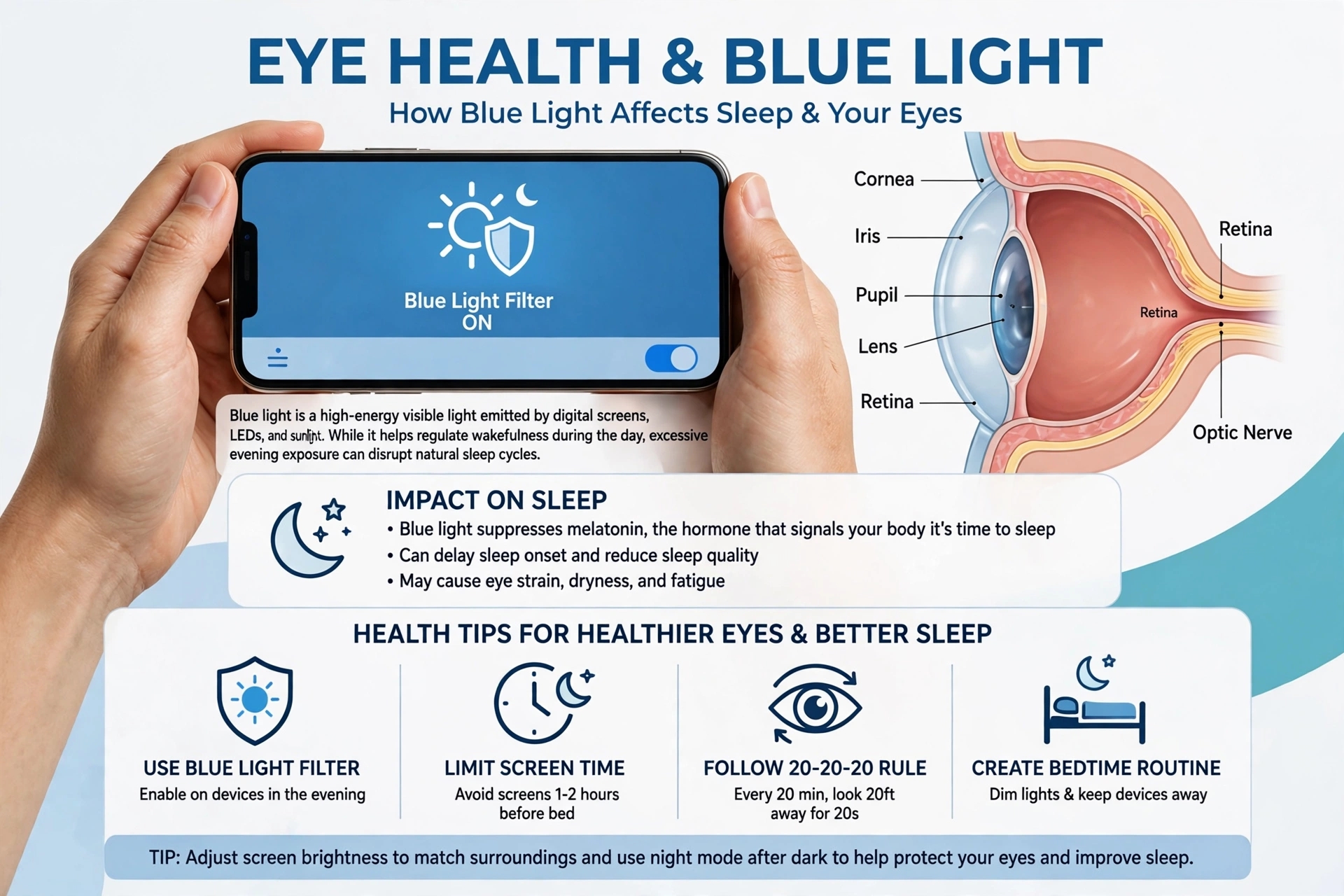
Blue light is a high-energy visible light that is emitted by all digital screens, including mobile phones, tablets, laptops, and LED lights. During the daytime, blue light is not so harmful. In fact, it helps us to stay awake, alert, and active. It regulates our natural body clock, also known as the circadian rhythm.
The problem starts at night. When you use your phone in a dark room, your pupils dilate to let in more light. At that exact moment, the concentrated blue light from your phone directly penetrates deep into your eye and reaches the retina. Unlike other lights, blue light has a very short wavelength, which means it has more energy and can cause more damage over time. In the dark, there is no other light to balance it, so your eyes have to work extra hard, leading to immediate strain and long-term problems.
Mistake Number 1:
Using Your Phone in Complete Darkness
This is the most common mistake. People think that turning off the room light and using the phone is comfortable. But this creates a huge contrast between the bright screen and the dark background.
When you do this, your eyes have to constantly adjust between extreme brightness and extreme darkness. This causes digital eye strain. The symptoms of digital eye strain include dryness, burning sensation, redness, blurred vision, headache, and pain around the eyes and forehead.
If you do this for months and years, it can lead to chronic dry eye disease. Your eyes stop producing enough tears because you blink less while staring at the screen. Studies show that a normal person blinks about 15 times per minute, but when using a mobile phone, this drops to only 5 to 7 times per minute. Less blinking means more dryness and more irritation. Over time, this can also increase the risk of early myopia, especially in young adults and teenagers.
Mistake Number 2:
Destroying Your Sleep Hormone Melatonin
The second and most dangerous mistake is destroying your sleep cycle. Inside our brain, there is a small gland called the pineal gland. This gland produces a hormone called melatonin. Melatonin is known as the sleep hormone. When it gets dark in the evening, your body starts producing melatonin, which tells your body that it is time to sleep.
Blue light from your mobile phone is a powerful suppressor of melatonin. Research from Harvard Medical School has shown that blue light exposure at night can suppress melatonin production by up to 80 percent. This means that even if you are tired, your brain thinks it is still daytime and refuses to fall asleep.
This is why you experience these problems: You lie down at 11 PM to sleep, but you start using your phone. You keep scrolling until 2 AM. Then you finally try to sleep, but you cannot sleep. Your mind is active. You toss and turn. You finally fall asleep at 3 AM and wake up at 10 AM feeling tired, lazy, and irritated. Your whole next day is ruined. You have low energy, poor concentration, and a bad mood.
Poor sleep is not just about feeling tired. Chronic poor sleep can lead to weight gain, high blood pressure, weakened immunity, anxiety, depression, and poor memory. Students who use phones at night often complain that they cannot remember what they studied. This is because deep sleep is essential for memory consolidation.
Mistake Number 3:
Holding Your Phone Too Close to Your Face and Neck
The third mistake is related to your posture. When you lie in bed and use your phone, you usually hold it very close to your face, often just 8 to 12 inches away from your eyes. You also bend your neck at an unnatural angle. This causes two problems.
First, for your eyes: The closer the screen is to your eyes, the harder your eye muscles have to work to focus. This is called eye accommodation stress. It causes severe eye fatigue and can cause temporary blurred vision. You might notice that after using your phone for a long time, when you look at a distant object, it looks blurry for a few seconds.
Second, for your neck and shoulders: Doctors have given a name to this condition called 'Text Neck'. When you bend your neck forward at a 60-degree angle to look at your phone, you put almost 27 kilograms of extra pressure on your neck spine. This leads to chronic neck pain, shoulder stiffness, back pain, and even headaches that start from the neck. If you sleep in the wrong position while using your phone, you can also compress the nerves in your hands, leading to tingling and numbness.
What is the Solution?
Doctors Recommend 4 Easy Tips for Healthy Eyes and Better Sleep
You do not have to completely stop using your mobile phone. That is not practical in today's world. But you can change your habits to protect your health. Here are four simple, doctor-approved solutions.
Tip 1:
Always Use Blue Light Filter and Never Use Your Phone in Complete Darkness.
Every smartphone today has a feature called Night Mode, Eye Comfort Shield, or Blue Light Filter. Turn it on every evening after 7 PM. This filter changes your screen color to a warm yellowish tone and reduces blue light by up to 70 percent. It is much easier on your eyes.
Also, never use your phone in a completely dark room. Always keep a small, dim table lamp or night light on in your room. This reduces the contrast between the screen and the surroundings and reduces strain on your eyes. Also, reduce your screen brightness to below 50 percent at night.
Tip 2:
Follow the 20-20-20 Rule to Protect Your Eyes.
This is the most famous rule recommended by ophthalmologists around the world to prevent digital eye strain. The rule is very simple: Every 20 minutes, take a 20-second break and look at something that is at least 20 feet, or about 6 meters, away from you.
This gives your eye muscles a chance to relax. When you look far away, your focusing muscles relax. During those 20 seconds, also blink rapidly 10 to 15 times to keep your eyes moist. You can set a small timer or reminder on your phone to follow this rule. It sounds small, but it makes a huge difference.
Tip 3:
Create a 60-Minute No-Screen Rule Before Bedtime.
This is the golden rule for better sleep. Make a strict rule that you will not touch your mobile phone, tablet, or laptop for at least 60 minutes before you sleep. In that 60 minutes, you can do relaxing activities like reading a physical book, light stretching, talking to your family, planning your next day, or drinking warm milk.
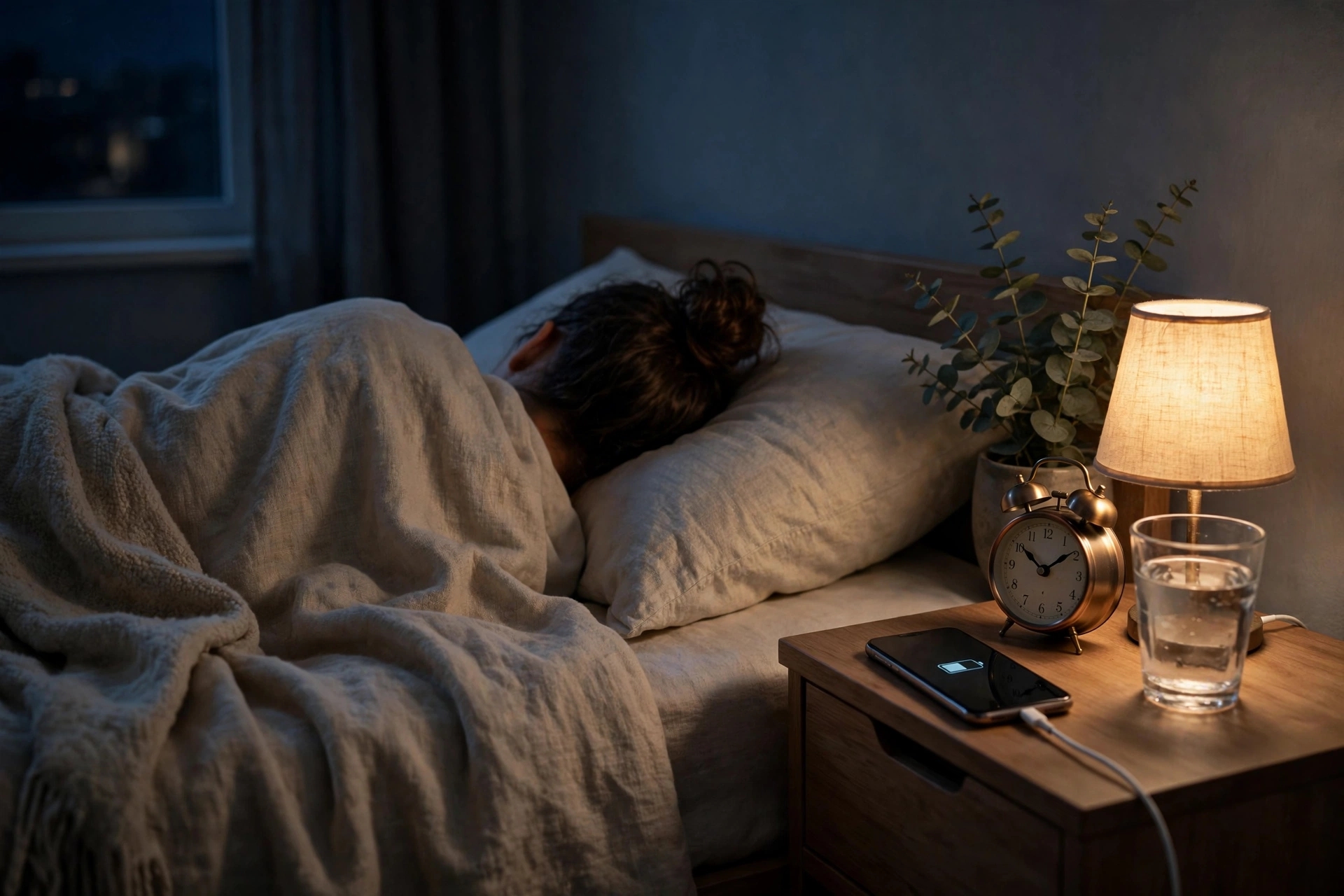
Keep your mobile phone away from your bed. Do not keep it under your pillow or on your bedside table. Keep it on a table across the room on charging. This has two benefits: You will not be tempted to use it, and you will have to get out of bed in the morning to turn off the alarm, which helps you wake up on time.
Tip 4:
Improve Your Sleep Environment.
Make your bedroom a screen-free zone. Keep your bedroom cool, dark, and quiet. Use dim, warm lights in the evening. Avoid tea, coffee, or energy drinks after 6 PM because caffeine also disrupts sleep. If you must use your phone, hold it at least 16 to 18 inches away from your face and keep your neck straight. Try to sit up rather than lying completely flat while using it.
Final Words - When to See a Doctor?
This article is for general health awareness. Using a mobile phone at night is a lifestyle habit that you can improve on your own. However, if you are experiencing severe symptoms like constant blurred vision, severe eye pain, daily headaches, extreme dryness, or chronic insomnia where you cannot sleep for many days, you should consult a qualified eye specialist or a sleep specialist immediately. Do not self-diagnose or use eye drops without a doctor's prescription.
Your eyes are a precious gift. Your sleep is essential for your health. Do not trade them for a few extra minutes of scrolling. Share this information with your family and friends, especially teenagers and students, who are most addicted to night-time mobile use. A small change today can save you from big health problems tomorrow.
Disclaimer: This article provides general health information and does not replace professional medical advice. If you have any medical concerns, please talk to a healthcare professional.










Comments 0
Sign in to join the conversation.
No comments yet. Be the first to say something.