

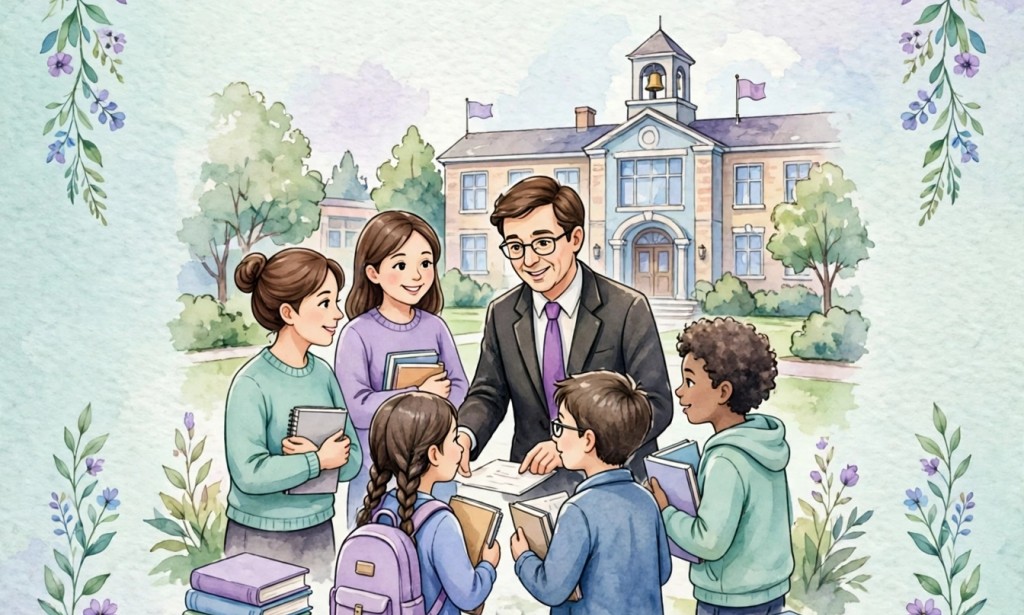
Leadership in Education
Understanding School Leadership and Educational Administration
By A. Ranjha
1. Introduction
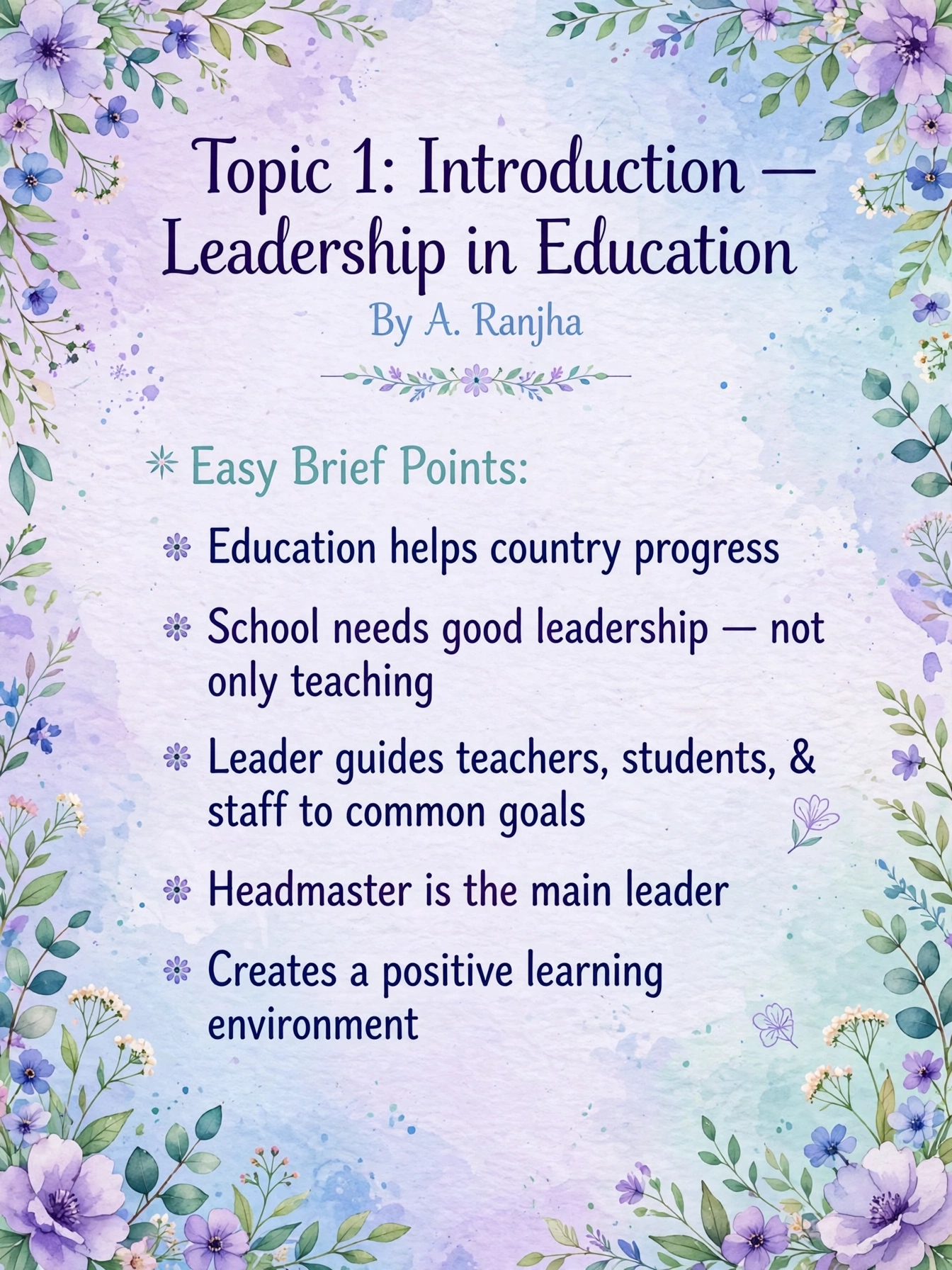
Education plays an important role in the progress of a country. Schools help children gain knowledge, learn good habits and prepare for their future. However, a school cannot become successful through teaching alone. It also needs good leadership.
Leadership in education means guiding teachers, students and other school staff towards common goals. A good educational leader helps everyone work together and creates a positive learning environment.
In a school, the headmaster or headmistress is usually the main leader. Their job is not only to manage daily school activities but also to improve teaching, support teachers and help students succeed.
2. What Is Leadership in Education?
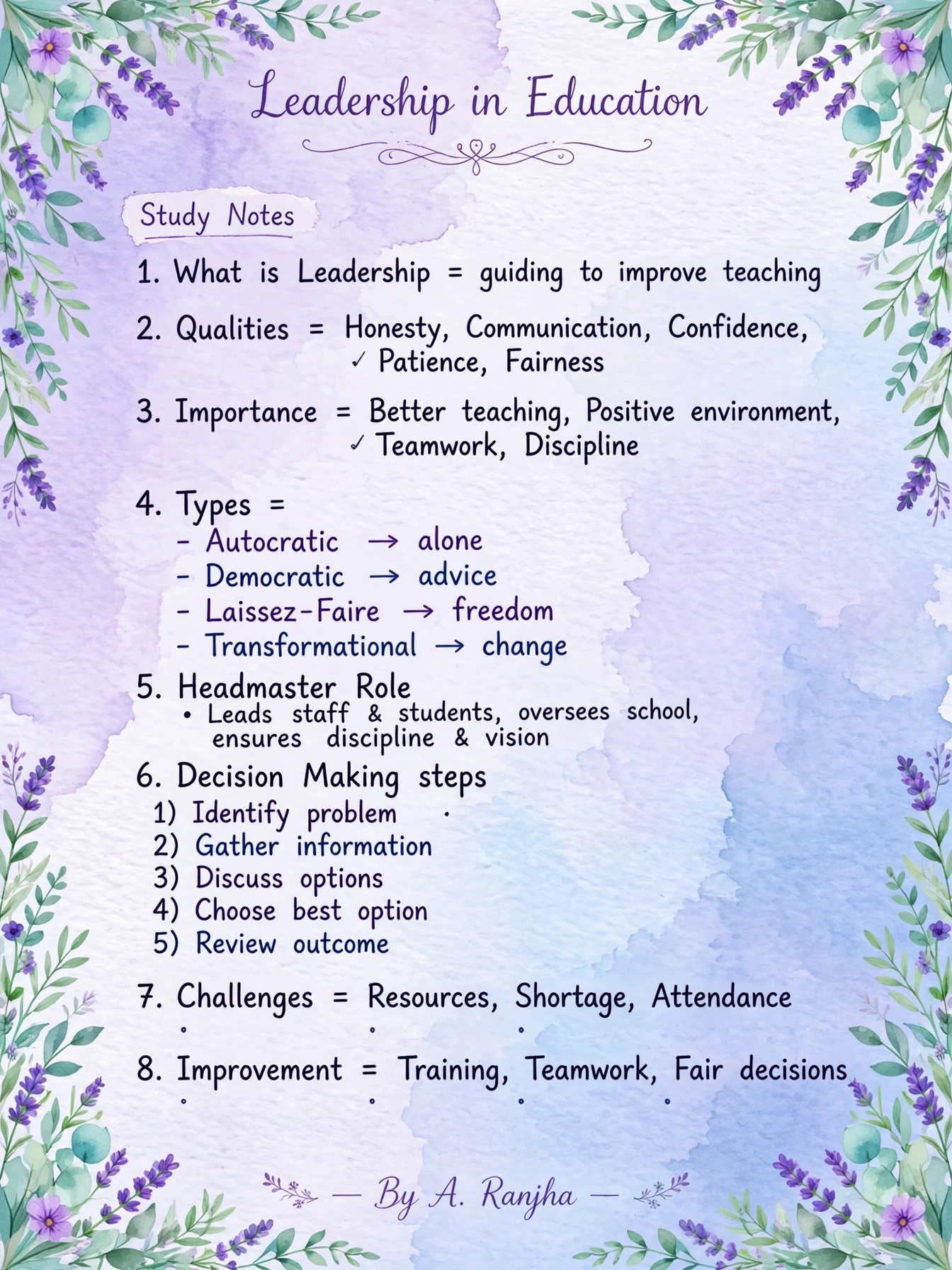
Leadership in education means guiding and supporting people to improve teaching and learning.
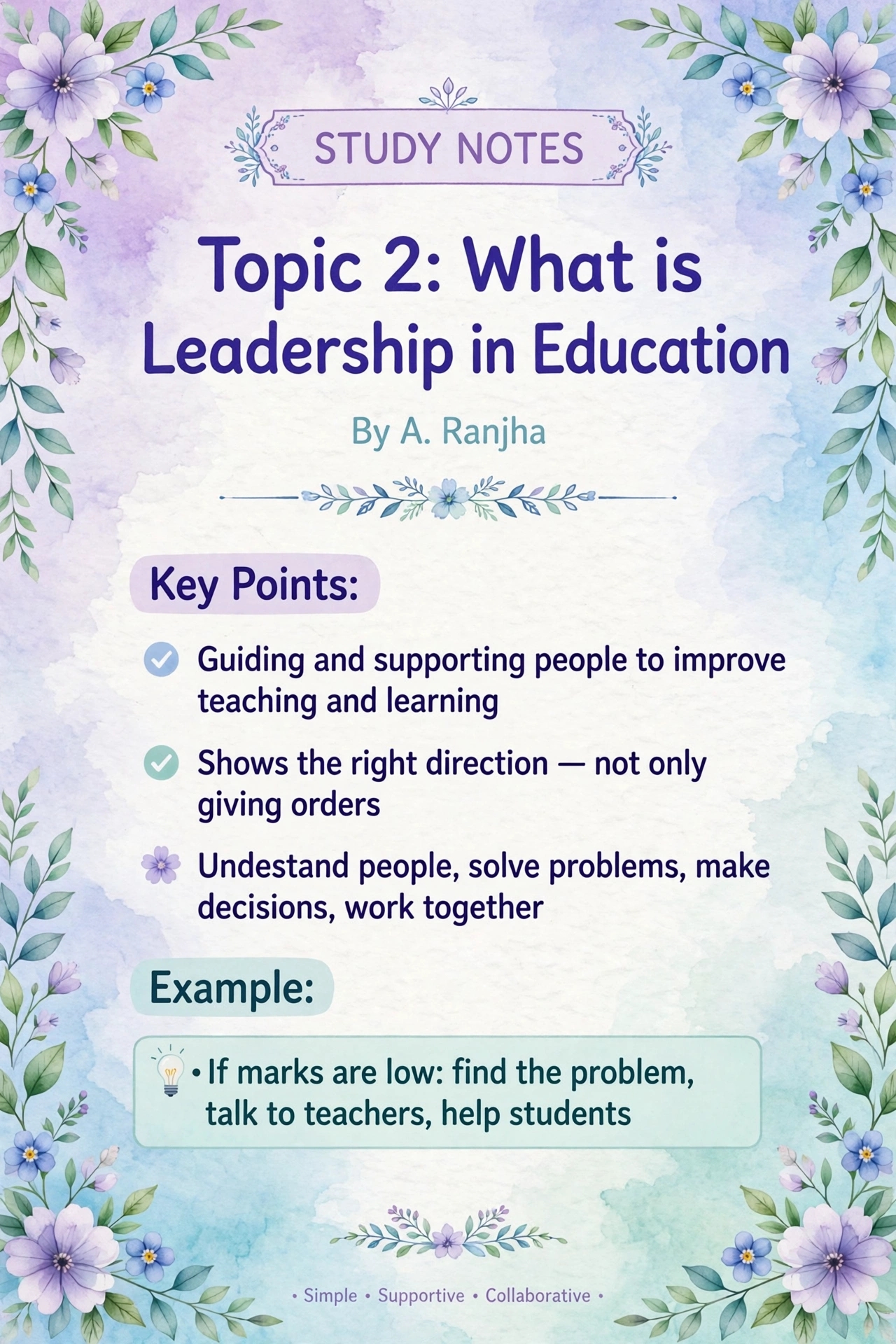
In simple words, an educational leader shows others the right direction and helps them work towards better results.
For example, if students are getting poor marks, a good headmaster does not simply blame teachers. Instead, the headmaster tries to understand the problem, talks to teachers and finds ways to help students improve.
Educational leadership is not only about giving orders. It is about understanding people, solving problems, making good decisions and working together.
3. Main Qualities of a Good Educational Leader
A good school leader needs some important qualities.
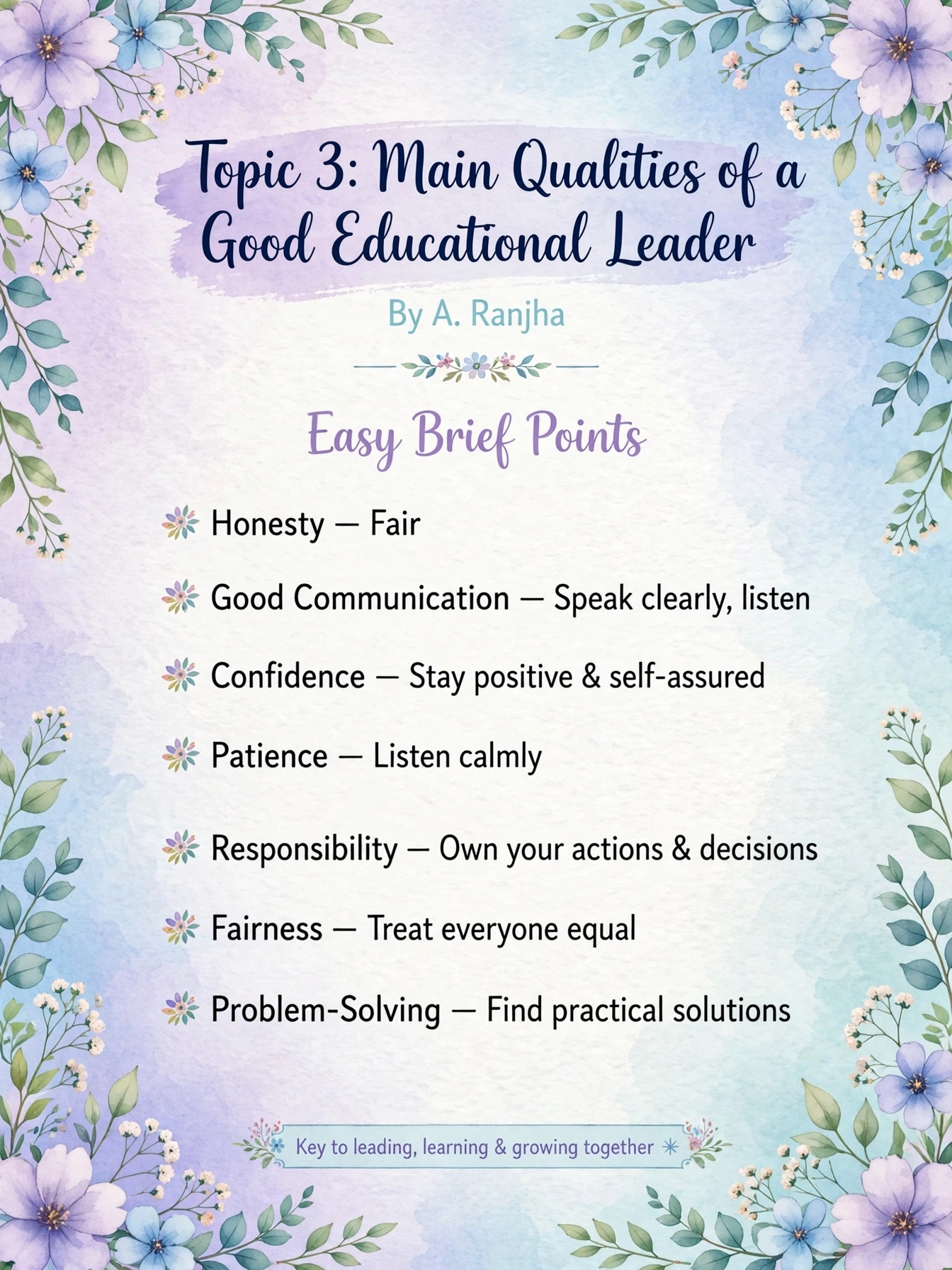
1. Honesty
A leader should always be honest. They should treat teachers, students and parents fairly. They should not show favour to anyone.
2. Good Communication
A leader should speak clearly and listen carefully. Teachers and students should feel comfortable sharing their problems and ideas.
3. Confidence
A good leader should have confidence when making decisions. They should not become confused or give up when problems appear.
4. Patience
Every teacher and student is different. A leader should listen to people calmly and try to understand their situations before making decisions.
5. Responsibility
A school leader must take responsibility for school activities. They should not blame others for every problem.
6. Fairness
All students and teachers should be treated equally. A leader should make decisions without personal likes or dislikes.
7. Problem-Solving Skills
Problems are a normal part of school life. A good leader finds practical solutions instead of ignoring problems.
4. Importance of Leadership in Education
Educational leadership is important because it helps schools work better.
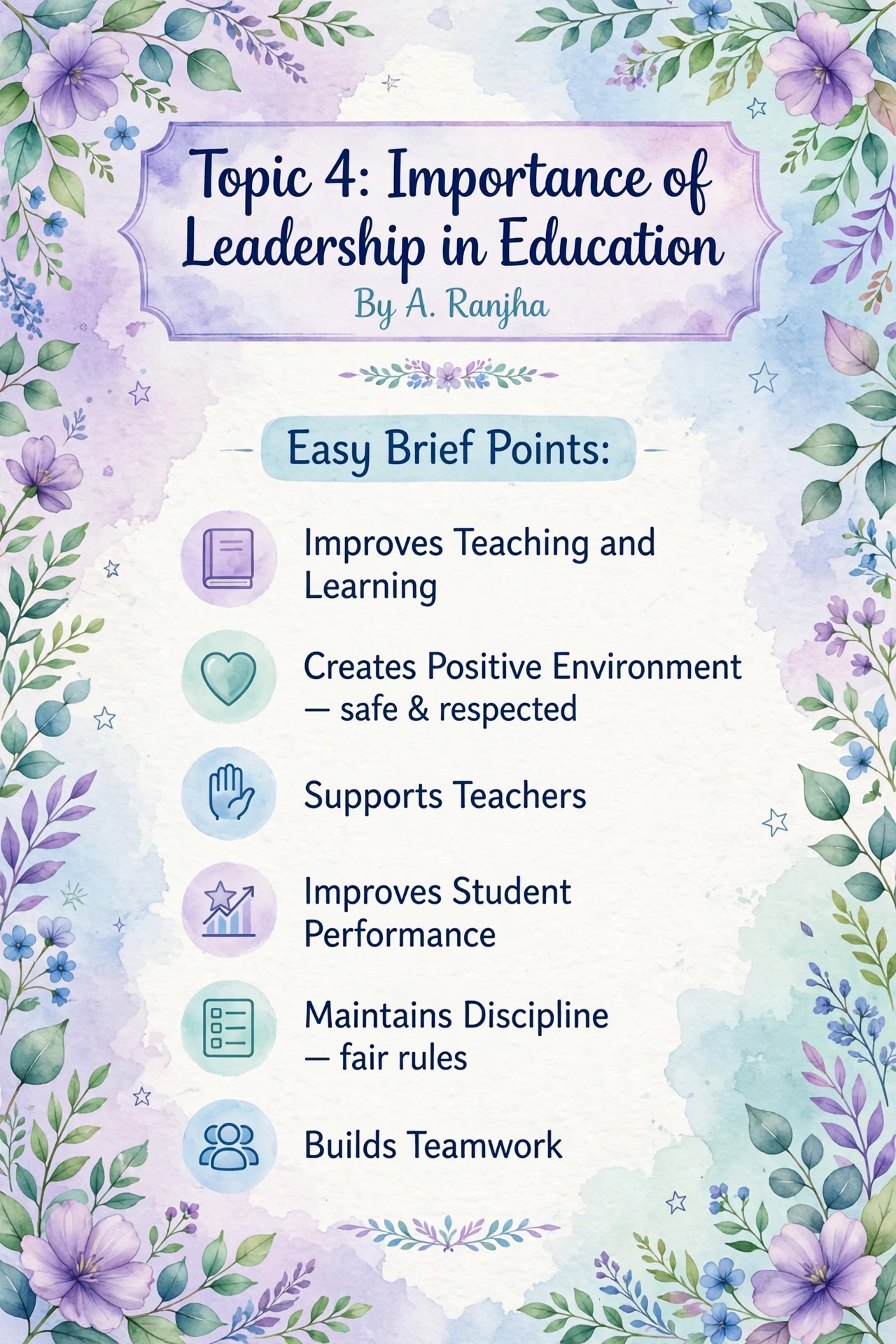
A. Improves Teaching and Learning
A good leader makes sure that teachers perform their duties properly. They also encourage teachers to use clear and useful teaching methods.
As a result, students can understand their lessons better.
B. Creates a Positive School Environment
Students learn better when they feel safe, respected and supported. A good leader helps create a friendly and peaceful school environment.
C. Supports Teachers
Teachers sometimes face problems in teaching or managing their classes. A good headmaster listens to them and provides guidance.
D. Improves Student Performance
A good leader keeps an eye on students' progress. If a student is weak in a subject, the school can arrange extra help or give more attention to that student.
E. Maintains Discipline
School discipline is important for learning. A good leader makes clear rules and ensures that everyone follows them fairly.
F. Builds Teamwork
A school cannot succeed through one person's efforts. Teachers, students, parents and other staff members must work together.
A good leader brings people together and encourages teamwork.
5. Types of Leadership in Education
There are different ways of leading a school. Some common types are explained below.
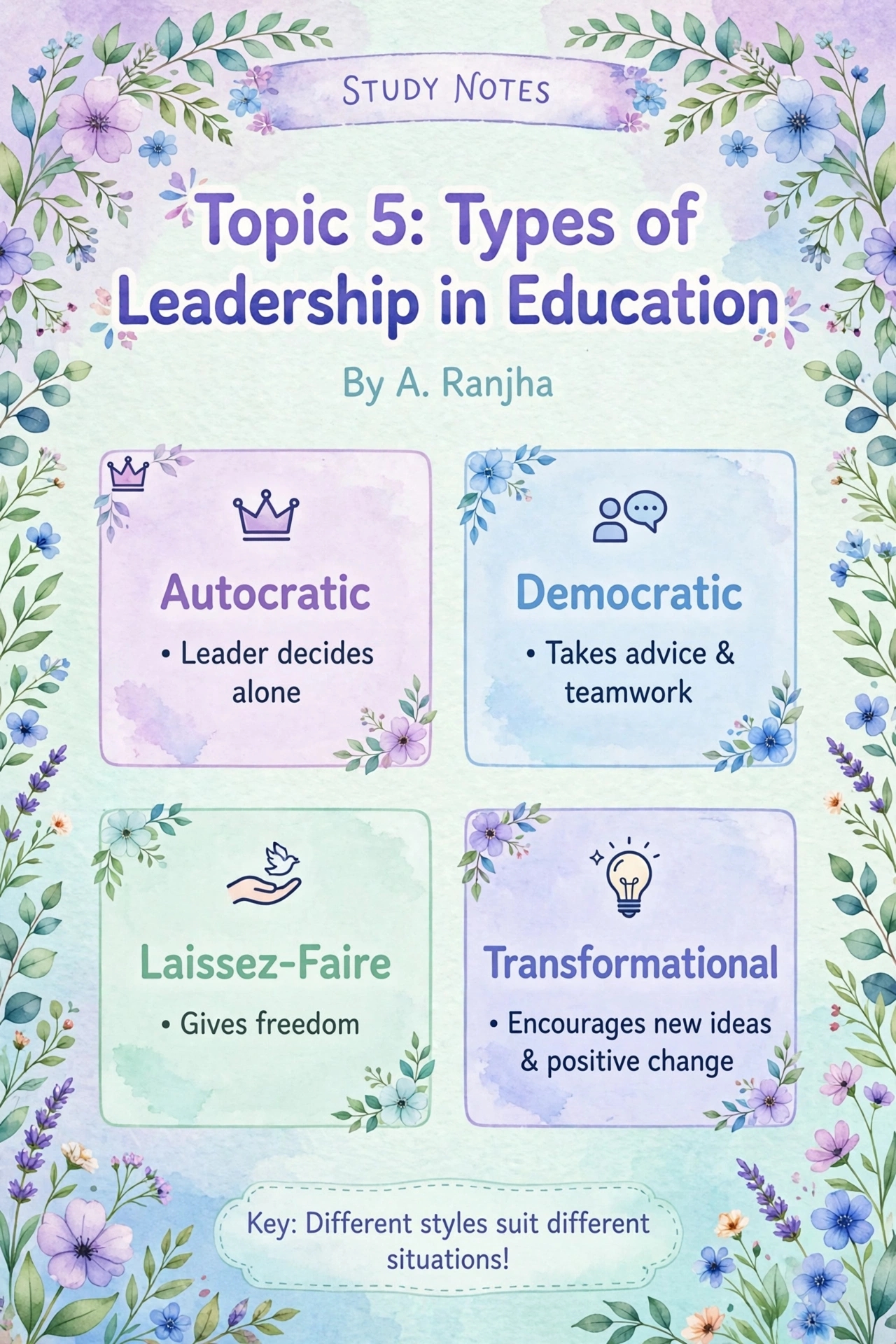
1. Autocratic Leadership
In this type of leadership, the leader makes most decisions alone. Teachers and other staff members have little chance to share their opinions.
For example, a headmaster may make all school decisions without asking teachers.
This style can be useful in an urgent situation, but using it all the time may make teachers feel ignored.
2. Democratic Leadership
In democratic leadership, the leader takes advice from others before making important decisions.
For example, a headmistress may hold a meeting with teachers to discuss how to improve students' results.
This style encourages teamwork, trust and cooperation.
3. Laissez-Faire Leadership
In this type, the leader gives staff members more freedom to make decisions and complete their work.
For example, experienced teachers may be allowed to plan classroom activities in their own way.
However, too much freedom without proper guidance can create confusion.
4. Transformational Leadership
A transformational leader encourages people to improve their work and try new ideas.
For example, a headmaster may encourage teachers to use practical activities, group work and technology to make lessons more interesting.
This type of leadership focuses on positive change and improvement.
6. Role of a Headmaster or Headmistress as a Leader
A headmaster or headmistress has many responsibilities in a school.
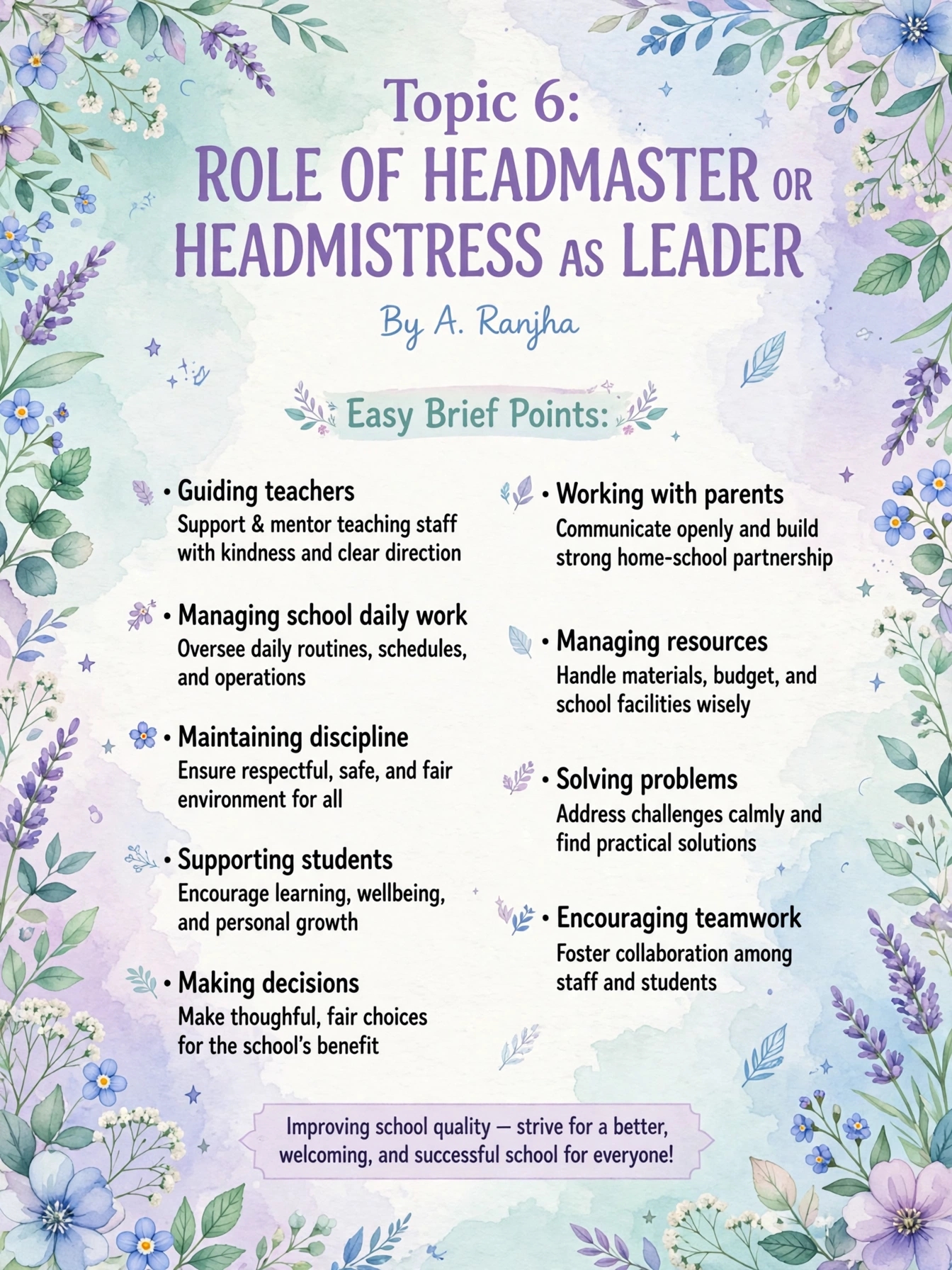
Some important duties include:
1. Guiding teachers: Helping teachers improve their teaching skills.
2. Managing the school: Making sure that daily school activities run properly.
3. Maintaining discipline: Ensuring that school rules are followed.
4. Supporting students: Helping students who face learning or personal difficulties.
5. Making decisions: Taking suitable decisions for the benefit of the school.
6. Working with parents: Keeping parents informed about their children's progress.
7. Managing resources: Making proper use of school funds, books, furniture and other facilities.
8. Solving problems: Dealing with conflicts and difficulties in a fair way.
9. Encouraging teamwork: Helping teachers and staff work together.
10. Improving school quality: Finding ways to make teaching and learning better.
A good headmaster does not only give instructions. They also guide others through their own actions.
7. Decision-Making in Educational Leadership
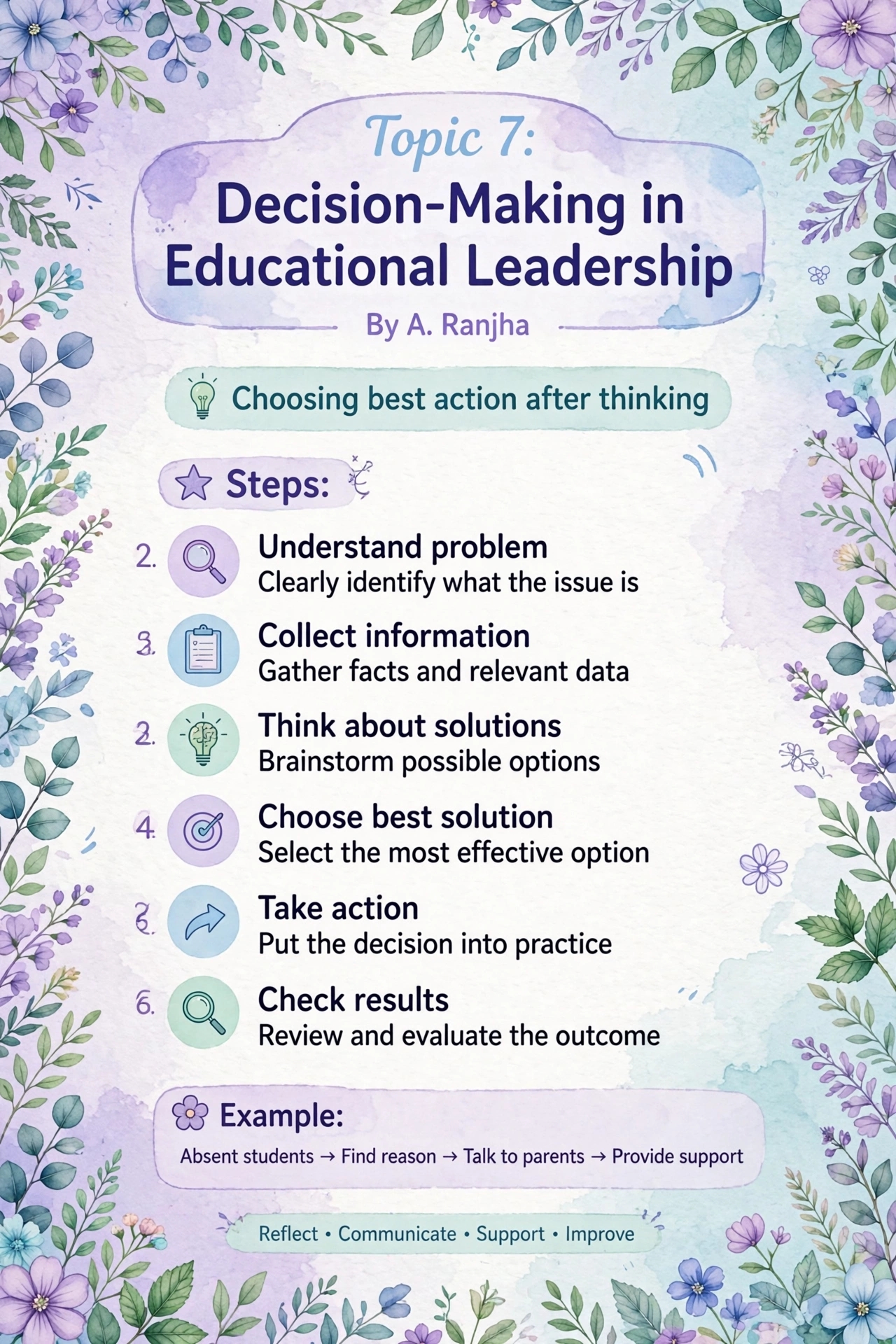
Decision-making means choosing the best action after thinking about a situation. It is an important part of educational leadership because school heads face different problems every day.
A good headmaster or headmistress should make decisions carefully and fairly.
Important Steps in Decision-Making
1. Understand the problem: First, find out what has happened.
2. Collect information: Talk to teachers, students or parents to understand the situation.
3. Think about solutions: Consider different ways to solve the problem.
4. Choose the best solution: Select the option that is fair and useful.
5. Take action: Put the decision into practice.
6. Check the results: See whether the decision has solved the problem.
Example: If students are regularly absent, the headmaster should first find out the reasons. After talking to parents and teachers, the school may arrange meetings with parents and provide support to students.
Good decision-making helps a school leader solve problems, build trust and improve school performance.
8. Challenges Faced by Educational Leaders
School leaders face many challenges in their daily work.
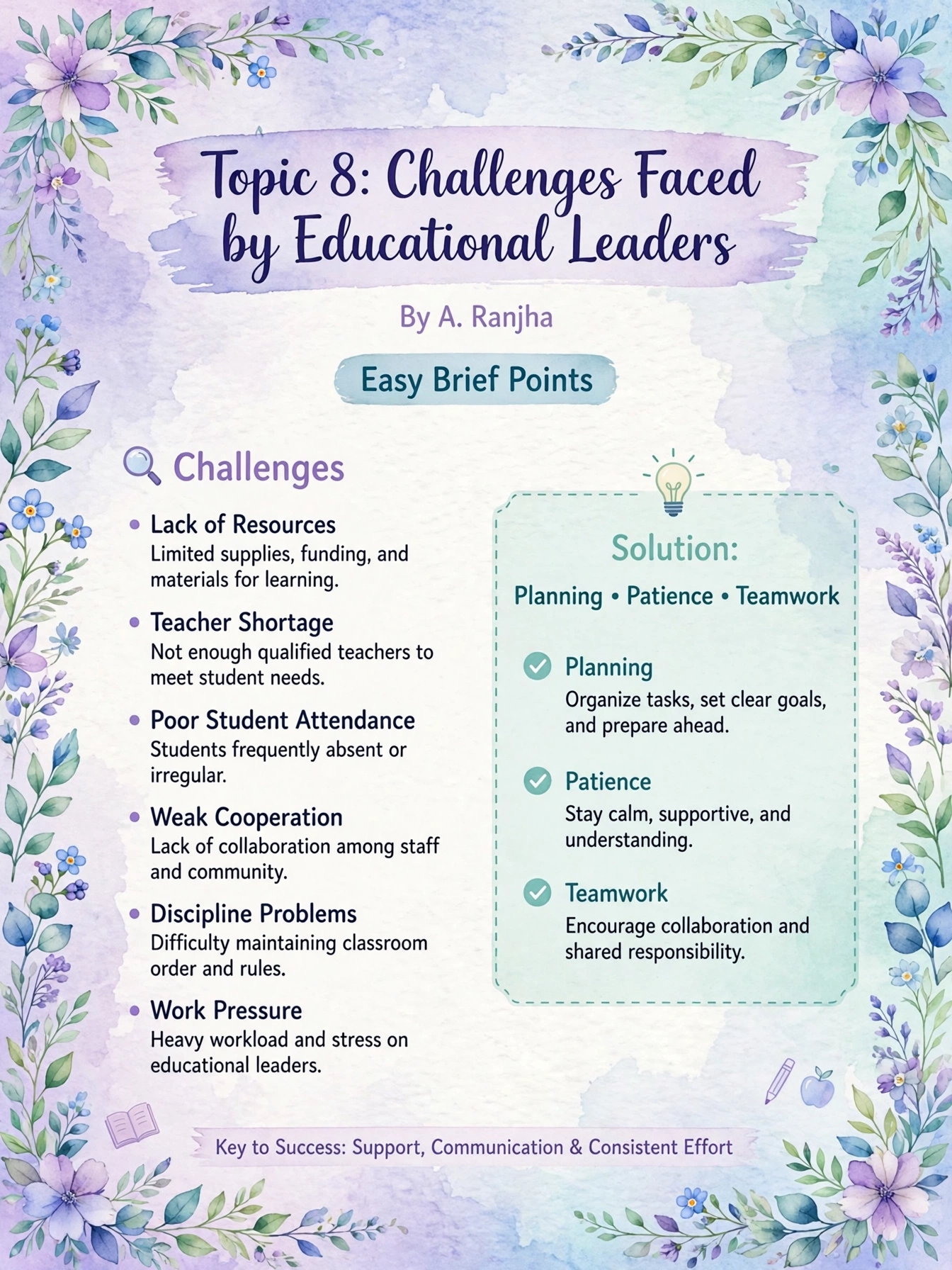
1. Lack of Resources
Some schools do not have enough classrooms, furniture, books or other basic facilities.
2. Teacher Shortage
When a school does not have enough teachers, it becomes difficult to manage all classes properly.
3. Poor Student Attendance
Some students miss school regularly because of family problems, poverty or lack of interest.
4. Weak Cooperation
Sometimes teachers, parents and school staff do not work together. This can affect school performance.
5. Discipline Problems
Managing students with different needs and behaviours can be difficult.
6. Work Pressure
School heads have many duties, including meetings, reports, school records and daily management.
A good leader deals with these challenges through planning, patience and teamwork.
9. How Can Educational Leadership Be Improved?
Educational leadership can become stronger through simple but effective steps:
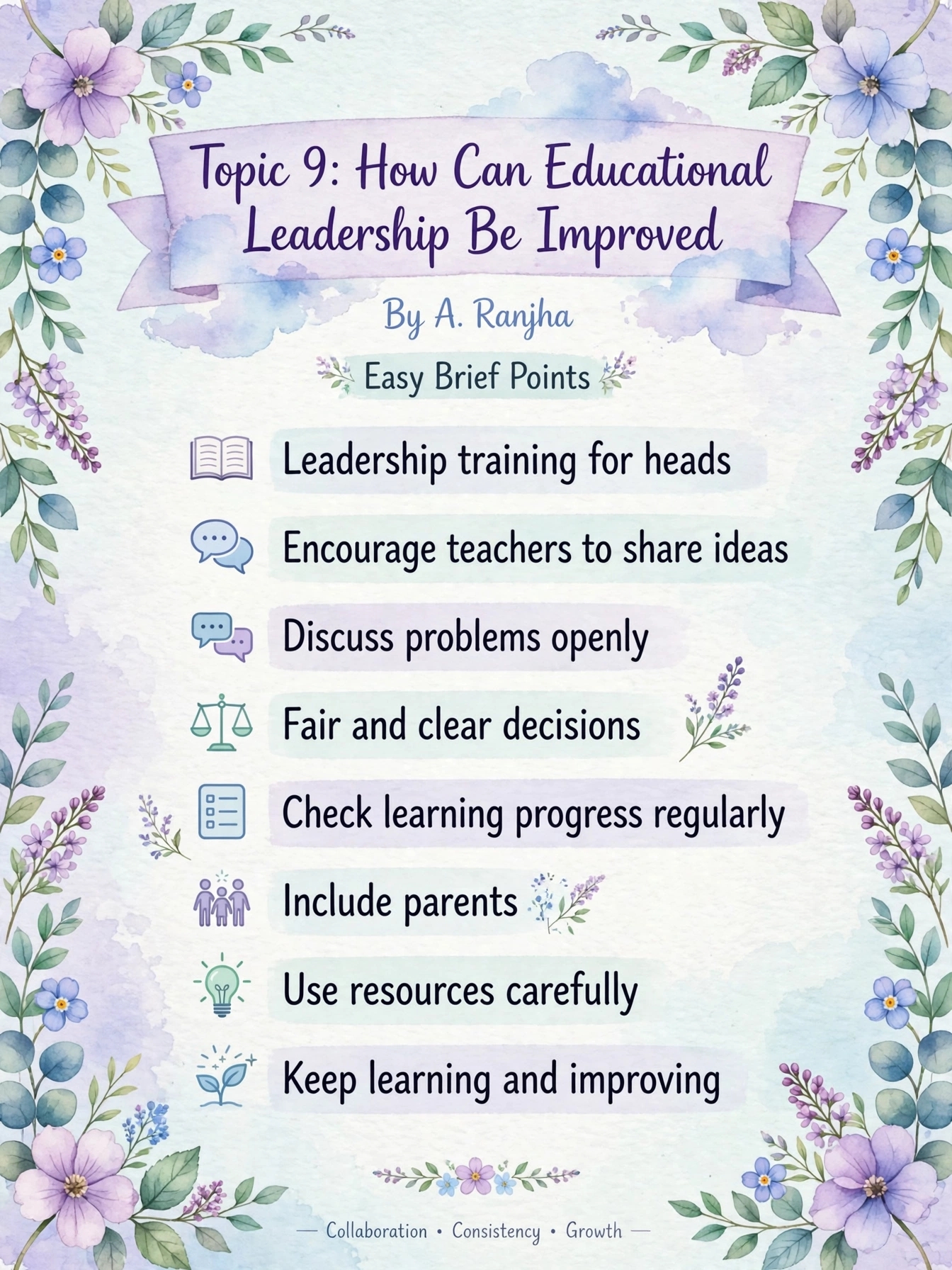
- School heads should receive proper leadership training.
- Teachers should be encouraged to share their ideas.
- School problems should be discussed openly.
- Decisions should be fair and clear.
- Students' learning progress should be checked regularly.
- Parents should be included in school activities.
- School resources should be used carefully.
- Leaders should continue learning and improving their skills.
A leader should also accept useful advice and learn from mistakes.
10. Conclusion
Leadership in education is essential for the success of every school. A good educational leader guides teachers, supports students, solves problems and creates a positive learning environment.
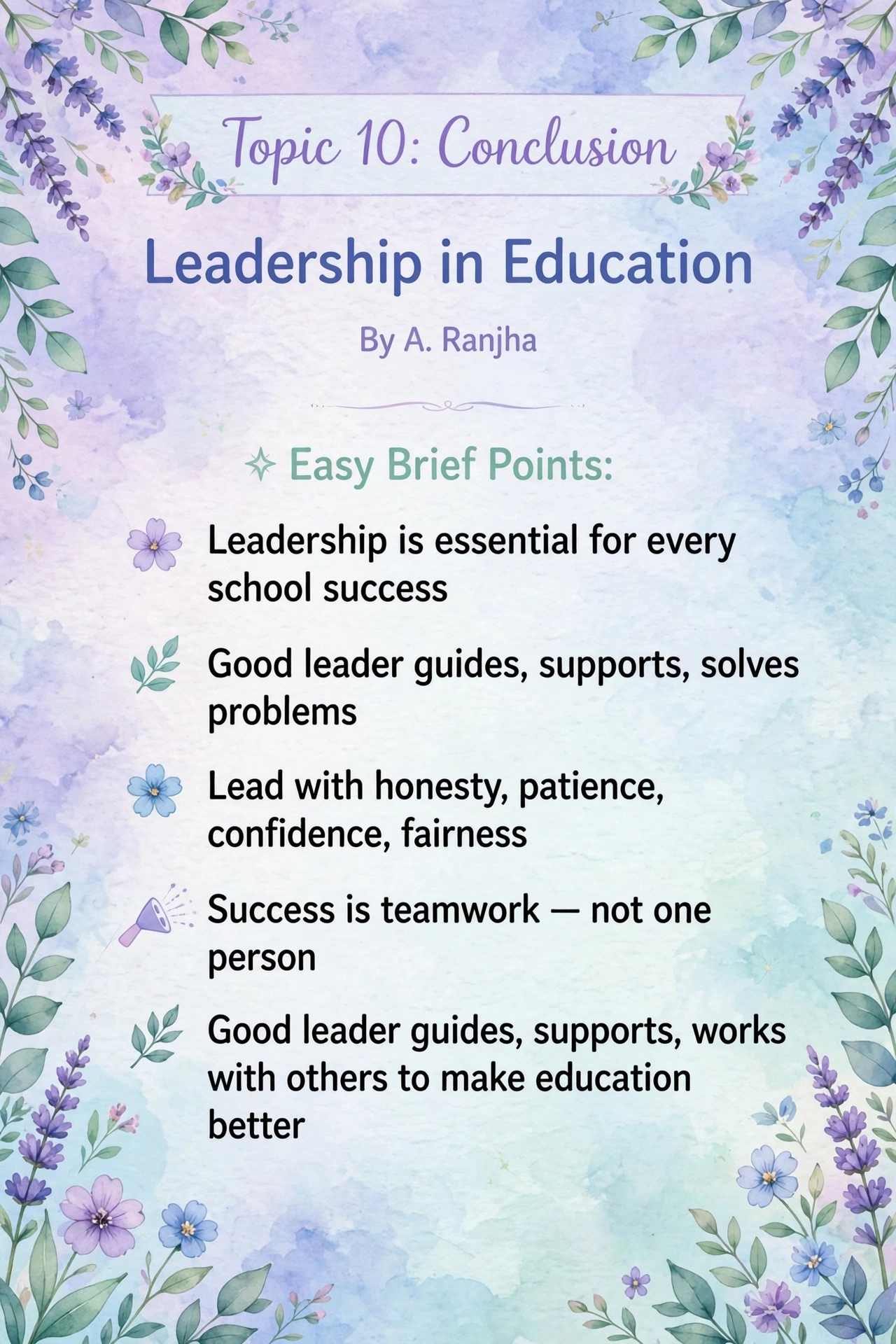
A headmaster or headmistress should lead with honesty, patience, confidence and fairness. They should understand that school success is not the responsibility of one person. It is the result of teamwork and shared effort.
A good leader does not simply tell others what to do. A good leader guides, supports and works with others to make education better.
---
Important Points for Examination
- Educational Leadership: Guiding people to improve teaching and learning.
- Autocratic Leadership: The leader makes decisions alone.
- Democratic Leadership: The leader takes advice from others.
- Laissez-Faire Leadership: Staff members are given more freedom.
- Transformational Leadership: Encouraging people to improve and bring positive change.
- Decision-Making: Choosing the best action after thinking about a situation.
- Problem-Solving: Finding ways to deal with difficulties.
- Main School Leader: Headmaster or Headmistress.
Remember: Effective educational leadership improves teachers' performance, students' learning and the overall school environment.





Comments 0
Sign in to join the conversation.
No comments yet. Be the first to say something.