
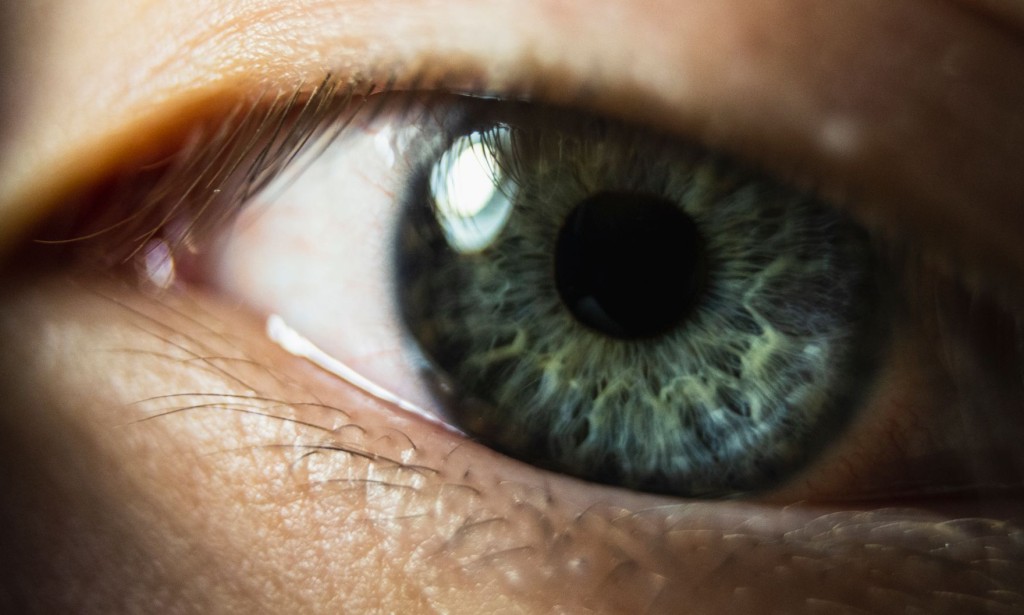
Your Eyes See the World Upside Down: The Shocking Truth About Human Vision

Introduction
Every second of your life, your eyes are collecting enormous amounts of visual information. Colors, shapes, faces, movement, light, and depth all flow into your brain effortlessly. It feels natural and simple—but the truth behind human vision is astonishing.
What most people don't realize is that the images entering your eyes are actually upside down. Yes, the world you see every day is flipped before your brain processes it. Yet somehow, your mind instantly corrects this inversion and presents a stable, upright picture of reality.
This remarkable ability reveals just how sophisticated the human visual system really is. From the structure of the eye to the powerful processing capabilities of the brain, vision is one of the most complex biological systems in the human body.
In this article, we will explore the surprising science behind human vision, including:
Why the image entering your eyes is upside down
How your brain flips the image automatically
The role of the retina and optic nerve
Fascinating experiments that reveal how adaptable your brain is
Strange visual illusions that expose how vision truly works
By the end, you’ll realize that what you see isn’t simply “reality”—it’s an incredibly advanced interpretation created by your brain.
The Amazing Structure of the Human Eye
Before understanding why images appear upside down, we must first look at how the human eye works.
The eye is often compared to a camera because it captures light and converts it into images that the brain can interpret.
Key Parts of the Eye
1. Cornea
The cornea is the clear outer layer of the eye.
Functions of the cornea:
Allows light to enter the eye
Bends (refracts) incoming light
Protects the inner eye structures
It performs about 70% of the eye’s focusing power.
2. Pupil
The pupil is the black circular opening in the center of the eye.
Its main job is controlling the amount of light entering the eye.
Bright light → pupil becomes smaller
Dark environments → pupil becomes larger
This automatic adjustment helps maintain clear vision in different lighting conditions.
3. Lens
Behind the pupil sits the eye’s lens.
The lens works like the focusing system of a camera.
Its job:
Focus light onto the retina
Adjust focus for near or distant objects
Fine-tune image clarity
This process is called accommodation.
4. Retina
The retina is where the real magic happens.
It is a thin layer of tissue at the back of the eye containing millions of light-sensitive cells.
Two main types of cells exist here:
Rods
Detect light and darkness
Help us see in low light
Responsible for night vision
Cones
Detect colors
Provide sharp detail
Work best in bright light
Together, rods and cones convert light into electrical signals sent to the brain.
Why the Image in Your Eye Is Upside Down
Here’s where things get fascinating.
When light enters your eye, it passes through the cornea and lens, which bend the light rays. This bending process flips the image before it reaches the retina.
The Physics of Light Refraction
The lens acts as a convex lens, which naturally inverts images.
This means:
The top of the object becomes the bottom of the retinal image
The bottom becomes the top
Left becomes right
Right becomes left
So technically, the image projected onto your retina is:
Upside down
Reversed left to right
Much smaller than the original object
Yet you never notice this because your brain performs an automatic correction.
How the Brain Fixes the Image Instantly
Once the retina converts light into electrical signals, those signals travel through the optic nerve to the brain.
The brain’s visual processing center is the visual cortex, located in the back of the brain.
Here, several amazing processes occur simultaneously.
The Brain Reinterprets the Image
Instead of simply displaying the inverted image, the brain reconstructs the visual scene.
It:
Flips the image upright
Combines input from both eyes
Interprets depth and motion
Recognizes objects and faces
All of this happens in milliseconds.
Your Brain Creates What You See
One of the most surprising truths about vision is that your eyes do not actually “see.”
Your brain does.
The eyes only gather light information. The brain:
Organizes the signals
Corrects distortions
Predicts missing details
Creates the final visual experience
In other words, vision is a construction, not a direct recording of reality.
Proof: Experiments That Show the World Is Upside Down
Scientists have conducted fascinating experiments demonstrating how adaptable the human brain is when it comes to vision.
The Famous Upside-Down Glasses Experiment
In the late 1800s and again in the 20th century, researchers created special glasses that flipped vision upside down.
Participants wore these glasses continuously.
What Happened?
At first:
Everything appeared inverted
Walking became extremely difficult
Coordination was disrupted
But after several days, something amazing occurred.
The brain adapted.
Participants began seeing the world upright again, even though the glasses still inverted the image.
When the glasses were removed, their normal vision temporarily looked upside down.
This proved that the brain constantly relearns how to interpret visual input.
Why Humans Don’t Notice the Flip
Several neurological processes help your brain maintain stable vision.
1. Neural Adaptation
The brain constantly adapts to sensory input.
If something remains consistent long enough, the brain adjusts its interpretation.
This is why:
Inverted glasses eventually feel normal
New prescription glasses stop feeling strange
Motion sickness eventually disappears for sailors
2. Visual Memory
Your brain stores enormous amounts of visual information about the world.
Because you already know:
The sky is above you
The ground is below you
People stand upright
Your brain quickly corrects any visual inconsistencies.
3. Sensory Integration
Vision does not work alone.
The brain combines information from:
Eyes
Inner ear (balance)
Muscles and joints
Touch sensors
Together, these systems confirm your orientation in space.
The Brain Processes Vision Faster Than You Think
Your visual system is incredibly fast.
Scientists estimate the brain processes visual information in about 13 milliseconds.
That means your brain can interpret images faster than a blink.
During this time, the brain performs several tasks:
Detects edges and shapes
Identifies colors
Recognizes movement
Determines distance
Connects objects to memory
This is why humans can instantly recognize familiar faces in a crowd.
Optical Illusions Reveal the Truth About Vision
Optical illusions demonstrate that vision is not always reliable.
They reveal that the brain often guesses what it is seeing.
Types of Optical Illusions
1. Geometric Illusions
These distort shapes and sizes.
Examples include:
Lines appearing longer than they really are
Shapes appearing curved when they are straight
2. Color Illusions
The brain interprets colors based on surrounding context.
This is why the famous “blue and black vs white and gold dress” debate confused millions of people online.
Different brains interpreted lighting differently.
3. Motion Illusions
Some static images appear to move.
This occurs because the brain predicts motion patterns from small visual cues.
Why Humans Have Two Eyes
Another mystery of human vision is binocular vision.
Humans use two eyes instead of one.
Benefits of Two Eyes
Depth Perception
Each eye sees the world from a slightly different angle.
The brain combines these images to calculate depth.
This allows you to:
Catch a ball
Drive safely
Judge distances accurately
Wider Field of Vision
Two eyes expand the visual field.
Humans can see about 200 degrees horizontally.
Backup Vision
If one eye becomes damaged, the other can still function.
This redundancy is a key evolutionary advantage.
The Blind Spot You Never Notice
Every human eye has a blind spot.
This occurs where the optic nerve exits the retina, because there are no photoreceptor cells there.
Yet you never see a hole in your vision.
Why?
Because your brain fills in the missing information automatically using surrounding visual details.
This is another example of how the brain constructs reality rather than simply recording it.
How Animals See the World Differently
Humans experience only a tiny portion of the visual spectrum.
Many animals have far more advanced vision.
Examples
Birds of Prey
Eagles can see up to four to five times farther than humans.
They can detect tiny prey from kilometers away.
Cats
Cats have excellent night vision due to a high number of rod cells.
This allows them to hunt in near darkness.
Mantis Shrimp
These incredible marine animals have up to 16 color receptors, compared to only three in humans.
They may see colors humans cannot even imagine.
Vision Problems That Reveal How the Eye Works
Certain vision conditions reveal weaknesses in the visual system.
Nearsightedness (Myopia)
Objects far away appear blurry.
Cause:
The eyeball is slightly too long, causing images to focus in front of the retina.
Farsightedness (Hyperopia)
Nearby objects appear blurry.
Cause:
The eyeball is too short, causing images to focus behind the retina.
Astigmatism
Vision becomes distorted or stretched.
Cause:
The cornea has an irregular shape.
The Future of Human Vision
Scientists are working on revolutionary technologies to improve or even enhance human vision.
Emerging Innovations
Artificial Retina Implants
These devices may restore partial vision for people who are blind.
Bionic Eyes
Advanced prosthetics may one day send visual data directly to the brain.
Augmented Vision
Future contact lenses could provide:
Night vision
Zoom capability
Real-time translation
Health monitoring
These technologies may dramatically expand human visual capabilities.
Fascinating Facts About Human Vision
Here are some mind-blowing facts about your eyes.
The human eye can distinguish around 10 million colors.
Your eyes process 36,000 pieces of visual information per hour.
The brain dedicates nearly 30% of its cortex to vision.
Humans blink about 15–20 times per minute.
Your eyes move hundreds of thousands of times daily.
Despite these constant movements, the brain keeps the world stable.
The Philosophical Question: Do We Really See Reality?
The upside-down image in our eyes raises a deeper question.
Do humans truly see reality?
Or do we only see a brain-generated interpretation?
Modern neuroscience suggests the second possibility is more accurate.
The brain:
Filters sensory data
Predicts patterns
Removes irrelevant details
Fills missing information
What we experience as "seeing" is actually a highly sophisticated simulation created by the brain.
Conclusion
The simple act of seeing hides one of the most incredible biological processes in the human body.
Every moment:
Light enters your eyes
The image flips upside down
Photoreceptors convert light into electrical signals
The brain reconstructs the scene
Reality appears stable and upright
Without realizing it, your brain constantly corrects, interprets, and rebuilds the visual world around you.
The next time you look at the sky, a tree, or a face, remember something astonishing:
The image inside your eyes is upside down—yet your brain transforms it into the clear, upright world you experience every day.
Human vision is not just a biological function. It is one of the greatest feats of natural engineering.






Comments 0
Sign in to join the conversation.
No comments yet. Be the first to say something.