

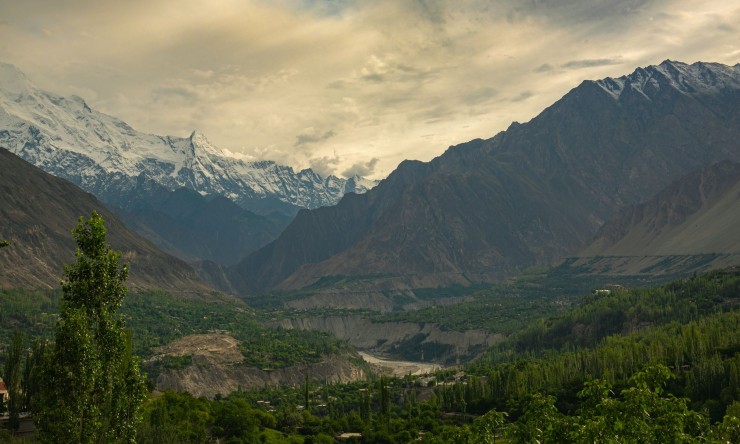
Pakistan's tourist map has about six names on it. Hunza, Skardu, Naran, Murree, Swat, and the Makran coast absorb almost all the traffic, which means the country's best quiet places stay quiet. That is good news for anyone willing to drive two hours past the last crowded viewpoint.
What follows is not a bucket list. It is a list of places where the access is realistic, the season matters, and the experience is better than the famous alternative nearby.
How to Travel Well Here
Three rules cover most of it. Travel shoulder season, not peak. Ask locally about road status the morning you leave, because a landslide can close a valley for a day. And carry cash — beyond the main towns, card payment is a rumour.
Also: distances in mountain areas are meaningless. Forty kilometres can take three hours. Plan by daylight, not by map.
The Top 10 Underrated Places
1. Kalash Valleys, Chitral
Three valleys — Bumburet, Rumbur, Birir — with a distinct culture, wooden architecture, and terraced fields that look nothing like the rest of the country. Best from May to September.
Go with a local guide and ask before photographing people. This is a living community, not a set.
2. Phander Valley, Ghizer
A lake so still it doubles the mountains, and a fraction of the traffic that Attabad gets. Trout fishing, basic guesthouses, and absolute quiet.
Roads are rough but passable in a normal car in summer.
3. Broghil Valley, Upper Chitral
High, remote, and green in a way that surprises people who picture Pakistan as dry. Yaks, glacial lakes, and almost no visitors.
Only attempt in July and August, with a proper vehicle and a local driver.
4. Gorakh Hill, Sindh
The one place in Sindh where summer is bearable. Cool nights, a plateau with a view, and a two-hour climb from Dadu.
Facilities are basic. Take water and a blanket.
5. Kharpocho Fort, Skardu
Everyone photographs Shangrila and skips the fort above the town. Walk up in the late afternoon for the best view of the Indus valley anywhere.
Go before sunset and come down before dark.
6. Arang Kel, Neelum
A village on a shoulder above Kel, reached by chairlift and a steep walk. Green, quiet, and far better value than the resorts below.
Check the chairlift runs before you commit to the walk.
7. Kund Malir and the Coastal Highway
Most people stop at the beach and turn back. The road west toward Ormara is one of the great coastal drives, with cliffs, empty sand, and almost no traffic.
Fuel up in Bela. There is nothing for a long stretch.
8. Uch Sharif, Bahawalpur
Fourteenth-century shrines with tilework that rivals anything in Lahore, in a small town almost no tourist visits.
Dress modestly and ask before entering shrine interiors.
9. Katora Lake, Kumrat
A day hike from Jahaz Banda into a glacial bowl. Kumrat itself is popular; the lake above it is not.
Start early. Afternoon weather turns fast.
10. Ziarat, Balochistan
Juniper forests, cold clean air, and colonial-era buildings at 2,400 metres. Reachable from Quetta and almost always empty.
Check current travel advisories and go with local guidance.

What It Costs
A week in the northern areas, travelling in a shared jeep and staying in basic guesthouses, runs a fraction of a week in Murree at peak season. The saving comes from skipping the resorts, not from skipping comfort.
Budget for one expensive thing: a reliable vehicle and driver on the hard roads. That is where money buys safety rather than luxury.
Practical Warnings
Weather changes faster than forecasts. Mobile coverage disappears for hours. Altitude sickness is real above 3,000 metres and the only treatment is descent. And never drive a mountain road at night for the first time.
Check road and security conditions with the Pakistan Tourism Development Corporation and ask at the last town before any remote stretch.
What to Pack Differently
Pack for cold nights even in June above 2,500 metres. A down jacket weighs less than regret. Take a power bank, because charging points are scarce and unreliable. Take a water filter or purification tablets rather than trusting every stream.
Bring small cash notes. In remote areas nobody can break a five-thousand-rupee note, and the one shop that can will be closed. Keep a photocopy of your ID separate from the original.
Take a physical map or download offline maps before you leave the last town with signal. Two of the places on this list have no coverage for several hours of road.
Pack a first aid kit that includes altitude medication if you are going above 3,000 metres, rehydration salts, and blister plasters. A blister that ends a hike on day two is a completely avoidable disappointment.
Leave room in the bag. The best purchases on these routes are local — dried fruit, honey, wool — and you will want somewhere to put them.
How to Travel Respectfully
These places are quiet partly because the people who live there have not been overrun. That is fragile, and it is worth protecting deliberately rather than assuming it will hold.
Ask before photographing people, and accept a no without negotiating. Pay the asking price in small villages instead of bargaining hard for sport; the difference is trivial to you and not trivial to them. Buy locally — tea, fuel, a meal, a guide — rather than bringing everything from the city and leaving nothing behind.
Take your rubbish out with you. Remote valleys have no collection service, and the plastic that tourists leave gets burned or buried because there is no alternative. A single bag of your own waste carried back to the last town is the whole contribution asked of you.
Dress modestly in conservative areas, particularly in Chitral, Balochistan, and around shrines. This is not about restriction; it is about not making your visit a source of friction for the people hosting you.
Hire local guides even when you could manage alone. The money stays in the valley, the knowledge is better than any app, and a guide who knows the road conditions is a safety measure disguised as a courtesy.
And go in small numbers. A group of four leaves a place as it found it. A convoy of twelve changes what the place is.
The Bottom Line
The best trip in Pakistan is usually the one two hours past where everyone else turns around. Pick one valley, give it four days, and let the quiet do the work.



Comments 0
Sign in to join the conversation.
No comments yet. Be the first to say something.