

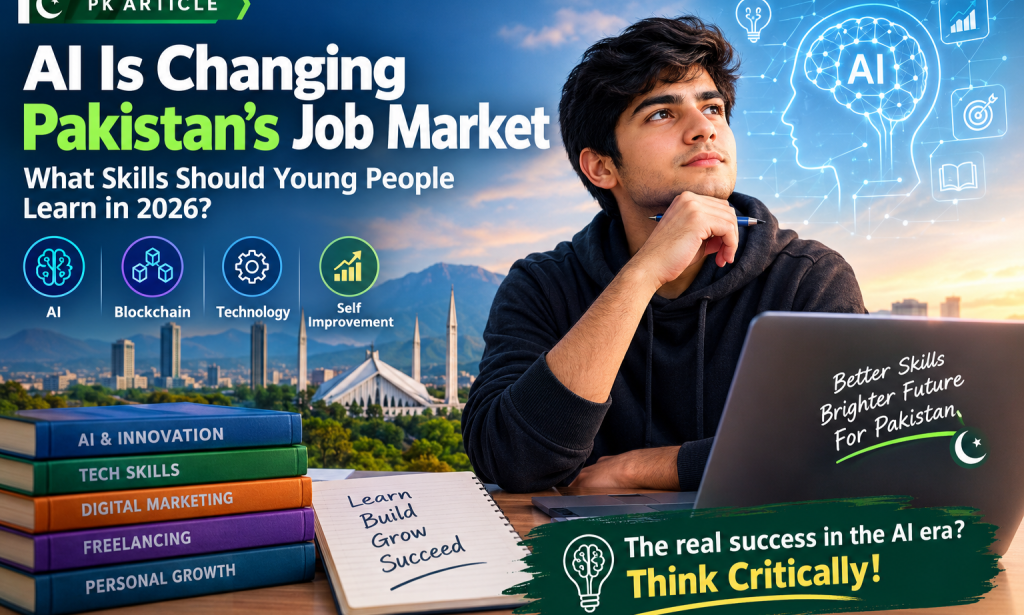
AI Is Changing Pakistan's Job Market everyone should learn these Skills in 2026
Artificial intelligence is reshaping the world of work. For Pakistan’s young generation the real challenge is not competing against machines, but learning
For Pakistan this transformation presents both an opportunity
The question is no longer simply whether AI will affect employment. It is whether young Pakistanis will be prepared to participate in an economy increasingly influenced by intelligent technologies.
How Is AI Changing the world especially Pakistan’s Job Market.
AI can perform certain repetitive tasks faster than humans. It can summarise documents organise information generate initial drafts assist with customer enquiries and support basic data analysis.
For businesses these capabilities can reduce the time required for routine work and improve productivity. For workers they can create opportunities to focus on more complex responsibilities including decision-making problem-solving communication and customer relationships.
However automation also creates uncertainty. Some routine tasks may require fewer workers while other jobs may change rather than disappear completely. New opportunities may emerge in software development, data analysis cybersecurity digital marketing, and AI-related services.
The World Economic Forum’s Future of Jobs Report 2025 identifies AI and big data cybersecurity and technological literacy among the fastest-growing skill areas globally. The report also highlights analytical thinking, creativity adaptability and lifelong learning as important capabilities.
These are global employer expectations, not a guarantee that every skill will lead to employment in Pakistan. Nevertheless, they offer useful guidance for young people deciding what to learn.
1. Learn to Use AI Tools Effectively
This is basic and first step does not necessarily require becoming a software engineer. Young people can begin by learning how to use AI tools to improve their existing work.
For example a student can use AI to understand difficult concepts difficultalgorithms a designer can explore visual ideas and a small business owner can draft product descriptions or organise customer feedback.
But using AI effectively involves more than writing prompts. Users must learn to provide clear instructions evaluate the output identify factual errors, protect private information, and decide when human judgment is necessary.
AI can generate convincing answers that are incomplete or incorrect. Therefore, verification is essential.
Young people who combine AI tools with genuine subject knowledge will be better positioned to produce useful work than those who depend entirely on automated answers.
2. Develop Digital and Technical Skills
AI literacy becomes more valuable when combined with practical technical abilities.
Young people interested in
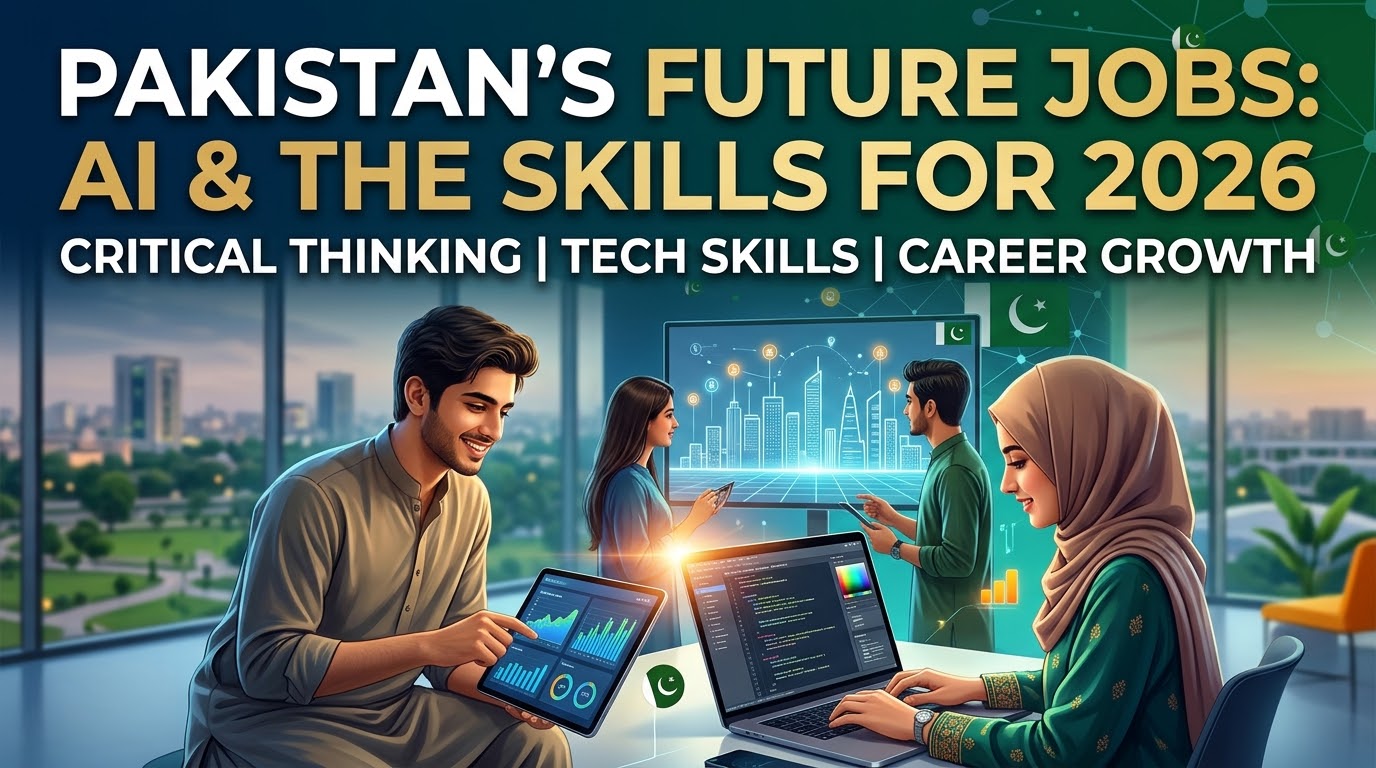
technology can begin with basic computer skills, spreadsheets internet researched an understanding of how digital systems work. Those who enjoy technical problem-solving can progress towards programming, web development, databases, or data analysis.
Python is a useful starting point for people interested in automation, data science, and AI development. learning a programming language should not become an end in itself. The objective is to use technical knowledge to build something useful.
For example, a beginner might develop a simple website for a local business create a spreadsheet that tracks expenses or build a small application that organises information.
Projects demonstrate practical ability. A certificate may show that someone completed a course, but a working project provides stronger evidence of what that person can actually do.
3. Strengthen Communication and English
Technical knowledge alone is rarely sufficient for professional success.
Young Pakistanis who want to work with international clients remote teams, or technology companies can benefit from improving their written and spoken English. Clear communication helps people understand client requirements, explain ideas, negotiate expectations for people and present their work professionally.
Communication also includes listening, asking precise questions, writing organised reports, and explaining complicated difficult ideas in simple language.
AI can help learners vocabular improve grammar and receive feedback on writing. However learners should actively develop these abilities rather than allowing AI to do all their communication for them.
The combination of technical competence and strong communication can make a person more effective across many different professions.
4. Build Critical Thinking and Problem-Solving Skills
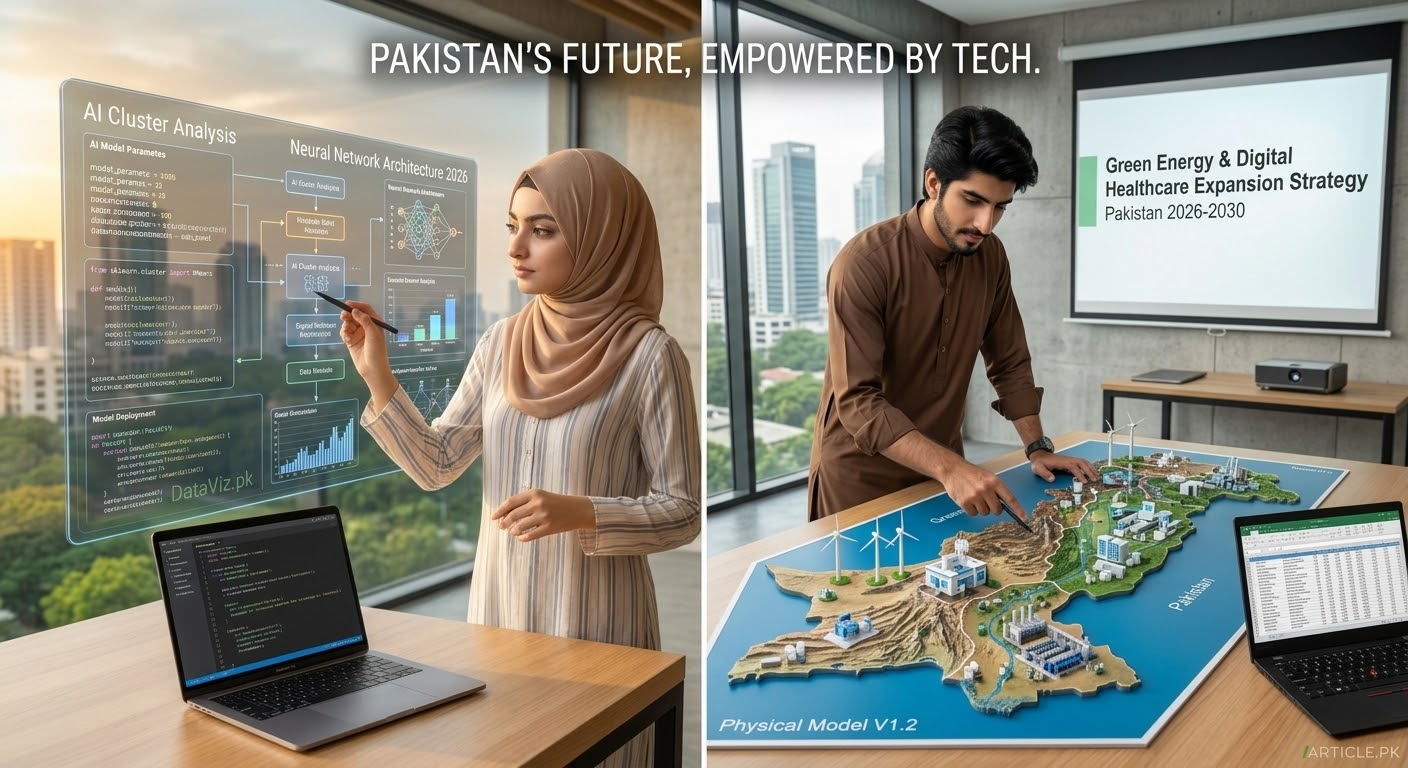
One of the most important skills in the AI era is the ability to evaluate information independently.
AI can produce an answer within seconds, but speed does not guarantee accuracy. A person who accepts every generated response without checking it risks making poor decisions.
Critical thinking involves examining evidence identifying assumptions, comparing explanations, and asking whether a conclusion is justified.
Consider a small Pakistani business that wants to increase sales. AI might suggest advertising discounts and social media campaigns. However a capable problem-solver will first investigate the actual issue: Is the business attracting too few customers, pricing products incorrectly or struggling to retain existing customers.
The distinction is important. Tools can generate suggestions but effective problem-solving requires understanding the situation and selecting an appropriate solution.
Young people should practise questioning information checking reliable sources, and applying what they learn to real-world problems.
5. Choose One Valuable Professional Skill
Learning about AI is useful but collecting dozens of tools without developing a professional skill is unlikely to produce strong results.
Instead young people should select one area that matches their interests and practise it consistently.
possible one or two for them
Web development Building and maintaining websites.
Data analysis Using spreadsheets visualisations, and analytical tools to understand information.
Graphic and digital design Creating useful visual content for businesses and organisations.
Digital marketing Understanding audiences content strategy, search visibility, and campaign performance.
Cybersecurity Learning how to protect computer systems, accounts, and information.
- AI automation Connecting digital tools to reduce repetitive business tasks.
These areas have different learning requirements and none guarantees immediate employment. The best choice depends on a persons interests, available resources, and willingness to practise.
A sensible approach is to learn the fundamentals, complete small projects, collect feedback and gradually build a portfolio demonstrating practical competence.
6. Learn Adaptability and Continuous Learning
Technology changes quickly. A tool that is popular today may be replaced by a more capable alternative tomorrow.
This makes adaptability an important professional advantage. Rather than depending on a single platform, young people should understand the underlying principles of their chosen field.
For example, someone who understands marketing strategy can adapt when advertising tools change. A developer who understands programming fundamentals can learn new frameworks more effectively. A researcher who understands evidence evaluation can assess information from different AI systems.
Continuous learning does not mean studying every new technology. It means identifying which changes matter to your field and updating your skills accordingly.
AI Is Changing Pakistan’s Job Market the Skills Should Young People Learn in 2026?
AI Is Changing Pakistan's Job Market: Everyone Should Learn These Skills in 2026
Artificial intelligence is reshaping the world of work. For Pakistan’s young generation the real challenge is not competing against machines, but learning how to use technology to solve problems, create opportunities and build absolute valuable skills.
Introduction: A New Era of Work
Artificial intelligence is no longer a technology limited to research laboratories or large international companies. Today, AI tools can help people write analyse information create designs develop software and automate repetitive tasks. These changes are transforming how businesses operate and how workers perform their jobs.
For Pakistan this transformation presents both an opportunity and a challenge. The country has a large young population and digital skills could help young people access new career paths, freelance projects, and entrepreneurial opportunities. However a lack of practical skills and reliable training could prevent many from benefiting from this transition.
The question is no longer simply whether AI will affect employment. It is whether young Pakistanis will be prepared to participate in an economy increasingly influenced by intelligent technologies.
How Is AI Changing the world special Pakistan’s Job Market?
AI can perform certain repetitive tasks faster than humans. It can summarise documents organise information, generate initial drafts assist with customer enquiries and support basic data analysis.
For businesses these capabilities can reduce the time required for routine work and improve productivity. For workers they can create opportunities to focus on more complex responsibilities including decision-making problem-solving, communication and customer relationships.
However automation also creates uncertainty. Some routine tasks may require fewer workers while other jobs may change rather than disappear completely. New opportunities may emerge in software development, data analysis cybersecurity digital marketing, and AI-related services.
The World Economic Forum’s Future of Jobs Report 2025 identifies AI and big data, cybersecurity and technological literacy among the fastest-growing skill areas globally. The report also highlights analytical thinking, creativity, adaptability and lifelong learning as important capabilities.
These are global employer expectations, not a guarantee that every skill will lead to employment in Pakistan. Nevertheless, they offer useful guidance for young people deciding what to learn.
1. Learn to Use AI Tools Effectively
This is basic and first step does not necessarily require becoming a software engineer. Young people can begin by learning how to use AI tools to improve their existing work.
For example a student can use AI to understand difficult concepts difficultalgorithms a designer can explore visual ideas and a small business owner can draft product descriptions or organise customer feedback.
But using AI effectively involves more than writing prompts. Users must learn to provide clear instructions evaluate the output, identify factual errors, protect private information, and decide when human judgment is necessary.
AI can generate convincing answers that are incomplete or incorrect. Therefore, verification is essential.
Young people who combine AI tools with genuine subject knowledge will be better positioned to produce useful work than those who depend entirely on automated answers.
2. Develop Digital and Technical Skills
AI literacy becomes more valuable when combined with practical technical abilities.
Young people interested in technology can begin with basic computer skills, spreadsheets internet researched an understanding of how digital systems work. Those who enjoy technical problem-solving can progress towards programming, web development, databases, or data analysis.
Python is a useful starting point for people interested in automation, data science, and AI development. learning a programming language should not become an end in itself. The objective is to use technical knowledge to build something useful.
For example, a beginner might develop a simple website for a local business create a spreadsheet that tracks expenses or build a small application that organises information.
Projects demonstrate practical ability. A certificate may show that someone completed a course, but a working project provides stronger evidence of what that person can actually do.
3. Strengthen Communication and English
Technical knowledge alone is rarely sufficient for professional success.
Young Pakistanis who want to work with international clients remote teams, or technology companies can benefit from improving their written and spoken English. Clear communication helps people understand client requirements, explain ideas, negotiate expectations for people and present their work professionally.
Communication also includes listening, asking precise questions, writing organised reports, and explaining complicated difficult ideas in simple language.
AI can help learners vocabular improve grammar and receive feedback on writing. However learners should actively develop these abilities rather than allowing AI to do all their communication for them.
The combination of technical competence and strong communication can make a person more effective across many different professions.
4. Build Critical Thinking and Problem-Solving Skills
One of the most important skills in the AI era is the ability to evaluate information independently.
AI can

produce an answer within seconds, but speed does not guarantee accuracy. A person who accepts every generated response without checking it risks making poor decisions.
Critical thinking involves examining evidence identifying assumptions, comparing explanations, and asking whether a conclusion is justified.
Consider a small Pakistani business that wants to increase sales. AI might suggest advertising discounts and social media campaigns. However a capable problem-solver will first investigate the actual issue: Is the business attracting too few customers, pricing products incorrectly or struggling to retain existing customers.
The distinction is important. Tools can generate suggestions but effective problem-solving requires understanding the situation and selecting an appropriate solution.
Young people should practise questioning information checking reliable sources, and applying what they learn to real-world problems.
5. Choose One Valuable Professional Skill
Learning about AI is useful but collecting dozens of tools without developing a professional skill is unlikely to produce strong results.
Instead young people should select one area that matches their interests and practise it consistently.
Web development Building and maintaining websites.
Data analysis Using spreadsheets visualisations, and analytical tools to understand information. Graphic and digital design Creating useful visual content for businesses and organisations. Digital marketing Understanding audiences, content strategy, search visibility, and campaign performance.
Cybersecurity Learning how to protect computer systems, accounts, and information.
AI automation Connecting digital tools to reduce repetitive business tasks.
These areas have different learning requirements and none guarantees immediate employment. The best choice depends on a persons interests, available resources, and willingness to practise.
A sensible approach is to learn the fundamentals, complete small projects, collect feedback and gradually build a portfolio demonstrating practical competence.
6. Learn Adaptability and Continuous Learning
Technology changes quickly. A tool that is popular today may be replaced by a more capable alternative tomorrow.
This makes adaptability an important professional advantage. Rather than depending on a single platform, young people should understand the underlying principles of their chosen field.
For example, someone who understands marketing strategy can adapt when advertising tools change. A developer who understands programming fundamentals can learn new frameworks more effectively. A researcher who understands evidence evaluation can assess information from different AI systems.
Continuous learning does not mean studying every new technology. It means identifying which changes matter to your field and updating your skills accordingly.
What Is Pakistan do to Prepare Its Youth?
Pakistan has begun developing national initiatives focused on AI education and digital skills. In February 2026, the government announced plans for a $1 billion investment in the country's AI sector by 2030, alongside proposed AI education and scholarship initiatives.
In April 2026, the government also announced the ACT AI initiative, designed to provide practical AI training to university students through a partnership involving the Prime Minister's Youth Programme, the Higher Education Commission and NAVTTC.
These initiatives indicate growing policy attention to AI skills. However announcements and training programmes do not automatically translate into employment. Their long-term impact will depend on implementation, the quality of training, access for students across different regions, and opportunities to apply new skills in real workplaces.
Young people should therefore look for credible educational programmes, verify eligibility and application information through official sources, and judge courses by the practical skills they teach.
A Practical Roadmap for Young Pakistanis
The path towards becoming future-ready does not require mastering every technology at once.
During the first month, focus on digital literacy, AI fundamentals, and communication. Learn how AI tools work, where they fail, and how to verify their outputs.
During the second month, choose one professional skill and study its fundamentals. Practise regularly rather than watching tutorials without applying what you learn.
During the third month, cre
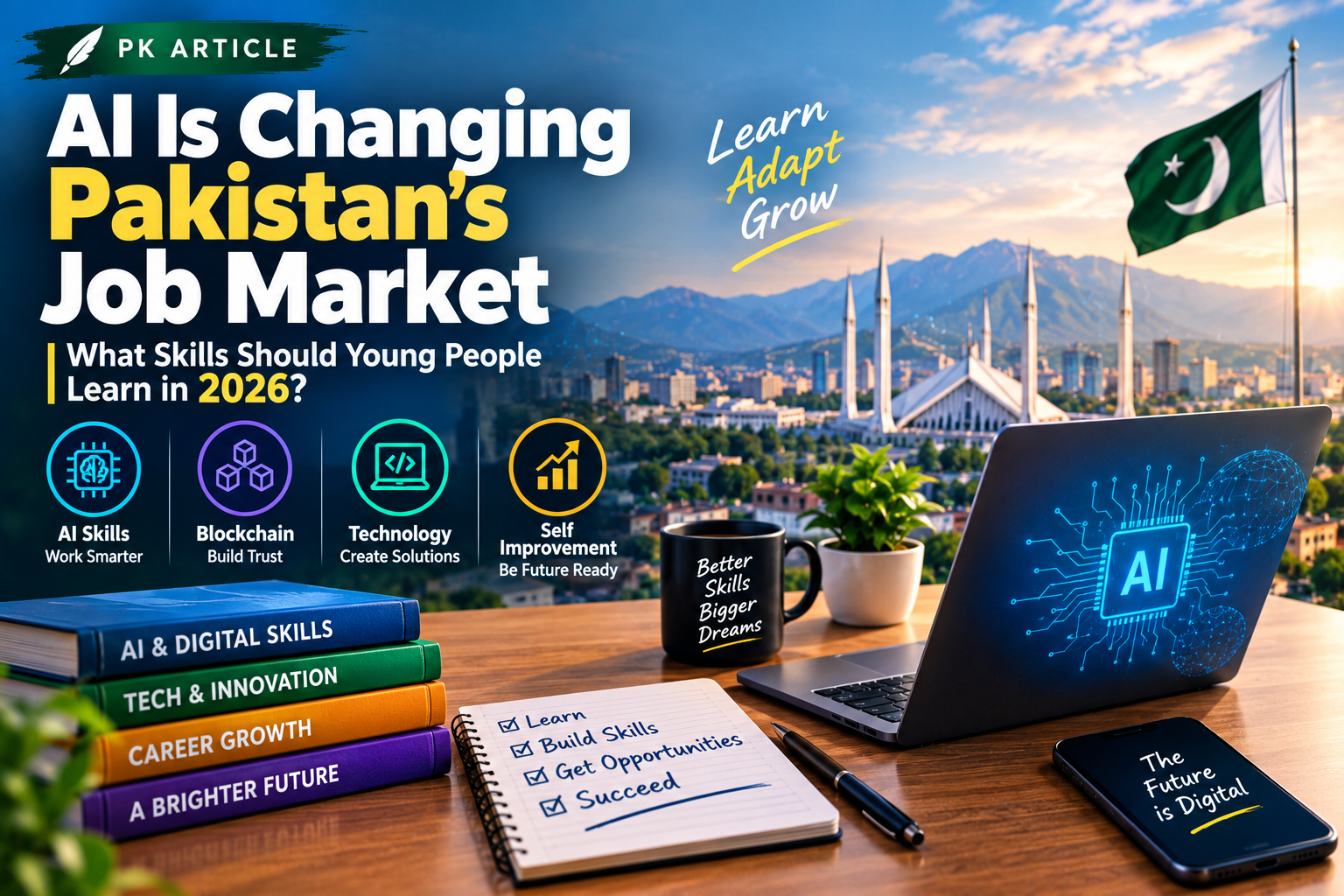
ate two or three small projects that demonstrate your ability. Ask teachers, experienced professionals, or knowledgeable peers for feedback and improve your work.
After that you eveloping your portfolio and explore internship , entry-level opportunities, or suitable freelance work. Progress will vary and three months should be treated as a starting period rather than a promise of employment.
Most importantly, avoid spending money on courses that promise guaranteed income or instant success. Real competence develops through practice, feedback, and persistence.
Conclusion The Future Belongs to Those Who Keep Learning
Artificial intelligence is changing how work is performed but its effects will not be identical across every profession or country. Some tasks will become valuable others will evolve, and new opportunities will emerge.
For Pakistan's young generation, the most practical response is to combine AI literacy with technical competence communication critical thinking and a valuable professional skill.
The objective should not be to compete with machines at every task. It should be to develop the judgment creativityand expertise needed to use technology responsibly and productively.
Pakistan's young population could become a significant advantage in the digital economy, but that potential will require more than enthusiasm. It will require accessible education practical trainin reliable infrastructure and sustained effort from individuals and institutions alike.
AI may change the tools people use to work. The ability to learn adapt and solve meaningful problems will remain central to building a successful career.
My Personal Opinion
my opinion to every one if you want success in this era learn critical thinking because if you develop this then you learn any thing smartly then others. seriously who develop critical thinking then he she will definitely succeed in future.









Comments 0
Sign in to join the conversation.
No comments yet. Be the first to say something.