

Table of Contents
-
Introduction
-
Personalized Learning with AI
-
AI-Powered Assessment and Grading
-
Virtual Classrooms and Intelligent Tutoring Systems
-
Data-Driven Insights for Educators
-
The Future of AI in Educatio
1. Introduction
Artificial Intelligence (AI) is no longer a futuristic concept — it’s here, and it’s reshaping industries across the globe. In education, AI is revolutionizing how students learn, how teachers teach, and how institutions operate. From smart algorithms that adapt to a student’s pace to virtual tutors available 24/7, AI is opening doors to a more efficient, personalized, and accessible learning experience.

2. Personalized Learning with AI
One of AI’s most significant contributions to education is personalized learning. Traditional classrooms often struggle to cater to every student’s unique learning style and pace. AI-powered platforms analyze student performance data, identifying strengths and weaknesses. This allows for custom-tailored lessons, quizzes, and learning paths.
For example, an AI platform might recognize that a student excels in reading comprehension but struggles with math. It can then recommend specific practice problems and resources, ensuring the student receives targeted help without falling behind in other subjects.
3. AI-Powered Assessment and Grading
Grading assignments can be a time-consuming task for educators. AI simplifies this by automating the grading process for multiple-choice tests, essays, and even coding assignments. This not only saves time but also reduces human error and bias.
Advanced AI tools can evaluate essays by analyzing grammar, coherence, and argument strength. They also provide constructive feedback, helping students improve their work before final submission.
4. Virtual Classrooms and Intelligent Tutoring Systems
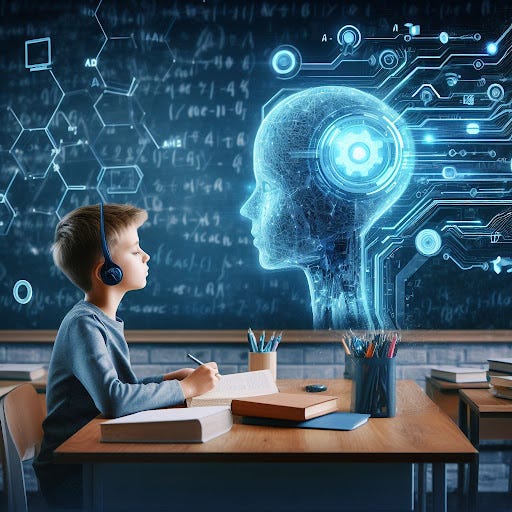
AI has made virtual classrooms more interactive and efficient. Intelligent Tutoring Systems (ITS) can guide students through lessons, answer questions in real-time, and adapt the difficulty of tasks based on performance.
These AI tutors are especially beneficial for remote learning, offering students constant access to educational support — even outside school hours. This accessibility helps bridge the gap for learners in remote or underprivileged areas.

5. Data-Driven Insights for Educators
AI’s ability to process large amounts of data allows educators to gain deeper insights into student performance. Teachers can quickly identify patterns, such as declining grades or low participation, and intervene before problems escalate.
Predictive analytics can forecast which students are at risk of dropping out, enabling timely academic and emotional support. This proactive approach ensures that students receive the help they need when they need it most.

6. The Future of AI in Education
As AI technology advances, we can expect even more sophisticated educational tools. AI could soon create fully immersive, gamified learning environments or develop real-time translation systems for global classrooms.
However, while AI offers immense benefits, it’s important to balance automation with human interaction. Teachers provide emotional intelligence, mentorship, and moral guidance — qualities AI cannot replicate. The future lies in AI supporting educators, not replacing them.


You must be logged in to post a comment.