

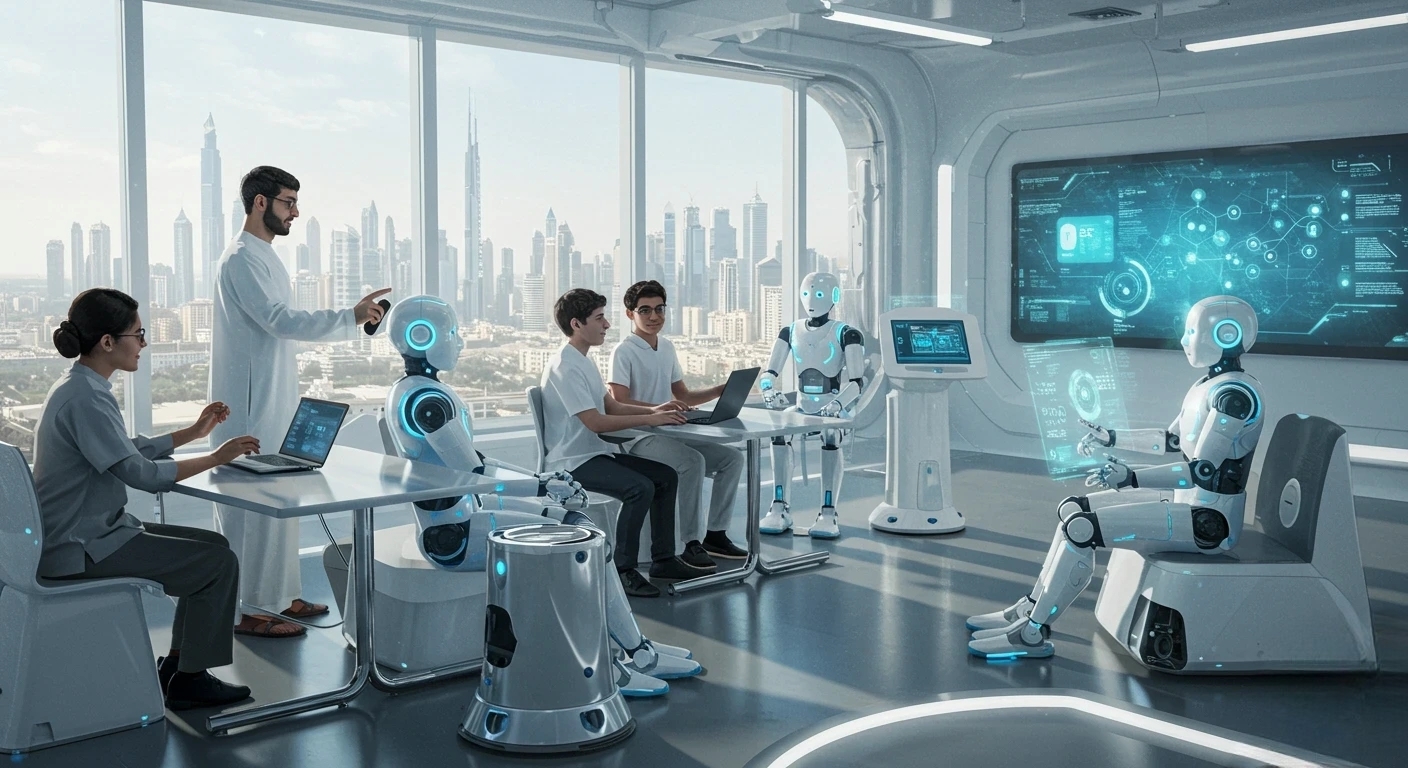
The Rise of AI in Pakistan: How Automation is Changing Jobs
Introduction: Understanding AI and Its Global Growth
Artificial Intelligence (AI) is no longer a futuristic concept. What was once science fiction has become a powerful force driving global transformation. AI technologies such as machine learning, natural language processing, robotics, and automation are reshaping industries, economies, and human lifestyles.
Across the world, businesses are integrating AI tools to increase productivity, reduce costs, and improve decision‑making. Pakistan is no exception. As digital adoption accelerates, AI is emerging as one of the key pillars of Pakistan’s economic evolution — influencing industries from healthcare to finance, agriculture to education.
This article explores how AI is transforming the job landscape in Pakistan, the sectors experiencing rapid automation, the challenges and opportunities it presents, and the steps Pakistan must take to benefit from this revolution.
H2: What is AI? A Simple Explanation
Artificial Intelligence refers to computer systems that mimic human intelligence to perform tasks. These tasks include:
Learning from data
Recognizing patterns
Making decisions
Predicting outcomes
AI can be categorized into:
H3: Narrow AI (Weak AI)
This type of AI performs specific tasks, such as:
Language translation
Image recognition
Virtual personal assistants (e.g., Siri and Google Assistant)
It cannot perform any function beyond its programming.
H3: General AI (Strong AI)
A theoretical form of AI that can perform any intellectual task a human can. This level remains hypothetical and has not been achieved.
H2: How AI Is Entering Pakistan’s Economy
Pakistan’s digital transformation accelerated after increased internet penetration, mobile connectivity, and youth engagement. Today:
Over 80 million internet users access platforms like WhatsApp, Facebook, and mobile banking.
Tech startups in Karachi, Lahore, and Islamabad are investing in AI solutions.
Government policies increasingly acknowledge the role of AI in future economic growth. AI is not just a tool for tech companies — it’s being adopted across sectors including:
Healthcare
Education
Agriculture
Retail
Banking & Finance
AI adoption in Pakistan is driven by two major forces:
Business competitiveness
Demand for improved services
H2: AI’s Impact on the Job Market in Pakistan
AI and automation are fundamentally reshaping the labor market. While they bring efficiency gains, they also disrupt traditional job roles.
There are three categories of job impact:
H3: Jobs at Risk of Automation
Positions that require repetitive tasks are most vulnerable. Examples:
Data entry operators
Manual bookkeeping
Telemarketing
Basic assembly line workers
These jobs often involve:
Routine decision‑making
Low complexity tasks
Predictable input/output workflows
AI systems can perform these with higher speed and fewer errors.
H3: Jobs Being Transformed
Many roles are not disappearing — but they are evolving. Workers in these categories must upgrade their skills.
Examples include:
Customer support → AI‑assisted service
Medical diagnostics → AI‑supported imaging tools
Marketing → AI insights for consumer behavior
AI tools become partners rather than replacements.
H3: New Job Creation through AI
Contrary to popular belief, AI also creates jobs. These tend to be more skilled and technology‑oriented. Examples include:
Data scientists
AI developers
Machine learning engineers
AI ethics consultants
Robotics technicians
These roles require specialized training but offer lucrative opportunities.
H2: Major Sectors Affected by Automation in Pakistan
Automation’s impact varies by industry. Below are the sectors seeing the most significant changes.
H3: 1. Manufacturing
Pakistan’s manufacturing sector employs millions. Traditional factories relied heavily on manual labor.
With automation, we now see:
Robotic arms for assembly
AI‑powered quality control systems
Predictive maintenance using sensors
Benefits:
Improved production speed
Fewer defects
Higher safety standards
Challenges:
Displacement of unskilled factory workers
Need for reskilling programs
H3: 2. Agriculture
Agriculture remains a cornerstone of Pakistan’s economy. AI is now helping farmers optimize production.
AI tools used include:
Drone monitoring of crops
Soil quality sensors
Forecasting weather patterns
Automated irrigation systems
Impact on Jobs:
Traditional labor tasks become fewer
Increased demand for agritech specialists
Farmers who adapt to AI technology can boost productivity and market access, but those who rely on traditional methods risk being left behind.
H3: 3. Healthcare
Healthcare professionals are benefiting from AI, especially in diagnostics and patient management.
AI applications in healthcare include:
Disease prediction using data analytics
AI interpretation of X‑rays and MRIs
Online diagnosis chatbots
These tools assist doctors and reduce burdens on human resources.
Job Effects:
Routine diagnostic jobs might decrease
Demand rises for AI‑literate medical staff
H3: 4. Banking & Financial Services
AI in finance focuses on:
Fraud detection
Automated loan approvals
Chatbots for customer service
Risk assessment using algorithms
AI has streamlined processes that previously took days.
Advantages:
Faster transaction processing
Enhanced customer experience
Reduced operational costs
Workforce Changes:
Reduced demand for clerical staff
Growth in fintech roles
H3: 5. Education
AI is revolutionizing how students learn:
Personalized learning paths
Automated grading
Virtual tutors
Language learning tools
Teachers become facilitators, focusing more on mentorship than routine tasks.
H2: The Upside: Benefits of AI Adoption in Pakistan
AI brings significant benefits to Pakistan’s economy and workforce.
H3: 1. Increased Productivity
AI can analyze vast amounts of data quickly. This leads to:
Faster decision‑making
Better resource allocation
Enhanced operational performance
H3: 2. Economic Growth
AI adoption attracts:
Foreign investment
New technology startups
Competitive global positioning
AI also boosts GDP by unlocking new revenue streams.
H3: 3. Better Quality of Services
From healthcare to banking, AI improves:
Accuracy
Speed
Customer satisfaction
H3: 4. New Business Opportunities
AI opens doors for:
Tech startups
Freelance AI consulting
Software development outsourcing
With Pakistan’s young population, the potential workforce is a great asset.
H2: The Challenges Pakistan Faces in the AI Era
Despite its benefits, AI adoption poses challenges in the Pakistani context.
H3: 1. Skill Gap Among Workers
Many workers lack skills required for AI‑related roles. The consequences include:
Job displacement without viable alternatives
Workforce inequality
Wage polarization
Upskilling is critical.
H3: 2. Limited Digital Infrastructure
Pakistan still faces:
Unstable internet access in rural areas
Low broadband speeds
Unequal access to tech resources
These factors slow down nationwide AI adoption.
H3: 3. Regulatory and Ethical Concerns
AI raises new ethical questions:
Privacy violations
Data security risks
Algorithmic biases
Pakistan needs robust policies to safeguard citizens.
H3: 4. Investment Shortfalls
Compared to tech powerhouses, Pakistan’s investment in AI research and development is constrained.
Reduced capital limits:
Innovation
Technology accessibility
Competitive advantage
H2: Government Initiatives and National Policies on AI
To benefit from the AI revolution, Pakistan must act at the policy level.
Key areas of focus:
Digital skills training programs
Incentives for AI startups
AI research institutions
Public‑private collaboration
Recent policy drafts indicate Pakistan’s intention to:
Support AI education
Build digital infrastructure
Encourage foreign partnerships
However, execution remains a major challenge.
H2: What Pakistani Workers Can Do to Stay Ahead
Individuals, institutions, and organizations have roles to play in this transition.
H3: 1. Embrace Lifelong Learning
Continuous upskilling is vital. Workers should:
Take online courses in AI and data science
Attend workshops and bootcamps
Explore certifications from global platforms
H3: 2. Focus on AI‑Resistant Skills
Some skills are less susceptible to automation:
Creativity
Critical thinking
Emotional intelligence
Complex problem solving
Jobs that require human judgment remain in demand.
H3: 3. Seek Hybrid Roles
Combining domain expertise with AI knowledge boosts employability. For example:
AI assisted doctors
Educators using AI tools
Farmers leveraging smart agriculture apps
Hybrid roles balance technology and human skills.
H3: 4. Start Freelancing or Entrepreneurship
Platforms like Upwork and Fiverr allow Pakistanis to offer:
AI training services
Data analysis
Chatbot development
Robotics assistance
Entrepreneurship reduces dependency on traditional jobs.
H2: How Businesses in Pakistan Are Adopting AI
Private sector adoption of AI is growing rapidly.
Common uses include:
Chatbots for customer support
Automated inventory management
AI‑powered analytics for marketing
Fraud detection in banking
Personalized product recommendations in e‑commerce
H3: Benefits for Pakistani Businesses
Lower operational costs
Faster service delivery
Elevated customer experience
Enhanced business insights
AI has become a competitive advantage for companies that adopt early.
H2: Case Studies: Real‑World AI Transformation in Pakistan
H3: 1. AI in Healthcare Clinics
Some clinics in Pakistan use AI for:
Diagnosing lung diseases
Predicting patient health risks
Minimizing human error
This improves patient outcomes and reduces workload.
H3: 2. AI in Agriculture Startups
Agritech startups are using:
Drones
Sensors
AI crop‑analysis tools
Farmers can predict irrigation needs and market demand more accurately.
H3: 3. AI in Financial Services
Banks use AI to:
Prevent fraud
Manage credit risk
Recommend investment strategies
This has raised trust and reliability in digitized financial systems.
H2: The Future of Work in Pakistan
Automation and AI will continue to evolve Pakistan’s job landscape.
Predictions for the next decade:
Most routine jobs may become automated
Demand for AI skilled professionals will grow
New industries will emerge
Remote and hybrid working models will increase
Pakistan’s young population can be a global asset if equipped with digital skills.
H2: Final Thoughts: AI as an Opportunity, Not Just a Disruption
AI represents a pivotal transformation — not a temporary trend.
While automation threatens certain job categories, it also creates new opportunities for growth, innovation, and economic modernization.
Pakistan’s success with AI will depend on:
Policies that support innovation
Educational reforms
Industry‑academia collaboration
Public awareness
The future of AI in Pakistan promises both challenges and remarkable opportunities.
H2: Frequently Asked Questions (FAQs)
H3: Is AI going to replace jobs in Pakistan?
AI will automate many jobs, especially routine tasks. However, it will also create new roles that require human judgment, creativity, and technical skills.
H3: What skills are most valuable in the age of AI?
Skills such as data analysis, programming, critical thinking, creativity, and AI literacy are highly valuable in the job market.
H3: How can students prepare for an AI‑driven future?
Students should focus on STEM education, learn coding or data science, take online AI courses, and participate in tech communities.
Conclusion
The rise of AI in Pakistan is not a distant phenomenon — it is happening now. Automation is transforming industries, reshaping jobs, and creating new opportunities.
With the right approach, Pakistan can harness AI to:
Improve economic growth
Create new jobs
Bridge skill gaps
Compete globally
The journey into an AI‑driven future will require collaboration, innovation, and proactive learning — for businesses, policymakers, and individuals alike.
.

You must be logged in to post a comment.