

Synergy of Blockchain and AI: Revolutionizing the Future of Technology
In the ever-evolving world of technology, two innovations stand out for their transformative potential: Blockchain and Artificial Intelligence (AI). These technologies, often discussed separately, are increasingly being recognized for the powerful synergy they can create when combined. Together, Blockchain and AI can revolutionize industries, enhancing data security, streamlining processes, improving efficiency, and fostering trust across various domains. In this article, we will explore the role of both technologies, the benefits they offer, and how their integration is shaping the future.
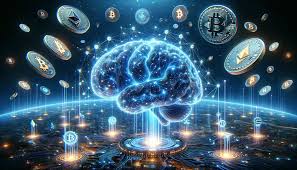
Understanding Blockchain and AI
Before diving into how Blockchain and AI complement each other, it’s important to understand each technology individually.
-
Blockchain: At its core, Blockchain is a distributed ledger technology (DLT) that securely stores data across a network of computers. Each record, or "block," is linked to the previous one, forming a chain. Blockchain operates on a decentralized basis, meaning no single entity controls the system. This decentralization ensures transparency, immutability, and security. Blockchain is most commonly associated with cryptocurrencies like Bitcoin, but its applications extend far beyond digital currencies, including supply chain management, voting systems, and healthcare data management.
-
Artificial Intelligence (AI): AI refers to the simulation of human intelligence in machines programmed to think, learn, and problem-solve. Machine learning (ML) is a subset of AI that enables machines to learn from data and improve over time without explicit programming. AI technologies can process vast amounts of data, recognize patterns, make predictions, and automate complex tasks. From natural language processing (NLP) and computer vision to autonomous systems and chatbots, AI is driving innovation across nearly every industry.
-
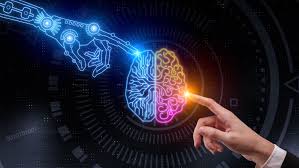
The Intersection of Blockchain and AI
While Blockchain and AI are powerful on their own, their integration offers a unique set of opportunities. Let's explore how these two technologies complement each other.
1. Enhanced Data Security and Privacy
AI systems rely on vast amounts of data to make predictions and learn patterns. This data often includes sensitive information, raising concerns about privacy and security. Blockchain can address these concerns by providing a decentralized and tamper-proof ledger for storing and sharing data.

By using Blockchain to secure AI training datasets, organizations can ensure that the data is immutable, transparent, and auditable. Furthermore, Blockchain can give users control over their data, enabling them to grant or revoke access to AI models, thus improving privacy.
For example, in healthcare, patient data can be securely stored on a Blockchain, and AI models can access it to predict diseases or recommend treatments without compromising the security of sensitive information. Blockchain ensures that only authorized parties can access this data, maintaining patient confidentiality while enabling AI-driven insights.
2. Improved Transparency and Trust
Blockchain is known for its transparency, as all transactions and data exchanges are recorded on an immutable ledger. AI, particularly in applications like financial services, requires a high level of transparency to build trust with users and regulatory bodies.
By combining Blockchain with AI, organizations can ensure that every action taken by an AI system is traceable. For instance, in financial services, Blockchain can record every step of an AI algorithm’s decision-making process, enabling auditors and regulators to verify that the AI system is operating fairly and within established guidelines. This is particularly important in areas like credit scoring, algorithmic trading, and loan approvals, where transparency is key to preventing bias and ensuring compliance with regulations.
3. Data Integrity and Authenticity
One of the key challenges in AI is ensuring the integrity and authenticity of data. AI systems depend on large volumes of data to train algorithms and make accurate predictions. However, this data can be susceptible to manipulation, errors, or tampering, which can compromise the quality of AI predictions.
Blockchain addresses this issue by providing a reliable and immutable record of data. With Blockchain, every piece of data used in AI models can be timestamped and verified, ensuring that it has not been altered. This is particularly important in industries like supply chain management, where data integrity is crucial to trace the origin of goods and ensure authenticity.
For example, Blockchain can be used to track the journey of goods from manufacturer to retailer, while AI can analyze the data to optimize inventory management or detect counterfeit products. The combination of both technologies ensures that the data being analyzed is accurate and trustworthy.
4. Decentralized AI Models
Traditionally, AI models are centralized, meaning they are hosted on a single server or a cluster of servers controlled by a single entity. This centralization poses several risks, including data breaches, single points of failure, and limited accessibility.
Blockchain can enable the decentralization of AI models. By leveraging Blockchain, AI models can be distributed across a network of nodes, where each node holds a copy of the model and contributes to the decision-making process. This decentralized approach not only enhances security but also allows for more equitable access to AI technology, as participants in the network can collaborate and contribute to training the AI models.
One example of this decentralized approach is federated learning, where AI models are trained on distributed devices (such as smartphones or IoT devices) without the need to share raw data. Blockchain can be used to securely aggregate model updates from different devices, ensuring that the learning process is transparent and verifiable.
5. Automation of Smart Contracts and Decision-Making
Blockchain’s smart contracts are self-executing contracts with the terms of the agreement directly written into code. These contracts automatically execute when predefined conditions are met. AI can enhance the functionality of smart contracts by incorporating decision-making capabilities.
For example, an AI algorithm could be used to evaluate a set of conditions in a smart contract and determine whether they have been met. In the case of insurance claims, for instance, AI could assess whether a claim is valid based on historical data and automatically trigger a payment via a smart contract if the claim is legitimate.
This combination of Blockchain and AI can automate complex business processes, reduce human intervention, and increase the efficiency of operations. In industries like insurance, real estate, and logistics, the use of smart contracts and AI can significantly reduce costs and administrative overhead.
6. Tokenization and Incentivization
Blockchain’s ability to create digital tokens offers exciting possibilities for incentivizing AI-driven actions. For example, organizations can use blockchain-based tokens to reward participants who contribute valuable data or computational resources to train AI models.
In a decentralized AI network, participants could earn tokens for providing training data, validating AI model predictions, or sharing computational power. This incentivization model can help foster collaboration and innovation, while also ensuring that data and resources are allocated efficiently.
For instance, a Blockchain-based platform could allow individuals to earn tokens by contributing data to train an AI model for weather prediction. These tokens could be exchanged for goods, services, or even access to more advanced AI models.
The Future of Blockchain and AI Integration
The potential for Blockchain and AI to reshape industries is vast, and the integration of these technologies is only in its early stages. As research and development continue, we can expect even more innovative use cases to emerge, such as in autonomous systems, smart cities, and IoT networks.
However, challenges remain. The scalability of Blockchain, the ethical implications of AI decision-making, and the need for regulatory frameworks are all hurdles that must be addressed. Nevertheless, the promise of a decentralized, transparent, and secure future driven by Blockchain and AI is a compelling vision that many are working towards.
Conclusion
The synergy between Blockchain and AI holds the potential to revolutionize a wide range of industries, from healthcare and finance to supply chain management and beyond. By enhancing data security, improving transparency, and enabling decentralized AI models, these technologies are poised to create new opportunities for businesses and individuals alike. As we move forward, the collaboration between Blockchain and AI will likely define the next wave of technological innovation, making processes more efficient, secure, and trustworthy.
As these technologies continue to evolve, we can expect to see more collaborative efforts between AI and Blockchain experts, regulators, and businesses to unlock their full potential. Ultimately, the integration of Blockchain and AI will not only enhance the way we interact with technology but also change the fundamental structure of how we approach problem-solving and decision-making in the digital age.

You must be logged in to post a comment.