

The Silent Spread: How Breast Cancer Travels Through Blood and Lymph Before You Notice a Lump
Introduction
Breast cancer is often thought of as a disease that begins with a noticeable lump. Many people believe that if they regularly check their breasts and don’t feel anything unusual, they are safe. Unfortunately, the truth can be far more complex—and sometimes far more dangerous.
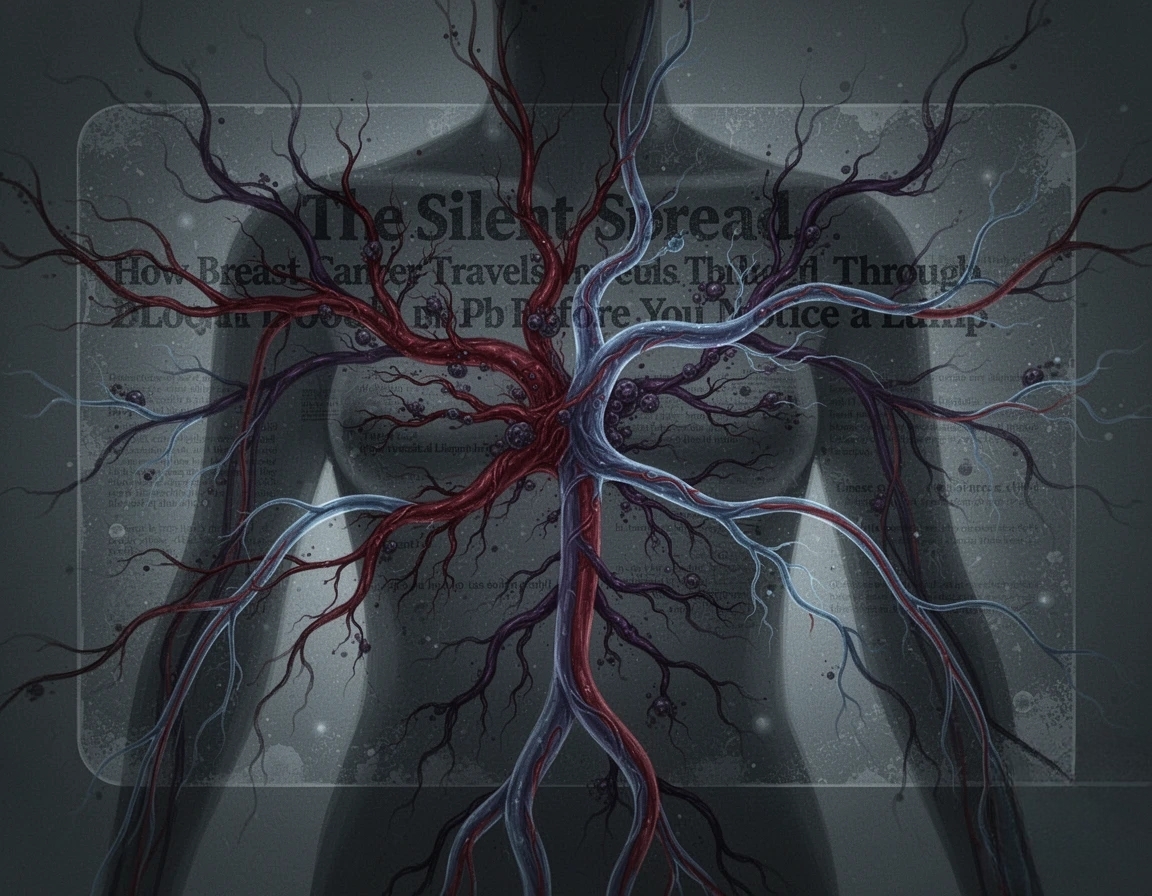
In many cases, breast cancer can start spreading before a lump becomes obvious. Cancer cells can quietly move through the body using natural pathways such as the bloodstream and lymphatic system, allowing the disease to travel beyond the breast tissue without early symptoms.
This silent spread is one of the most alarming aspects of breast cancer. By the time physical signs appear, cancer cells may have already reached nearby lymph nodes or other parts of the body.
Understanding how this hidden process works is crucial. Early awareness can help people recognize subtle warning signs, seek medical advice sooner, and improve survival rates.
In this article, we’ll explore:
How breast cancer develops in the body
The role of blood vessels and lymph nodes in cancer spread
Early signs that people often ignore
Why breast cancer sometimes spreads before a lump forms
Practical steps to detect the disease earlier
Understanding Breast Cancer
What Is Breast Cancer?
Breast cancer occurs when abnormal cells in the breast begin to grow uncontrollably. These cells form a mass known as a tumor, which may be benign (non-cancerous) or malignant (cancerous).
Malignant tumors have the ability to:
Invade nearby tissue
Enter the bloodstream
Spread to other organs
This spreading process is known as metastasis, and it is the main reason cancer can become life-threatening.
Breast cancer typically starts in one of the following areas:
1. Milk Ducts
Most breast cancers begin in the ducts that carry milk to the nipple. This type is known as ductal carcinoma.
2. Lobules
Some cancers begin in the milk-producing glands, called lobules.
3. Connective Tissue
Less commonly, cancer can develop in the supportive tissues surrounding ducts and lobules.
The Hidden Pathways: Blood and Lymph Systems
Breast cancer does not always remain in one place. The body contains natural transport systems that cancer cells can exploit.
Two of the most important pathways are:
The bloodstream
The lymphatic system
The Bloodstream: A Highway for Cancer Cells
Blood vessels run throughout the breast tissue, delivering oxygen and nutrients to cells.
When cancer cells break away from a tumor, they can:
Enter nearby blood vessels
Travel through the circulatory system
Reach distant organs
Common organs where breast cancer spreads include:
Bones
Liver
Lungs
Brain
Once cancer cells settle in another organ, they may begin forming new tumors.
The Lymphatic System: Cancer’s Silent Route
The lymphatic system is another network that carries fluid, immune cells, and waste throughout the body.
It includes:
Lymph vessels
Lymph nodes
Lymph fluid
Lymph nodes act like filters that trap harmful substances. However, cancer cells can also become trapped there and begin growing.
The lymph nodes most commonly affected in breast cancer are located:
Under the arm (axillary lymph nodes)
Near the collarbone
Around the breastbone
Because these nodes are connected through lymph vessels, cancer can travel from one node to another.
Why Breast Cancer Can Spread Before a Lump Appears
Many people assume a lump is the first warning sign. However, cancer may spread long before it becomes noticeable.
Several factors make this possible.
Tumors Can Be Extremely Small
In early stages, tumors may be:
Smaller than a pea
Hidden deep within breast tissue
Difficult to feel during self-exams
Even tiny tumors can release cancer cells into nearby blood or lymph vessels.
Dense Breast Tissue
People with dense breast tissue may have tumors that are harder to detect.
Dense tissue can:
Mask lumps
Make detection through touch difficult
Hide tumors even on some imaging scans
Cancer Cells Can Break Away Early
In aggressive forms of breast cancer, cells may detach from the tumor very early in its development.
These cells can migrate before the tumor becomes large enough to feel.
The Silent Spread Process
Understanding how cancer spreads helps explain why early detection is so important.
Step 1: Tumor Formation
Cancer begins when DNA mutations cause breast cells to grow uncontrollably.
These cells multiply rapidly and form a tumor.
Step 2: Invasion of Nearby Tissue
As the tumor grows, cancer cells can invade surrounding breast tissue.
This is called local invasion.
Step 3: Entry into Blood or Lymph Vessels
Some cancer cells manage to break through vessel walls and enter:
Blood vessels
Lymphatic vessels
Step 4: Travel Through the Body
Once inside these systems, cancer cells move through circulation.
They may travel to:
Lymph nodes
Distant organs
Step 5: Formation of Secondary Tumors
When cancer cells settle in another location, they may begin forming new tumors.
This stage is known as metastatic cancer.
Early Warning Signs People Often Ignore
Many subtle symptoms can appear before a noticeable lump forms.
Unfortunately, these signs are often overlooked.
Changes in Breast Shape
Unusual changes may include:
One breast becoming larger
Visible swelling
Uneven appearance
Skin Changes
The skin of the breast may show signs such as:
Dimpling
Redness
Thickened texture
Some people describe it as looking like orange peel skin.
Nipple Changes
Nipple-related symptoms may include:
Sudden inversion
Scaling or dryness
Discharge
Bloody discharge is particularly concerning.
Persistent Breast Pain
While breast pain is common and often harmless, persistent pain in one specific area should be evaluated.
Swollen Lymph Nodes
Enlarged lymph nodes can appear:
Under the arm
Near the collarbone
These nodes may feel like small lumps.
Risk Factors That Increase the Chance of Breast Cancer
Certain factors increase the likelihood of developing breast cancer.
Age
The risk increases as people get older, especially after age 40.
Family History
Having close relatives with breast cancer raises the risk significantly.
Genetic mutations such as BRCA1 and BRCA2 can increase susceptibility.
Hormonal Factors
Hormones influence breast cell growth.
Risk increases with:
Early menstruation
Late menopause
Hormone replacement therapy
Lifestyle Factors
Some lifestyle habits can increase risk, including:
Lack of physical activity
Excess body weight
Alcohol consumption
Why Early Detection Saves Lives
Early detection dramatically improves treatment success.
When breast cancer is found early:
Treatment is less aggressive
Survival rates increase significantly
Spread to other organs can be prevented
In many cases, early-stage breast cancer is highly treatable.
Screening Methods That Detect Cancer Early
Several medical tests help detect breast cancer before symptoms appear.
Mammography
A mammogram is an X-ray of the breast that can detect tumors too small to feel.
Doctors recommend regular mammograms starting around age 40, depending on individual risk.
Ultrasound
Ultrasound uses sound waves to examine breast tissue.
It is often used to investigate suspicious areas found on mammograms.
MRI Scans
MRI provides detailed images and is especially useful for people with high genetic risk.
The Importance of Breast Self-Exams
Self-exams help people become familiar with their normal breast structure.
This makes it easier to notice unusual changes.
How to Perform a Self-Exam
Stand in front of a mirror and look for visible changes.
Raise your arms and check for shape differences.
Use your fingers to gently feel the breast tissue.
Check the underarm area for lumps.
Self-exams should be done once a month.
How Breast Cancer Is Treated
Treatment depends on:
Cancer stage
Tumor type
Patient health
Common treatment methods include:
Surgery
Doctors may remove:
The tumor
Part of the breast
The entire breast in severe cases
Radiation Therapy
Radiation uses high-energy beams to destroy cancer cells.
Chemotherapy
Chemotherapy drugs travel through the bloodstream to kill cancer cells.
Targeted Therapy
Newer medications attack specific molecules that help cancer grow.
Reducing Your Risk of Breast Cancer
While no method guarantees prevention, certain habits can lower risk.
Maintain a Healthy Weight
Excess body fat can increase hormone levels linked to cancer.
Stay Physically Active
Exercise helps regulate hormones and improve immune function.
Limit Alcohol
Alcohol consumption has been linked to increased breast cancer risk.
Eat a Balanced Diet
A diet rich in fruits, vegetables, and whole grains supports overall health.
When to See a Doctor
Seek medical advice immediately if you notice:
A new lump in the breast or armpit
Sudden breast shape changes
Nipple discharge
Persistent breast pain
Skin changes on the breast
Early evaluation can make a critical difference.
Final Thoughts
Breast cancer is not always obvious in its early stages. The disease can silently travel through blood vessels and lymphatic pathways, spreading before a lump becomes noticeable.
This hidden spread is why awareness, screening, and early detection are so important.
Paying attention to subtle body changes, performing regular self-exams, and scheduling routine screenings can dramatically increase the chances of catching breast cancer early.
The sooner breast cancer is detected, the greater the opportunity for successful treatment—and the better the chances of saving lives.








Comments 0
Sign in to join the conversation.
No comments yet. Be the first to say something.