

You’re Not Fully Human – The Shocking Truth
Introduction
What if everything you believe about being “human” is incomplete?
It sounds dramatic—even unsettling—but science suggests that you are not entirely human in the way you might think. Your body is not just made of human cells, your thoughts are not entirely under your control, and your biology is deeply intertwined with invisible life forms and ancient evolutionary systems.
In fact, modern research in biology, neuroscience, and genetics reveals a fascinating truth: you are a complex ecosystem, a hybrid of human and non-human components working together.
This article explores the shocking, science-backed reality behind what it truly means to be human. From microscopic organisms living inside you to ancient brain systems guiding your behavior, you’ll discover why you’re not “fully human”—and why that’s actually a good thing.
What Does It Mean to Be Human?
The Traditional Definition
Most people define being human in simple terms:
Having human DNA
Walking upright
Possessing intelligence and emotions
Being self-aware
But this definition is outdated.
The Scientific Perspective
Modern science paints a very different picture. Being human is not just about your DNA—it’s about:
The trillions of microorganisms living inside you
The evolutionary history embedded in your brain
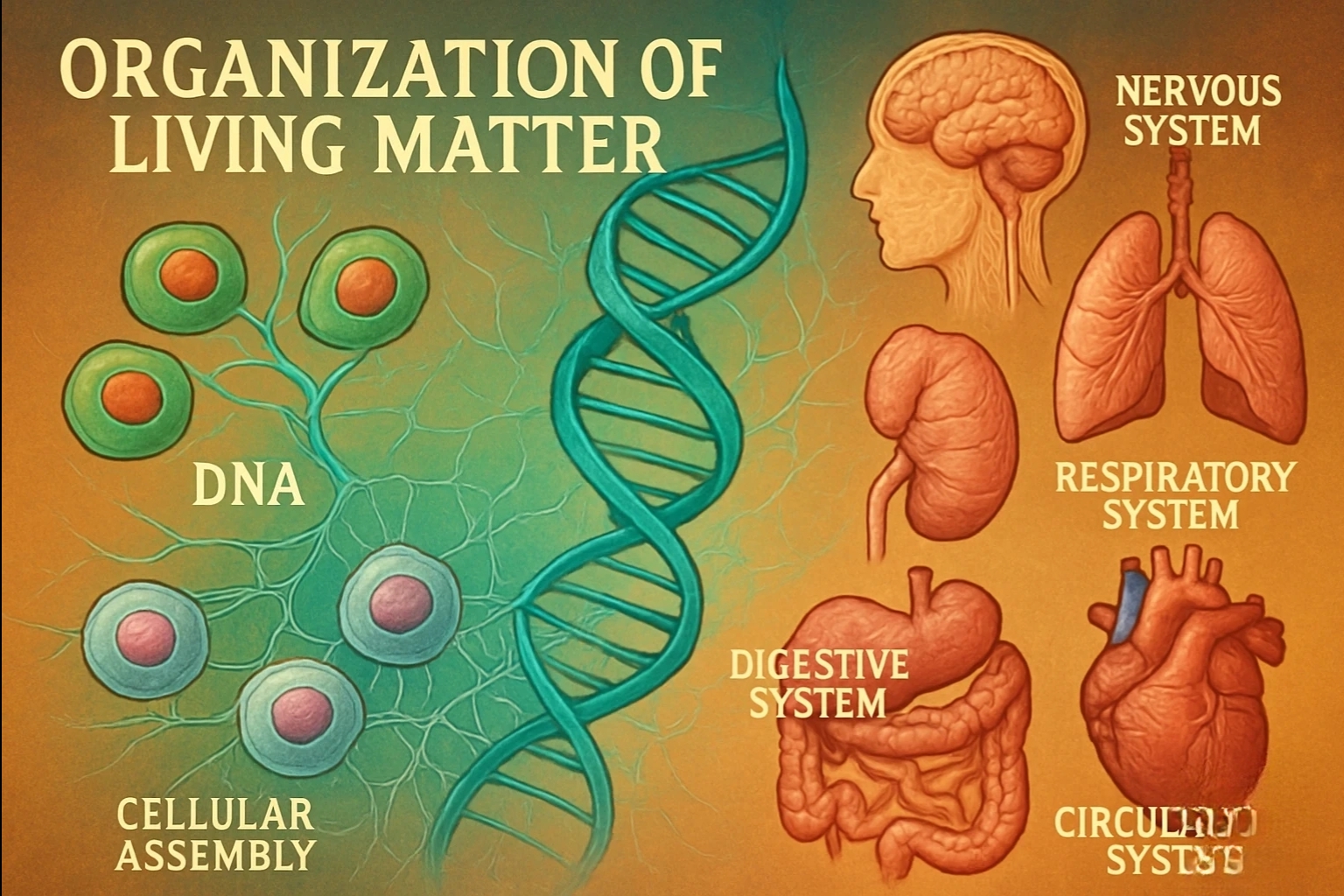
The external influences shaping your thoughts and actions
In short, you are less of an individual and more of a living system.
The Microbial Reality: You Are Mostly Not Human
Your Body Is Full of Microbes
Here’s the shocking fact:
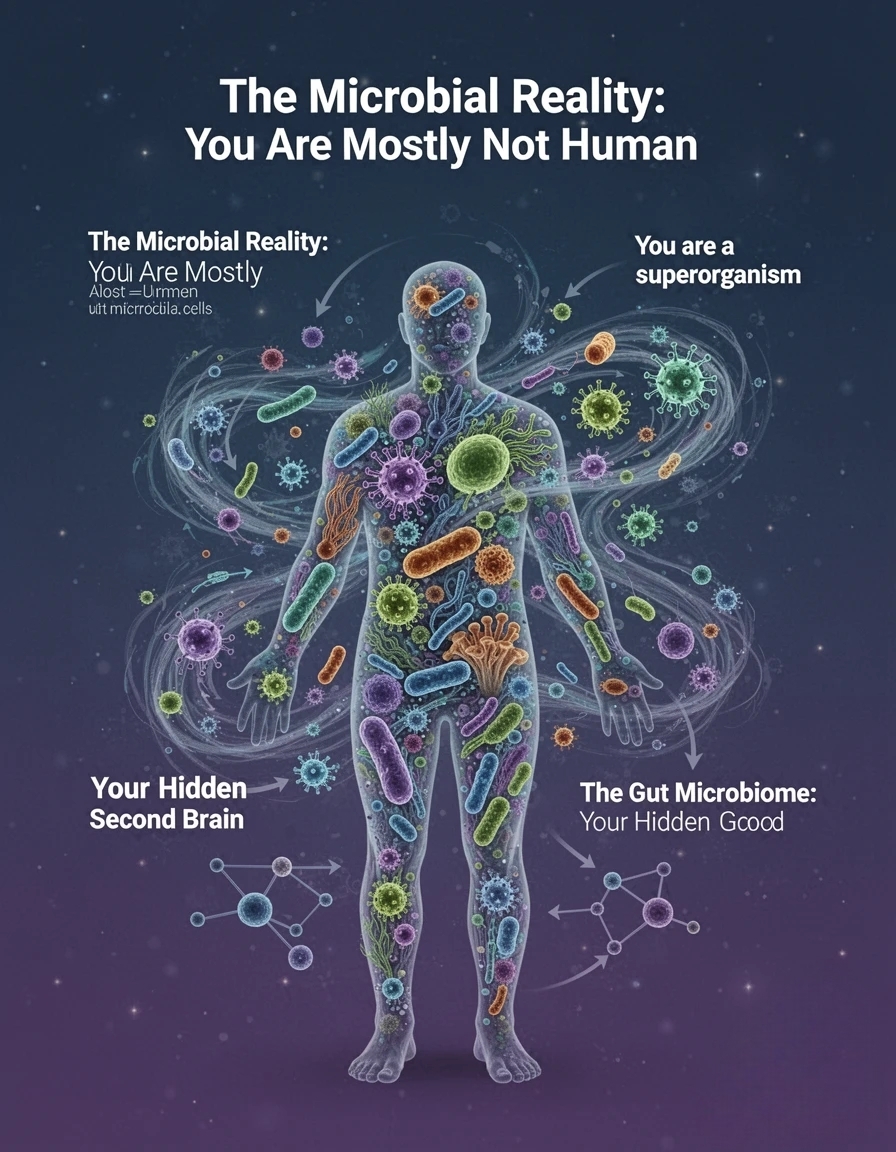
Your body contains trillions of microorganisms
These include bacteria, viruses, fungi, and other microbes
Many of them live in your gut, skin, mouth, and even lungs
Scientists call this collection the microbiome.
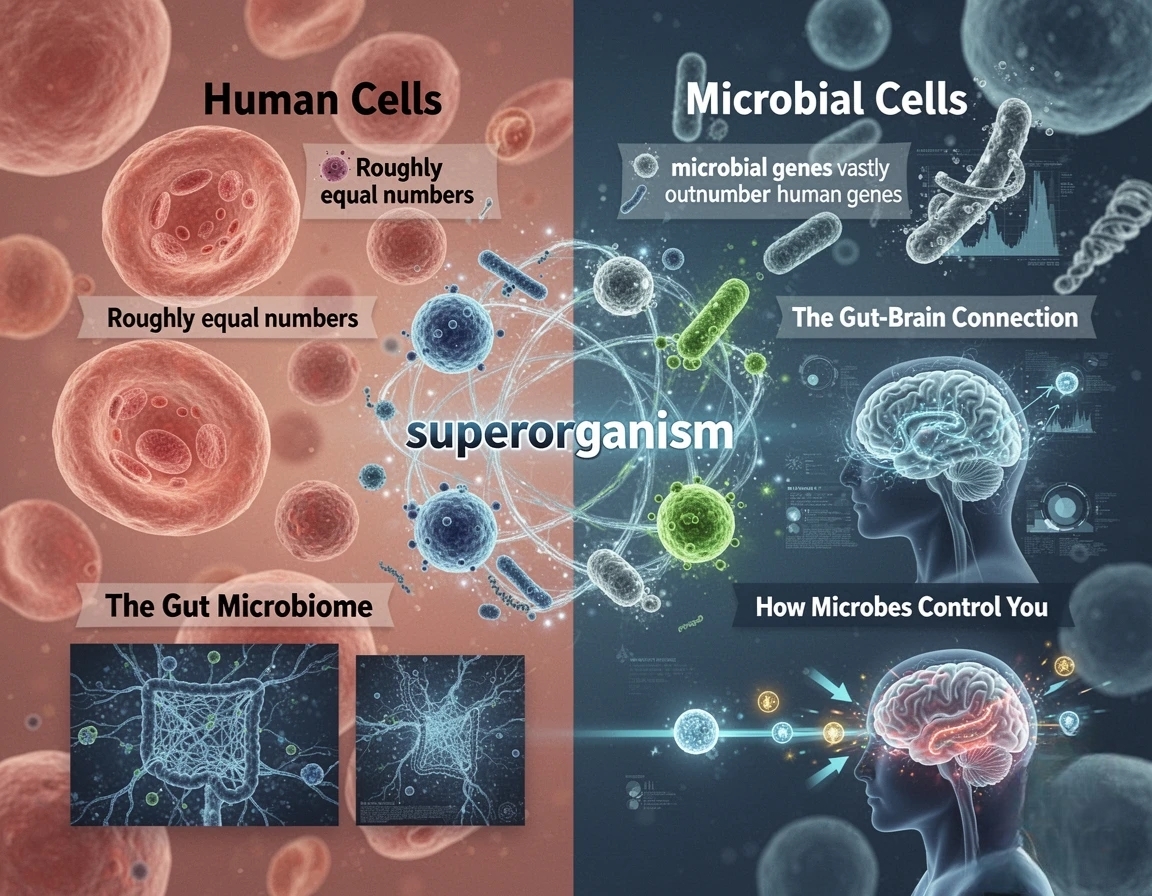
Human Cells vs Microbial Cells
While earlier estimates suggested microbes outnumber human cells 10 to 1, updated research shows:
Roughly equal numbers of human and microbial cells exist in your body
However, microbial genes vastly outnumber human genes
What Does This Mean?
It means:
You are not a single organism
You are a superorganism
Your survival depends on non-human life
The Gut Microbiome: Your Hidden Second Brain
What Is the Gut Microbiome?
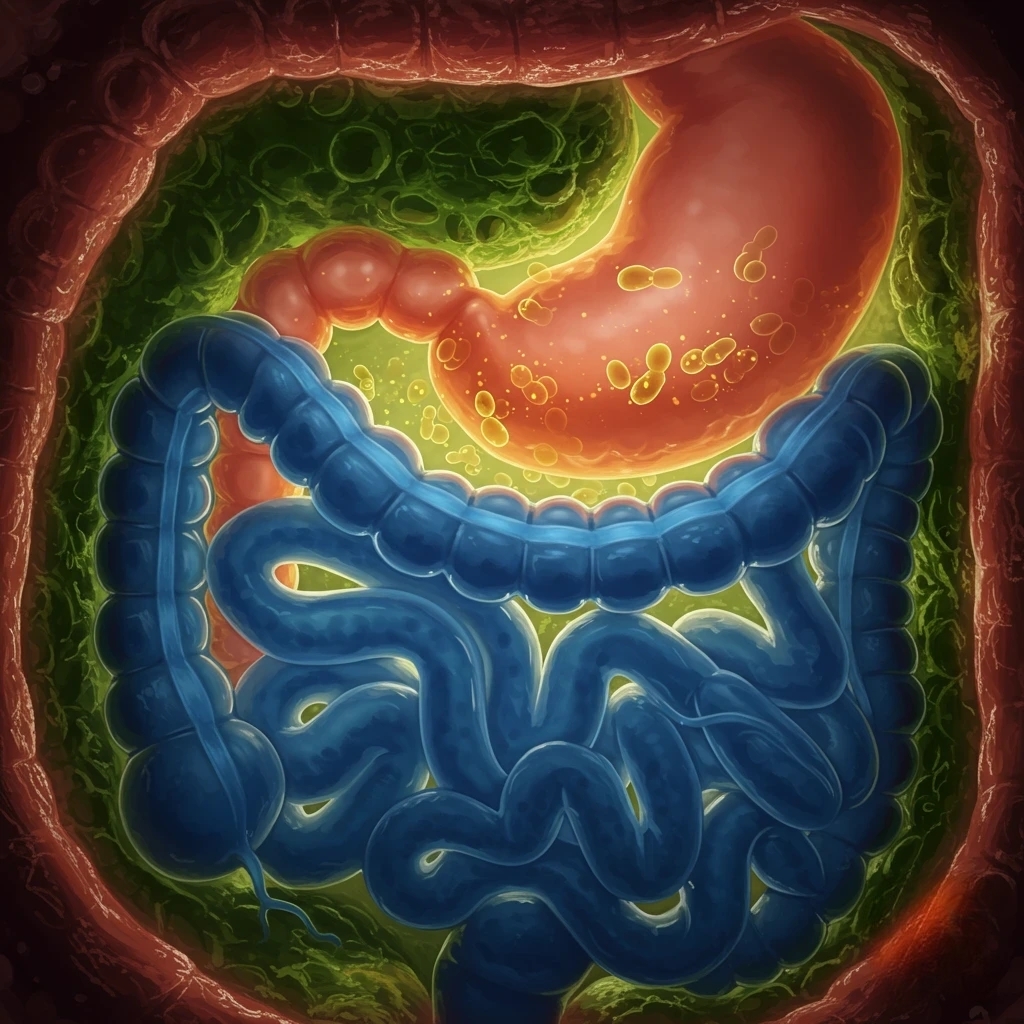
Your gut is home to billions of bacteria that:
Help digest food
Produce vitamins
Support your immune system
But their influence goes far beyond digestion.
The Gut-Brain Connection
Scientists have discovered a powerful link between your gut and brain:
Your gut produces neurotransmitters like serotonin
It communicates with your brain via the vagus nerve
It influences mood, anxiety, and decision-making
How Microbes Control You
Yes, control.
Certain bacteria can:
Increase cravings for sugar or fat
Influence your eating habits
Affect your emotions and stress levels
In a way, your thoughts and desires may not be entirely your own.
Your Brain: A Product of Evolution, Not Perfection
The “Three Brains” Theory
Your brain is not a single unified system. It is made of layers developed over millions of years:
1. The Reptilian Brain
Controls basic survival functions
Responsible for instincts like fear and aggression
2. The Limbic System
Handles emotions
Governs bonding and memory
3. The Neocortex
Enables logic, reasoning, and planning
Makes you feel “human”
The Conflict Inside Your Mind
These systems often conflict with each other:
Logic vs emotion
Fear vs curiosity
Habit vs intention
This is why:
You make irrational decisions
You act against your own best interests
You struggle with self-control
You are not a perfectly rational human—you are an evolutionary compromise.
Your DNA Isn’t Fully “Human”
The Viral DNA Inside You
One of the most surprising discoveries in genetics is this:
Around 8% of your DNA comes from ancient viruses
These viral sequences are called endogenous retroviruses.
How Did They Get There?
Over millions of years:
Viruses infected your ancestors
Some of their genetic material became permanently embedded in human DNA
These sequences were passed down through generations
Are They Harmful?
Not necessarily.
Some viral DNA actually helps:
Regulate gene activity
Support immune responses
Play a role in pregnancy and development
Without viruses, modern humans might not exist.
Your Decisions Are Not Fully Yours
The Illusion of Free Will
You believe you are in control of your decisions.
But neuroscience suggests otherwise.
The Brain Decides Before You Do
Experiments show that:
Your brain makes decisions milliseconds before you’re aware of them
Your conscious mind often just “justifies” those decisions afterward
What Influences Your Choices?
Your decisions are shaped by:
Past experiences
Emotions
Hormones
Microbial signals
Environmental triggers
You are not the sole author of your actions—you are influenced by multiple hidden forces.
You Share Genes With Other Species
The Genetic Overlap
Humans are not genetically unique as we might think:
You share about 60% of your DNA with bananas
Around 85% with mice
About 98–99% with chimpanzees
What Does This Mean?
It means:
Life on Earth is deeply connected
Humans are part of a biological continuum
The line between species is thinner than you think
Your Body Is Constantly Changing
You Are Not the Same Person
Every moment, your body is changing:
Cells die and regenerate
Skin replaces itself every few weeks
The gut microbiome shifts daily
Identity Is Fluid
This means:
The “you” of today is not the same as yesterday
Your body is a constantly evolving system
You are not a fixed human—you are a process.
The Role of Hormones: Chemical Control System
What Are Hormones?
Hormones are chemical messengers that regulate:
Mood
Energy
Hunger
Attraction
Stress
How They Control Behavior
Examples include:
Dopamine drives motivation and reward
Cortisol triggers stress responses
Oxytocin influences bonding and trust
The Reality
Your emotions and behaviors are often:
Chemically driven
Automatically triggered
Outside your conscious control
The Social Brain: You Are Shaped by Others
Humans Are Social Creatures
Your brain is wired for connection:
You mimic others unconsciously
You seek approval and belonging
You are influenced by social norms
External Control
Your behavior is shaped by:
Culture
Family
Media
Society
Even your beliefs and opinions are often influenced by external forces.
You are not an isolated human—you are part of a network.
Technology Is Merging With Humanity
The Rise of Human-Tech Integration
Modern humans are increasingly connected to technology:
Smartphones act as external memory
Wearables track health and behavior
AI assists decision-making
Are You Still Fully Human?
Consider this:
You rely on devices for information
You outsource thinking to technology
Your digital identity is part of who you are
The boundary between human and machine is fading.
Why This Truth Matters
It Changes How You See Yourself
Understanding that you’re not fully human can:
Increase self-awareness
Reduce guilt about imperfections
Help you make better decisions
It Improves Health
By understanding your microbiome and biology, you can:
Eat better
Manage stress
Improve mental health
It Expands Your Perspective
You begin to see:
Humans as part of a larger system
Life as interconnected
Identity as flexible and evolving
Key Takeaways
You are a superorganism made of human and microbial cells
Your gut bacteria influence your thoughts and behavior
Your brain is shaped by evolution, not perfection
Your DNA contains viral elements
Your decisions are influenced by unconscious processes
You share genes with many other species
Your body is constantly changing
Hormones and society shape your actions
Technology is becoming part of your identity
Conclusion
The idea that you are not “fully human” may sound shocking—but it is also deeply fascinating.
You are not just a single, independent being. You are a living ecosystem, a blend of biology, evolution, microbes, chemistry, and environment. Every thought you have, every decision you make, and every feeling you experience is the result of countless interacting systems—many of which are not fully under your control.
And yet, this doesn’t make you less human.
It makes you more complex, more connected, and more extraordinary than you ever imagined.
The truth is not that you are incomplete—it’s that being human is far more intricate than we once believed.
You must be logged in to post a comment.