


The Urgent Need for Educational Reform in the Age of Artificial Intelligence
Education is the bedrock of any society, serving as the primary engine for economic growth, innovation, and social mobility. However, as we navigate deeper into the twenty-first century, a glaring disconnect has emerged between traditional schooling systems and the demands of the modern world.
For decades, academic structures have remained largely stagnant, clinging to outdated nineteenth and twentieth-century paradigms. Today, as Artificial Intelligence (AI) reshapes every facet of our daily lives, economy, and workforce, the message is clear: nineties-style learning will no longer work. It is time to overhaul our educational framework and integrate AI literacy into the core curriculum.
The Flaws of the 90s Educational Model
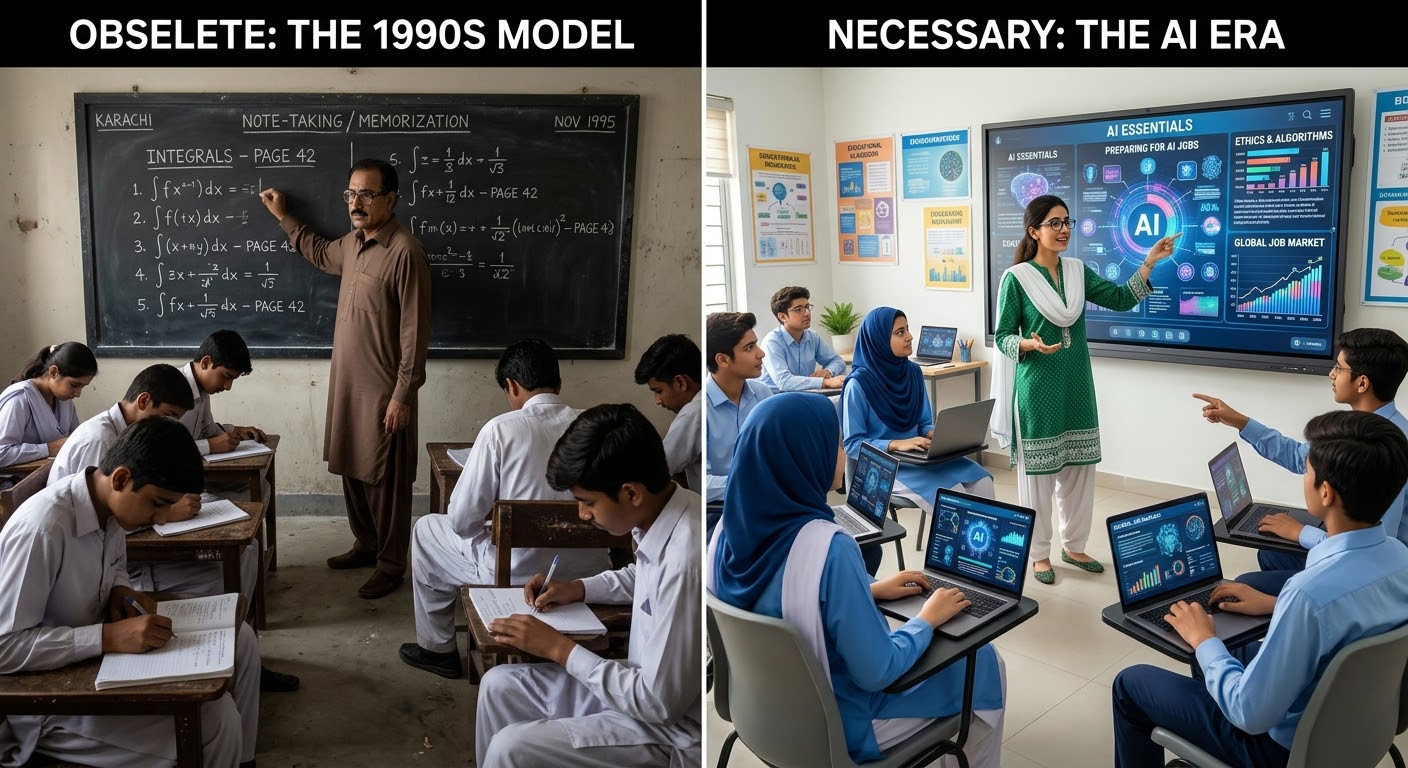
The conventional school system—often referred to as the industrial-era model—was designed to produce factory workers. It prioritizes rote memorization, standardized testing, passive listening, and rigid compliance. Students are taught to store facts in their memory, regurgitate them on exam papers, and fit into standardized boxes.
While this approach served the twentieth century well, it is fundamentally obsolete today.
The Death of Rote Memorization:
In the past, remembering formulas, historical dates, and extensive facts was a mark of high intelligence. Today, an AI model can retrieve, synthesize, and present factual information in a fraction of a second. Valuing memory over critical thought is a recipe for producing graduates unequipped for reality.
Lack of Adaptability:
Traditional classrooms discourage deviation from the textbook. In contrast, the modern professional landscape demands rapid adaptation, continuous unlearning and relearning, and high-level problem-solving.
Isolation from Technology: Many schools still treat computers as peripheral tools or treat technology classes as an afterthought, rather than weaving digital fluency and computational thinking into every subject.
The Artificial Intelligence Revolution
We are living through the AI revolution. Artificial intelligence is no longer a futuristic concept found only in science fiction movies; it is an active, driving force across healthcare, finance, engineering, creative arts, and governance.
AI automates routine tasks, analyzes massive datasets instantly, and accelerates scientific discovery. However, this shift brings both immense opportunity and profound disruption. Automation is replacing repetitive administrative and manufacturing jobs at an unprecedented pace.
The question is no whether AI will change the job market, but how human beings will adapt to remain relevant. If our schools continue to graduate students trained for a 90s economy, we will face a massive employment crisis. We are preparing young minds for a world that no longer exists.
Why AI Must Be Taught in Schools
Integrating artificial intelligence and modern technology into school curricula is no longer an optional luxury or an extracurricular club; it is an absolute necessity for survival and progress.
Developing Critical and Analytical Thinking: When students learn how AI models work—their logic, capabilities, and limitations—they develop a deeper appreciation for analytical problem-solving. They learn to question outputs, analyze biases, and think critically rather than accepting information blindly.
Preparing for Future Careers: The jobs of tomorrow will require fluency in human-AI collaboration. Students must understand how to prompt, build, utilize, and ethically manage AI systems. Introducing these concepts early ensures that students grow up as creators and innovators rather than passive consumers of technology.
Fostering Creativity and Innovation: Far from stifling creativity, AI frees students from monotonous busywork. By handling repetitive calculations and formatting tasks, AI allows students to focus on high-level conceptual design, artistic expression, and interdisciplinary collaboration.
Democratizing Success: Early exposure to AI bridges the digital divide. If underprivileged schools fail to teach these skills, students from lower-income backgrounds will fall hopelessly behind, widening societal inequality.
How We Can Transform the Education System
Transforming our educational system requires a bold, strategic, and collective effort from policymakers, educators, and communities. We must implement targeted reforms:
Revamping Curricula: Outdated syllabi must be trimmed to make room for coding, basic machine learning, data literacy, digital ethics, and prompt engineering. These subjects should be introduced gradually from primary school onwards.
Retraining Teachers: The finest curriculum is useless without qualified educators. Governments and school boards must invest heavily in training teachers, empowering them to become facilitators of technology rather than traditional lecturers.
Project-Based Learning: Rote exams must be replaced with project-based assessments. Students should be given real-world problems—such as designing a sustainable community solution or analyzing local climate data using AI tools—to foster practical experience.
Promoting Ethical AI Usage: Alongside technical skills, students must learn the ethical dimensions of technology. Understanding data privacy, algorithmic bias, copyright laws, and the social impact of automation is crucial for raising responsible digital citizens.
Outdated 90s Model,
The AI Imperative: Artificial Intelligence has reshaped workforce demands, rendering memorization obsolete since AI retrieves and analyzes information instantly.
Core Curriculum Integration: AI literacy, digital ethics, coding, and computational thinking must be integrated directly into school curricula rather than treated as optional electives.
Focus on Higher-Order Skills: Education must shift from memory-based learning to critical thinking, creative problem-solving, and practical, project-based human-AI collaboration.
Teacher Empowerment & Reform: Modernizing education requires updating syllabi, training teachers to facilitate tech-driven learning, and ensuring equitable access to bridge the digital divide.
Conclusion
The world has changed irrevocably, and our schools must change with it. Clinging to the educational methods of the 1990s is like trying to navigate a Conclusionmodern city using a physConclusionical map from fifty years ago—it will only lead us astray.
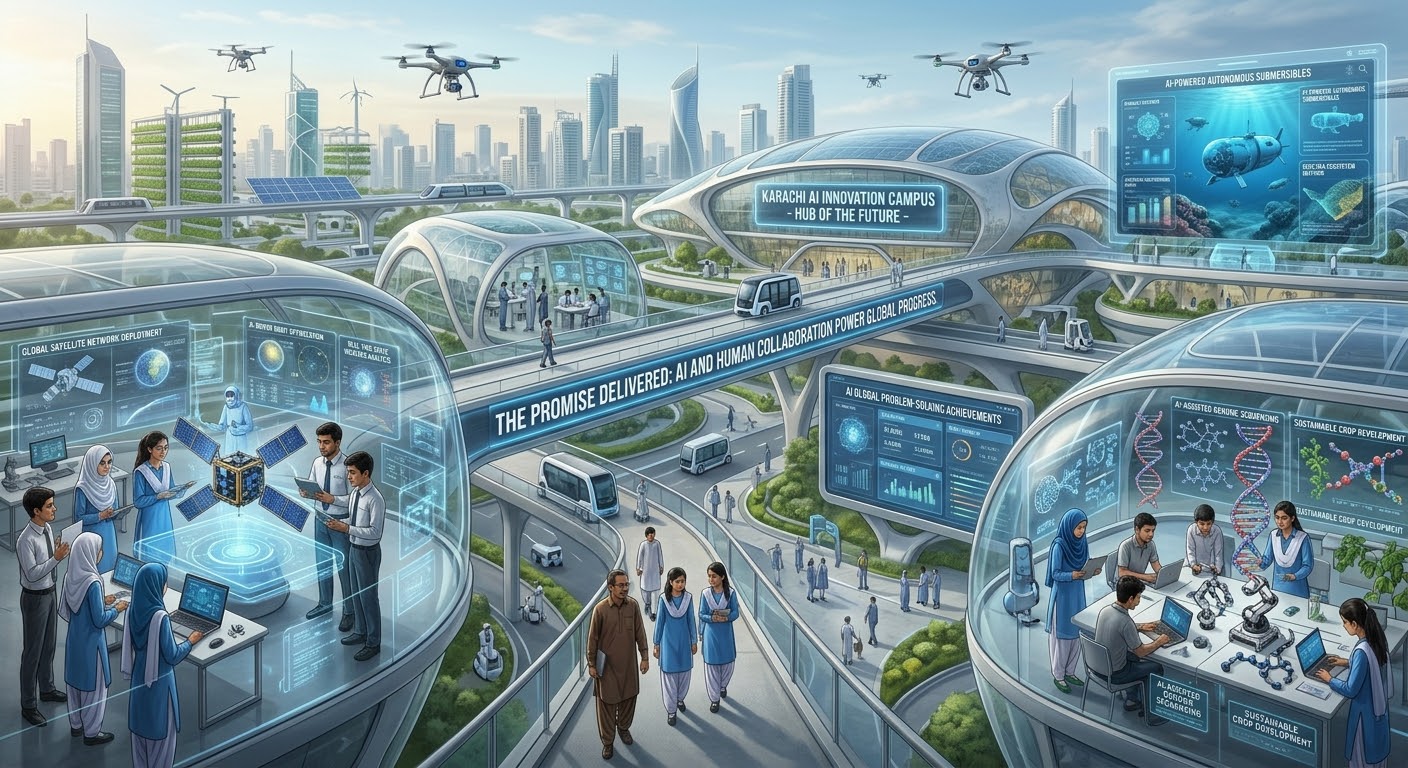
By embracing artificial intelligence in our classrooms, we can transition from a system of passive memorization to one of active innovation. We owe it to the next generation to equip them with the tools, mindset, and resilience required to lead the future. It is time to modernize education, bridge the gap, and build a brighter, smarter tomorrow.
The world has changed irrevocably, and our schools must change with it.
Clinging to the educational methods of the 1990s is like trying to navigate a modern city using a physical map from fifty years ago—it will only lead us astray.
Furthermore, integrating AI does not mean replacing human teachers; rather, it empowers educators to provide personalized guidance, fostering critical thinking, creativity, and emotional intelligence in every student.
By embracing artificial intelligence in our classrooms, we can transition from a system of passive memorization to one of active innovation. As we step into this new era, collaboration between technology and educators will unlock unprecedented potential, ensuring no learner is left behind. We owe it to the next generation to equip them with the tools, mindset, and resilience required to lead the future. It is time to modernize education, bridge the gap, and build a brighter, smarter tomorrow.








Comments 0
Sign in to join the conversation.
No comments yet. Be the first to say something.