


Table of Contents
- Introduction: The Quantum Revolution
- The Foundations of Quantum Mechanics
- Wave-Particle Duality: The Dual Nature of Reality
- Quantum Entanglement: Spooky Action at a Distance
- The Uncertainty Principle: Limits of Knowledge
- Quantum Computing: A New Era of Information Processing
- The Role of Quantum Mechanics in Modern Science
- The Future of Quantum Mechanics: Where Are We Headed?
1. Introduction: The Quantum Revolution
Quantum mechanics is the foundation of modern physics, governing the behavior of particles at the smallest scales. Unlike classical physics, which describes the world in deterministic terms, quantum mechanics introduces probabilities, superpositions, and entanglements that defy common sense.
From the early 20th-century discoveries of Max Planck, Albert Einstein, Niels Bohr, and Erwin Schrödinger, quantum mechanics has evolved into a field that underpins everything from semiconductor technology to quantum computing. The deeper we explore the quantum world, the more we realize that reality is far stranger than we once believed.

2. The Foundations of Quantum Mechanics
Quantum mechanics emerged to explain phenomena that classical physics could not. It is built upon several key principles:
Superposition:
A quantum particle can exist in multiple states simultaneously until it is measured. This idea is famously illustrated by Schrödinger’s Cat, a thought experiment in which a cat in a box is both alive and dead until observed.
Quantization of Energy:
Max Planck proposed that energy is not continuous but exists in discrete packets called quanta. This idea led to the development of quantum theory.
Probability and the Wave Function:
Instead of definite locations, particles are described by a wave function, which represents the probability of finding them in a particular state.
Observer Effect:
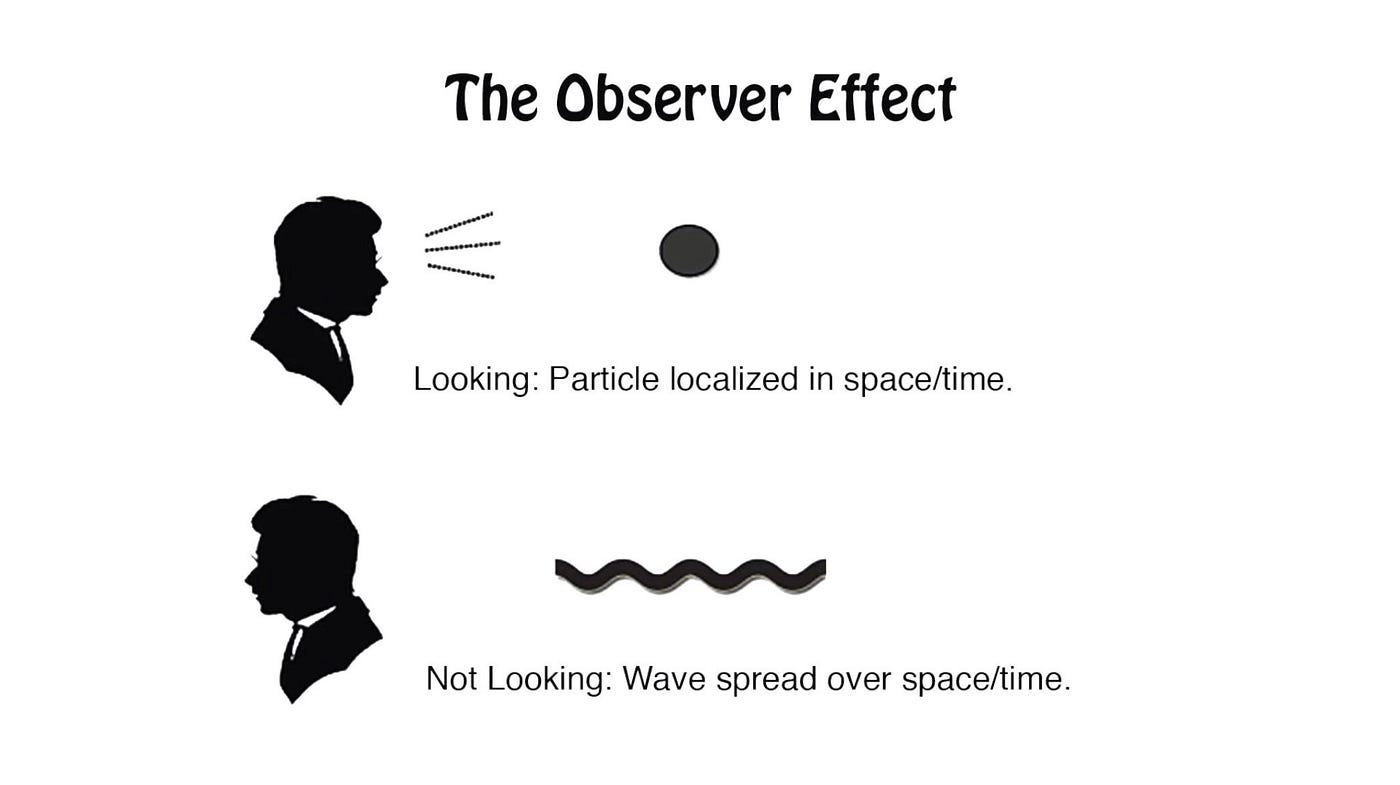
The act of measuring a quantum system influences its state, a concept that challenges the objectivity of classical physics.
These principles have profound implications, affecting everything from atomic interactions to the fundamental nature of space and time.
3. Wave-Particle Duality: The Dual Nature of Reality
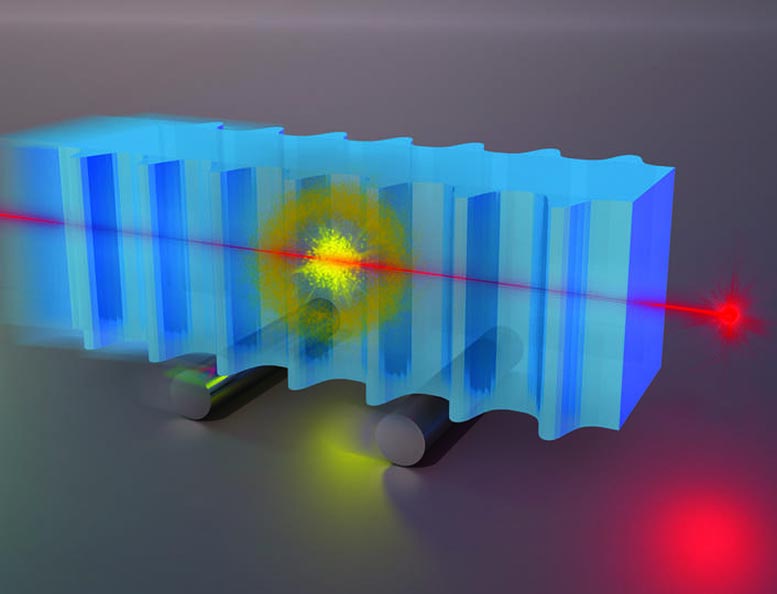
One of the most famous concepts in quantum mechanics is wave-particle duality, which suggests that particles such as electrons and photons behave as both particles and waves.
The Double-Slit Experiment:
When electrons or photons are sent through two slits, they create an interference pattern, as if they are waves. However, when observed, they behave like particles, landing in distinct locations. This paradox challenges our classical understanding of matter.
Implications:
- Light is both a wave and a particle.
- Electrons exhibit wave-like behavior, even though they have mass.
- Reality depends on how we observe it.
This experiment raises deep philosophical questions about the nature of reality and whether an objective universe exists independent of observation.

4. Quantum Entanglement: Spooky Action at a Distance
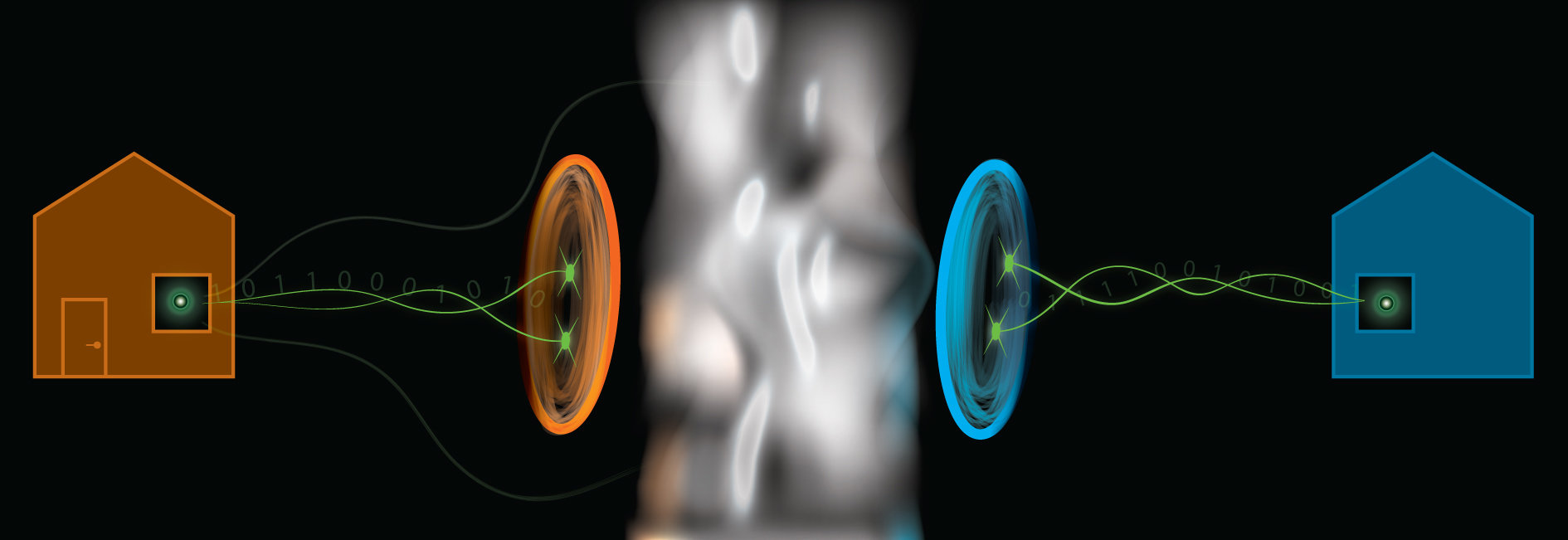
Quantum entanglement occurs when two particles become correlated in such a way that the state of one instantly influences the state of the other, regardless of distance.
Einstein’s Challenge:
Albert Einstein famously called entanglement “spooky action at a distance” because it seemed to violate the principle that nothing can travel faster than light. However, experiments by physicists like John Bell and Alain Aspect have confirmed that entangled particles influence each other instantaneously, suggesting a deeper interconnectedness in nature.
Applications of Quantum Entanglement:
- Quantum Cryptography: Secure communication based on entangled particles.
- Quantum Teleportation: The transmission of quantum information across distances.
- Understanding Reality: Entanglement challenges our notions of space and locality.
Despite its counterintuitive nature, quantum entanglement is a fundamental part of quantum mechanics and is being harnessed for next-generation technologies.
5. The Uncertainty Principle: Limits of Knowledge
Werner Heisenberg’s Uncertainty Principle states that certain pairs of properties, such as a particle's position and momentum, cannot be precisely measured at the same time. The more accurately we measure one property, the less accurately we can measure the other.
Consequences of the Uncertainty Principle:
- Fundamental limits to measurement: Precision in one aspect leads to uncertainty in another.
- Quantum fluctuations: The vacuum of space is never truly empty but filled with energy variations.
- Philosophical implications: Challenges the deterministic nature of classical physics.
This principle is at the heart of quantum mechanics, redefining the limits of human knowledge and scientific prediction.
6. Quantum Computing: A New Era of Information Processing
Quantum mechanics is not just a theoretical field; it is transforming technology. Quantum computing harnesses the power of quantum bits (qubits) to process information in ways classical computers cannot.
Key Features of Quantum Computing:
- Superposition: Qubits can exist in multiple states simultaneously.
- Entanglement: Allows qubits to be interconnected for faster processing.
- Exponential Speedup: Can solve complex problems much faster than traditional computers.
Applications of Quantum Computing:
- Cryptography: Breaking and creating new encryption methods.
- Drug Discovery: Simulating molecular structures for medical advancements.
- Optimization Problems: Enhancing AI and logistics.
Companies like Google, IBM, and Microsoft are actively developing quantum computers that may revolutionize industries.

7. The Role of Quantum Mechanics in Modern Science
Quantum mechanics influences nearly every field of science and technology:
- Electronics: Transistors and semiconductors rely on quantum principles.
- Lasers and LEDs: Operate based on quantum energy levels.
- Medical Imaging: MRI machines use quantum spin properties.
- Astronomy: Quantum physics helps explain black holes and the origins of the universe.
Without quantum mechanics, modern technology and scientific discoveries would not be possible.

8. The Future of Quantum Mechanics: Where Are We Headed?
Quantum mechanics continues to challenge our understanding of reality. Future research may lead to:
- Quantum Gravity: Unifying quantum mechanics with Einstein’s relativity.
- Quantum Internet: Ultra-secure global communications.
- Understanding Consciousness: Some theories suggest quantum mechanics may play a role in human cognition.
As scientists push the boundaries of quantum physics, we may uncover even deeper truths about the nature of existence.









Comments 0
Sign in to join the conversation.
No comments yet. Be the first to say something.