

Liaquat Ali Khan: Pakistan’s First Prime Minister
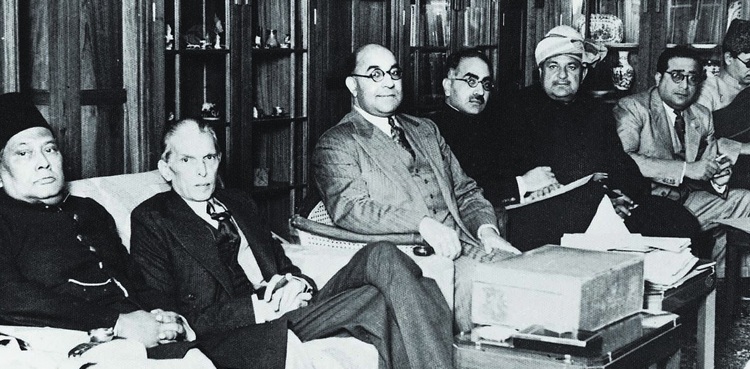
Liaquat Ali Khan was a pivotal figure in the history of Pakistan, serving as its first Prime Minister from 1947 until his assassination in 1951. A close associate of Quaid-e-Azam Muhammad Ali Jinnah, he played a crucial role in the creation of Pakistan and its early governance. His leadership laid the foundation for the newly independent country, addressing both internal and external challenges.

Early Life and Education
Born on October 1, 1895, in Karnal, British India (now in Haryana, India), Liaquat Ali Khan hailed from a prominent Muslim family. He received his early education in Aligarh before pursuing higher studies at Oxford University in England. His exposure to Western education and political thought shaped his views on governance and democracy.
Upon returning to India, he became involved in politics and joined the All India Muslim League in 1923. His commitment to the cause of Muslims in the subcontinent led him to become one of Jinnah’s most trusted allies. His advocacy for Muslim rights and his efforts in the Pakistan Movement earned him a reputation as a dedicated leader.

Role in the Pakistan Movement
Liaquat Ali Khan played a crucial role in the Pakistan Movement alongside Muhammad Ali Jinnah. As the General Secretary of the Muslim League, he worked tirelessly to mobilize support for the idea of a separate Muslim state. His leadership in negotiations with the British government and the Indian National Congress was instrumental in securing the creation of Pakistan in 1947.
Prime Minister of Pakistan
Following the independence of Pakistan on August 14, 1947, Liaquat Ali Khan was appointed as the country’s first Prime Minister. He faced numerous challenges, including the partition's refugee crisis, economic instability, and tensions with India over Kashmir. Despite these difficulties, he remained committed to strengthening Pakistan.
One of his most significant contributions was the passage of the Objectives Resolution in 1949, which laid the foundation for Pakistan’s future constitution. This resolution emphasized Pakistan as an Islamic state while ensuring democratic principles and fundamental rights for all citizens.
Liaquat Ali Khan also played a key role in shaping Pakistan’s foreign policy. He sought to establish strong relations with the United States and the Western bloc while maintaining Pakistan’s sovereignty. His visit to the U.S. in 1950 was a landmark event, as it marked Pakistan’s strategic alignment with the West during the Cold War.
Assassination and Legacy
On October 16, 1951, Liaquat Ali Khan was assassinated while addressing a gathering in Rawalpindi. His sudden death left Pakistan without one of its most capable leaders. His assassination remains a mystery, and many believe it was a conspiracy to destabilize the young nation.
Liaquat Ali Khan is remembered as a selfless leader who dedicated his life to Pakistan. His contributions to the country’s political and economic development continue to inspire future generations. As Pakistan’s first Prime Minister, he set the course for governance, foreign policy, and democracy, making him one of the most respected figures in the nation’s history.







Comments 0
Sign in to join the conversation.
No comments yet. Be the first to say something.