Private Schools and Education Inequality
The rapid growth of private schools in Karachi has significantly influenced the educational landscape. Private institutions range from elite international schools with modern facilities to small neighborhood schools that serve middle-income families.
Private education has helped expand access to schooling and introduced innovative teaching methods, better infrastructure, and extracurricular opportunities. Many parents prefer private schools because they often provide higher academic standards and English-medium instruction.
However, the expansion of private education has also deepened educational inequality. High-quality private schools charge expensive tuition fees that are affordable only for wealthy families. Meanwhile, low-income households must rely on either low-cost private schools with limited resources or underfunded public institutions.
This divide creates unequal learning opportunities and affects long-term career prospects. Students from privileged backgrounds gain access to better universities and employment opportunities, while others struggle to compete in the job market.
Higher Education Institutions
Karachi is widely recognized as one of the leading centers of higher education in Pakistan. The city hosts several prominent universities and professional institutions that offer programs in medicine, engineering, business, information technology, and social sciences.
One of the most respected institutions in the city is University of Karachi, which has produced thousands of graduates contributing to various sectors of society. Another well-known institution is NED University of Engineering and Technology, which specializes in engineering education and research.
Higher education institutions in Karachi play a vital role in research, innovation, and workforce development. They also attract students from different regions of Pakistan, making the city an academic hub.
Despite these advantages, access to higher education remains limited for many students. Financial constraints, competitive admission criteria, and weak academic preparation at the school level often prevent talented students from pursuing university degrees.
Role of Madrasas and Informal Education
Madrasas, or Islamic religious schools, form an important component of the educational system in Karachi. These institutions provide free education, accommodation, and meals, making them particularly attractive for families facing economic hardship.
Madrasas primarily focus on religious studies, Quranic education, and moral teachings. They play a significant role in shaping the spiritual and ethical development of students.
However, critics argue that madrasa education sometimes lacks integration with modern academic subjects such as science, mathematics, and technology. Without exposure to these disciplines, students may face limited employment opportunities in the broader job market.
Educational experts increasingly emphasize the importance of integrating modern subjects into madrasa curricula so that students receive a balanced education that prepares them for both religious and professional life.
Impact of Technology on Education
Technology has begun to reshape education in Karachi, particularly in recent years. Digital learning platforms, online courses, and educational applications have become more common, especially after the global pandemic accelerated the adoption of remote learning.
Many schools and universities now use virtual classrooms, digital libraries, and online assessment tools to enhance learning experiences. These innovations have the potential to improve educational accessibility and connect students with global knowledge resources.
However, the digital divide remains a serious challenge. Many students from low-income families lack access to computers, smartphones, or reliable internet connections. Without addressing this technological gap, digital education may unintentionally widen educational inequality.
Challenges Facing Education in Karachi
Despite progress in some areas, several persistent challenges continue to affect education in Karachi:
-
Poverty and child labor that force students to drop out of school
-
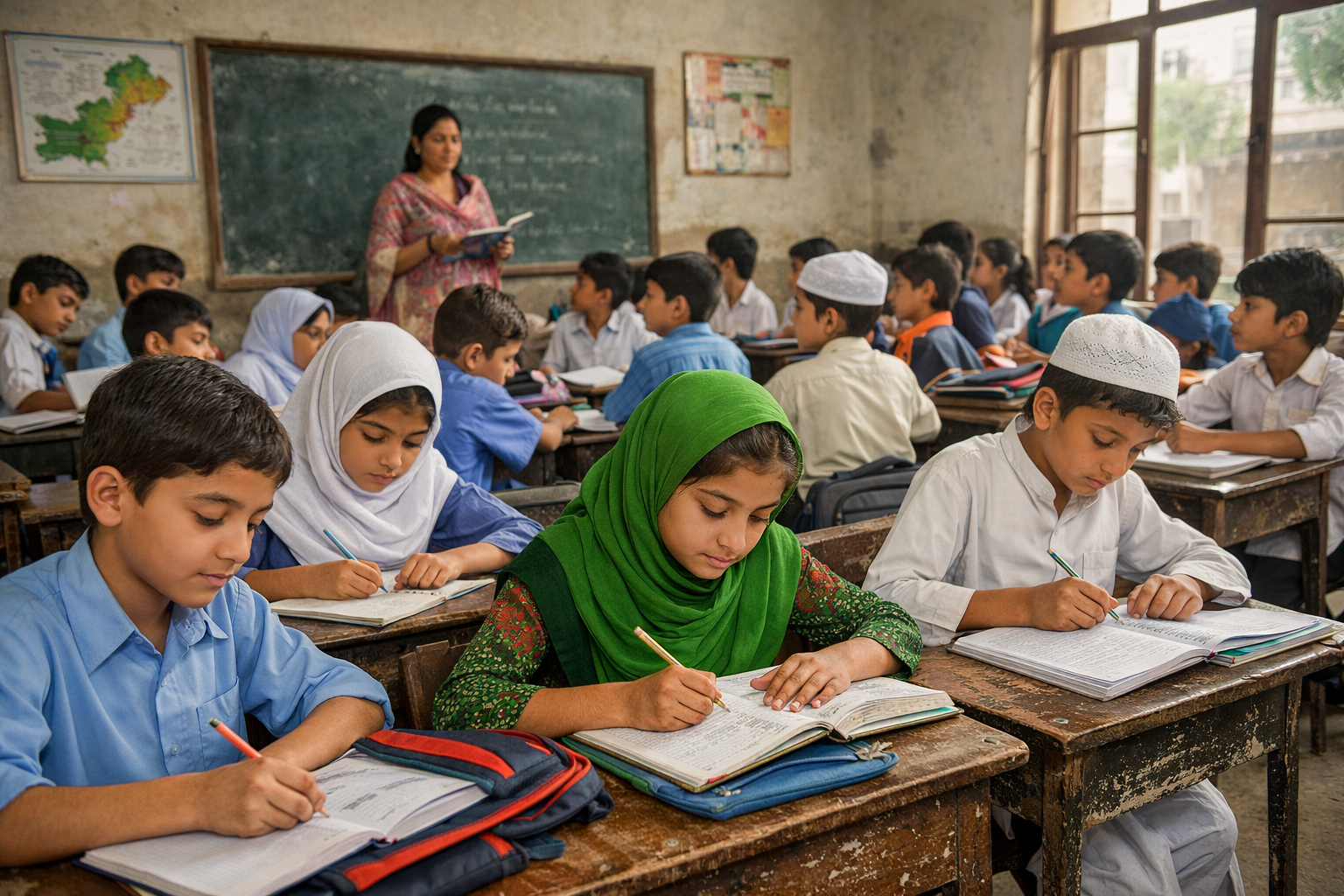
Inadequate school infrastructure and overcrowded classrooms
-
Shortage of qualified teachers and limited training opportunities
-
Gender inequality in certain communities
-
Safety concerns and transportation difficulties for students
Addressing these challenges requires coordinated efforts from government institutions, private organizations, community leaders, and families.
Government and NGO Initiatives
Various government agencies and non-governmental organizations are working to improve educational opportunities in Karachi. Initiatives include school renovation programs, teacher training workshops, scholarship programs, and awareness campaigns promoting girls’ education.
Non-governmental organizations also play a significant role in supporting marginalized communities by offering non-formal education programs and vocational training. These initiatives help provide second chances for children who have left the formal education system.
Public-private partnerships have also emerged as effective models for improving school management, monitoring educational standards, and ensuring accountability in the education sector.
Future of Education in Karachi
The future of education in Karachi depends largely on sustained policy reforms and increased investment in educational infrastructure. Strengthening public schools, regulating private institutions, expanding vocational training programs, and integrating technology can significantly improve educational outcomes.
Education policies must focus on inclusivity and equal access to ensure that children from all socioeconomic backgrounds receive quality learning opportunities. By prioritizing education, Karachi can develop a skilled workforce capable of driving economic growth and social progress.
Conclusion
The education level in Karachi presents a complex picture of progress and persistent inequality. While the city hosts some of the most prestigious educational institutions in Pakistan, many communities still struggle with limited access to quality schooling.
Improving education in Karachi requires long-term planning, strong government commitment, and active participation from civil society. With proper reforms and investment, the city has the potential to become a center of educational excellence and innovation.
Key Takeaways
-
Education is essential for social and economic development in Pakistan.
-
Karachi has a relatively high literacy rate but significant internal disparities.
-
Public schools face challenges such as poor infrastructure and teacher shortages.
-
Private education has expanded but also increased inequality.
-
Technology and educational reforms can help improve access and quality.
FAQ / Frequently Asked Questions
Why is education important for Karachi’s development?
Education helps create skilled professionals, reduce poverty, and strengthen economic growth in the city.
What are the main problems in Karachi’s education system?
Major problems include poverty, overcrowded classrooms, teacher shortages, and unequal access to quality education.
Which universities are famous in Karachi?
Some well-known universities include University of Karachi and NED University of Engineering and Technology.
How can education improve in Karachi?
Education can improve through increased government investment, teacher training, modern infrastructure, and wider access to technology.
Final Thoughts
Education remains the foundation for building a stronger and more prosperous society. While Karachi faces many educational challenges, the city also possesses tremendous potential due to its diverse population and strong academic institutions. By addressing inequalities and investing in quality education, Karachi can empower future generations and contribute significantly to the development of Pakistan.
References / Sources



You must be logged in to post a comment.