


Have you ever noticed how your mind can turn a small problem into something that feels impossible to handle? You wake up thinking about something that happened yesterday. You replay a conversation, imagine what someone might be thinking, and worry about things that haven’t even happened yet.
Nothing around you may have changed, but your mood is already different.
This is one of the strange things about the human mind. It can help us solve problems, make decisions, and move forward. But sometimes, it does the opposite. It keeps us trapped in thoughts that bring no answers.
So, can your mind really become your worst enemy?
Yes, sometimes. Not because your mind is working against you intentionally, but because the way you think can affect how you feel, behave, and see the world.
How Your Mind Can Become Your Worst Enemy
Your mind is constantly trying to understand what’s happening around you. It remembers past experiences, notices possible dangers, and prepares you for what might come next.
This ability is useful. It helps us learn from mistakes and avoid repeating them.
But problems begin when thinking turns into endless worrying.
Imagine you send a message to someone, and they don’t reply for several hours. At first, you don’t think much about it. Then your mind starts creating possibilities.
Maybe they’re upset. Maybe you said something wrong. Maybe they don’t want to talk anymore.
Before long, you’re checking your phone again and again.
The truth is, you don’t know why they haven’t replied. They could be busy. Yet your mind has already created an entire story.
This is how overthinking works. It fills information gaps with assumptions, and those assumptions can feel real even without evidence.

1. Overthinking Makes Small Problems Feel Bigger
One of the easiest ways to lose your peace is to keep thinking about something you cannot change.
You make a mistake at work, and instead of learning from it, you spend the whole evening wondering what your colleagues think of you.
Someone makes a strange comment, and you keep trying to understand what they really meant.
You remember an embarrassing moment from years ago and suddenly feel uncomfortable all over again.
The event may be over, but your mind keeps bringing it back.
There’s a difference between thinking about a problem and repeatedly going over it without finding a solution.
Healthy reflection helps you understand what happened. Overthinking keeps you stuck in the same place.
When you notice yourself repeating the same thoughts, ask one simple question:
Is there anything I can actually do about this right now?
If the answer is yes, focus on the next practical step. If the answer is no, try to bring your attention back to what is happening today.
You don’t have to solve every problem in your head.
2. Negative Self-Talk Slowly Changes How You See Yourself
Think about the way you talk to yourself after making a mistake.
Do you say, “I made a mistake, but I’ll do better next time”?
Or do you say, “I always mess things up. " Will I never be good enough”?
These sentences may sound similar, but they send very different messages.
The first one recognizes a mistake. The second turns that mistake into a judgment about your entire personality.
This is what negative self-talk can do.
You fail at something once, and your mind tells you that you’re a failure. Someone rejects your idea, and you start believing that your opinions don’t matter.
Over time, these thoughts can affect your confidence and make ordinary challenges feel frightening.
Try changing the way you respond to yourself.
Instead of saying:
“I’m not good at anything,” say, “I’m still learning.”
“I’ll never succeed,” say, “I haven’t figured it out yet.”
“Everyone is better than me,” say, “Everyone has a different journey.”
You don’t need to pretend everything is perfect. You need to stop treating yourself like you deserve constant criticism.
3. Your Mind Can Make You Afraid of Things That Haven’t Happened
Have you ever avoided an opportunity because you were already imagining everything that could go wrong?
Maybe you wanted to start a business, apply for a job, learn a new skill, or speak in front of people.
But then the questions started.
What if I fail?
What if people laugh at me?
What if I waste my time?
What if I’m not capable?
These questions can make you feel as if failure has already happened.
Of course, thinking about risks is important. It helps us prepare and make sensible decisions.
But there’s a difference between preparing for a possible problem and allowing fear to make every decision for you.
You cannot predict every outcome before taking the first step.
Sometimes, you only discover what you’re capable of after trying something that once scared you.
You don’t need complete confidence to begin. You need to be willing to take a small step.
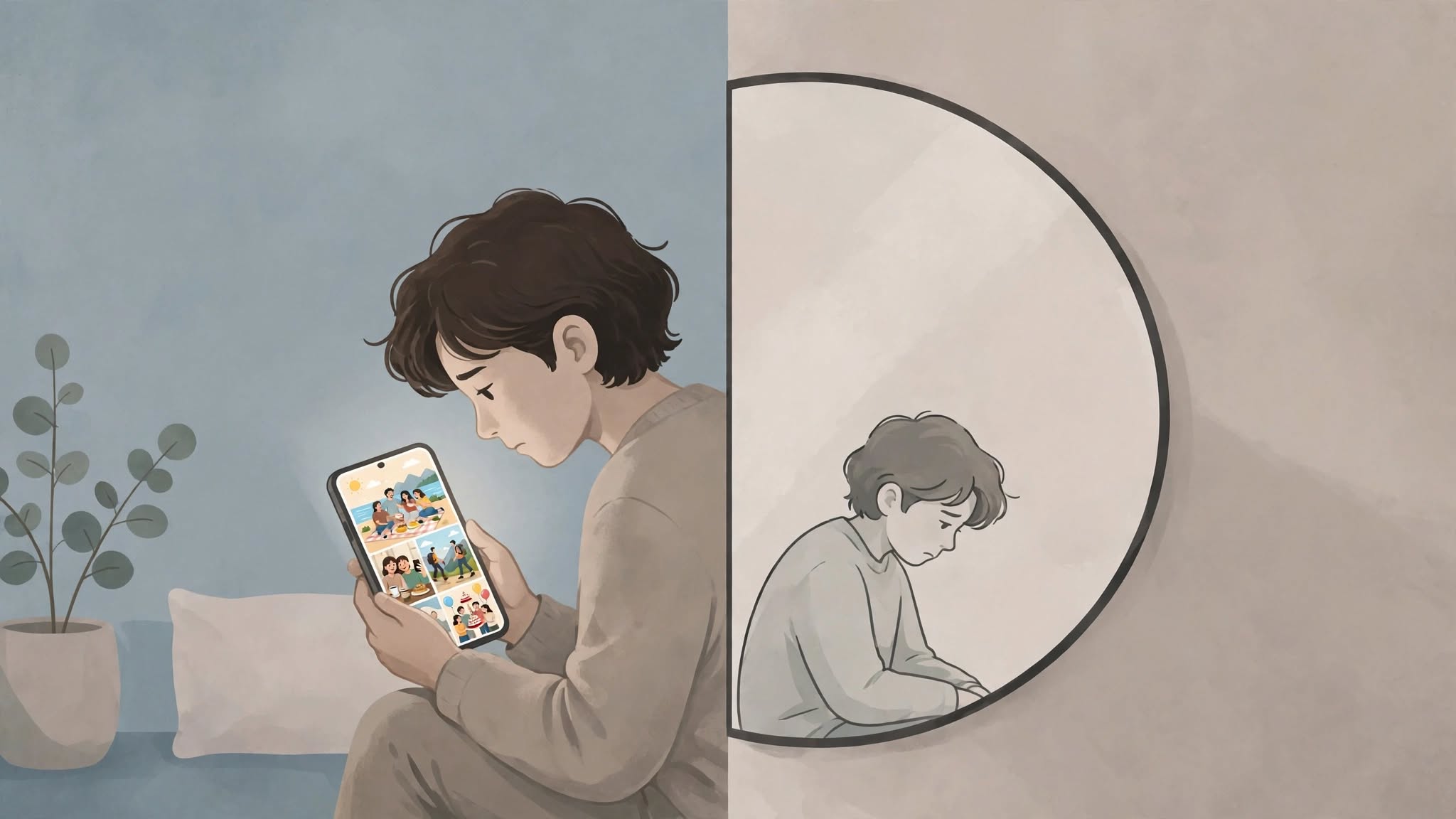
4. Comparing Yourself to Others Steals Your Happiness
Social media has made comparison easier than ever.
You open your phone and see someone buying a new house, traveling abroad, starting a successful business, or celebrating an achievement.
You look at their life, then at your own.
Suddenly, your progress doesn’t seem impressive anymore.
You start wondering why you’re behind, why things aren’t working out, and why everyone else seems to be moving forward.
But there’s something important to remember.
You’re comparing your everyday life with selected moments from someone else’s life.
You don’t know what they struggled with, what they sacrificed, or what their life looks like when the camera is off.
And even if someone really is doing better than you in a particular area, that doesn’t make your own journey meaningless.
Your life doesn’t become less valuable because someone else achieved something first.
Instead of constantly checking how far others have gone, pay attention to how far you’ve come.

5. Your Mind Needs Rest Too
We often think exhaustion comes from physical work.
But sometimes, you can spend an entire day sitting at home and still feel completely drained.
Why?
Because your mind hasn’t stopped working.
You’re thinking about tomorrow, remembering yesterday, worrying about money, checking notifications, and trying to keep up with everything happening around you.
Even when your body is resting, your attention may be somewhere else.
Research on stress and sleep has shown that ongoing stress and worry can interfere with healthy sleep patterns. Poor sleep can then make it harder to manage emotions and concentrate the next day.
This can create a difficult cycle.
You worry because you’re tired, and you feel even more overwhelmed because you haven’t rested properly.
Give yourself some time away from constant stimulation.
You could:
Spend a little time outside without your phone.
Take a short walk.
Read a few pages of a book.
Talk to someone you trust.
Keep a regular sleep schedule.
Write down the thoughts that keep bothering you.
These small habits won’t solve every problem, but they can give your mind some breathing room.
6. How to Stop Letting Your Thoughts Control You
You cannot stop every negative thought from entering your mind. Trying to control every thought can become another source of stress.
The goal is not to have a perfectly positive mind. The goal is to learn how to respond to your thoughts without automatically believing everything they tell you.
Here are a few practical things you can try.
Notice your thoughts.
When you feel worried or upset, take a moment to identify what’s going through your mind. Sometimes, simply recognizing a thought helps you see it more clearly.
Separate facts from assumptions.
Ask yourself what you actually know and what you’re only imagining. This is especially helpful when dealing with relationships, work, and uncertain situations.
Focus on what you can control.
You cannot control how everyone treats you, what people think about you, or everything that happens tomorrow. But you can control your next decision and how you respond.
Stop expecting perfection.
You will make mistakes. You will have difficult days. You may even repeat something you promised yourself you wouldn’t do again.
That doesn’t mean you’re not making progress.
Ask for help when you need it.
If worrying, negative thoughts, or emotional distress are affecting your daily life, consider speaking with a mental health professional. You don’t have to figure everything out alone.
Frequently Asked Questions
Can your mind really become your worst enemy?
Yes. Repeated negative thinking, excessive worry, and harsh self-criticism can affect your confidence, relationships, and emotional well-being. Learning to recognize these patterns can help.
Why do I overthink even when nothing is wrong?
Overthinking can be linked to stress, uncertainty, past experiences, and fear of making mistakes. Sometimes, the mind keeps searching for answers even when there is nothing useful left to figure out.
How can I stop negative thoughts?
Start by noticing negative thoughts instead of immediately believing them. Question whether they are based on facts, focus on practical actions, and develop habits that support your emotional well-being.
Is overthinking a sign of anxiety?
Not necessarily. Many people overthink occasionally. However, persistent and difficult-to-control worrying can be associated with anxiety. If it interferes with your daily life, professional guidance may help.
Conclusion: Don’t Let Your Thoughts Decide Your Worth
Your mind is an important part of who you are, but not every thought it produces deserves your attention.
Sometimes, it reminds you of mistakes you have already learned from. Sometimes, it makes you afraid of a future that hasn’t arrived. And sometimes, it convinces you that you’re not good enough when you’re simply having a difficult day.
The next time your thoughts start working against you, remember that you don’t have to follow every one of them.
You can make a mistake without calling yourself a failure. You can face uncertainty without expecting the worst. And you can have a bad day without believing that your whole life is going wrong.
Your mind should help you live your life, not make you afraid of living it.
Be patient with yourself. You’re still learning, still growing, and still figuring things out. That’s perfectly okay.







Comments 0
Sign in to join the conversation.
No comments yet. Be the first to say something.