

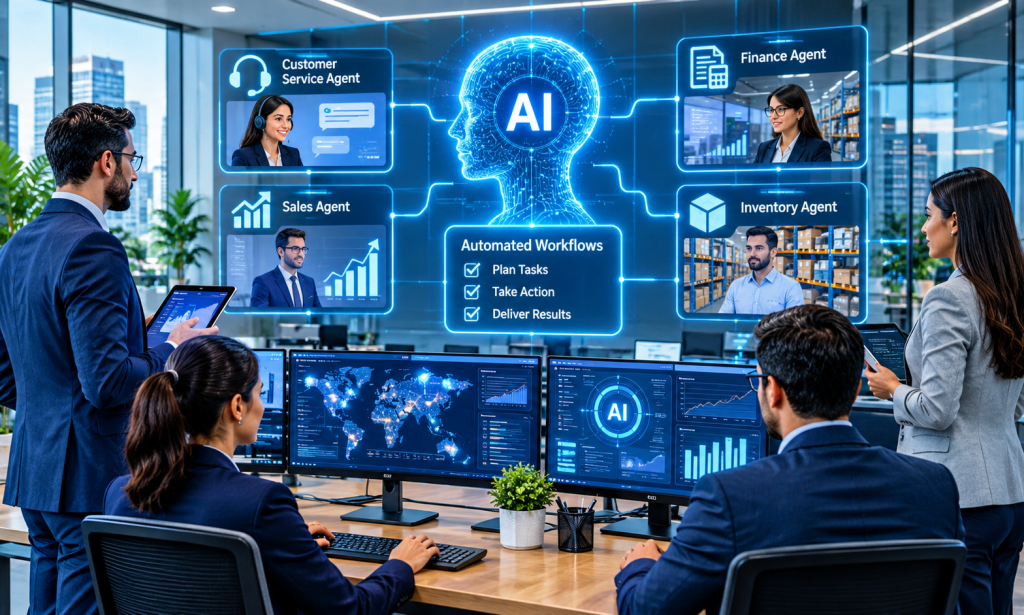
Artificial intelligence is changing how businesses manage their daily operations. From customer support and sales to marketing and financial management, companies are increasingly adopting intelligent technologies to improve productivity and reduce repetitive work.
One of the most important developments is the rise of AI agents for business. Unlike traditional chatbots that mainly answer questions, AI agents can understand instructions, plan tasks, interact with connected applications, and complete specific activities with varying levels of human supervision.
For example, an AI agent can organize customer inquiries, retrieve order information, prepare email responses, and update business records. These capabilities make AI agents valuable tools for companies looking to improve efficiency.
As businesses prepare for 2027, choosing the right AI automation software can help them streamline operations, improve customer experiences, and support business growth.
What Are AI Agents for Business?
AI agents are intelligent software systems designed to perform tasks and achieve specific objectives. They use artificial intelligence to understand instructions, process information, and take actions through connected tools and applications.
Unlike traditional automation, which generally follows predefined rules, AI agents can adapt their actions according to the information and instructions they receive.
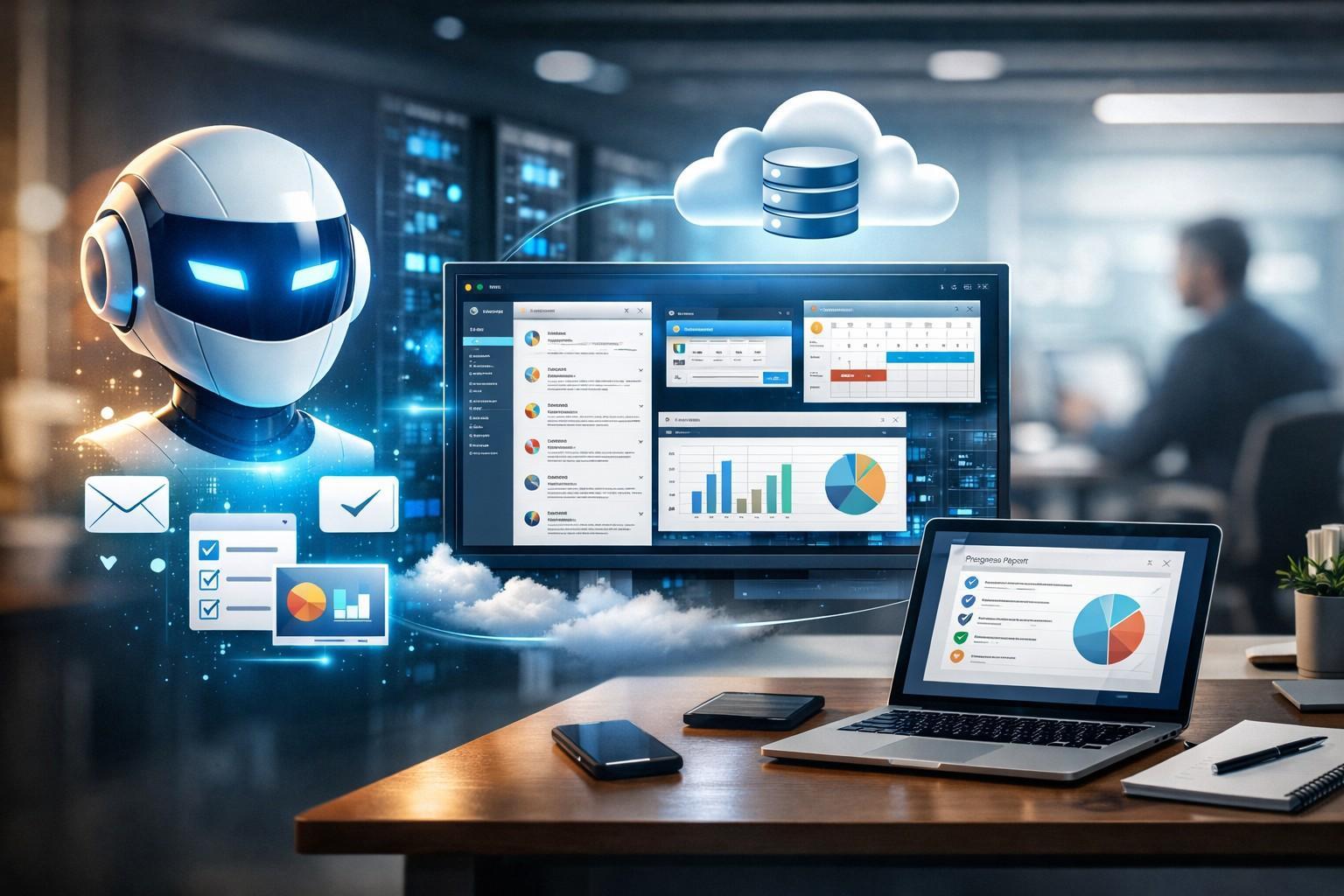
For example, a traditional automation system might send an automatic email after receiving an order. An AI agent could additionally review the order details, identify potential issues, retrieve customer information, and prepare a personalized response.
Common capabilities include:
Understanding natural language instructions.
Analyzing business information.
Connecting with different applications.
Completing multi-step workflows.
Preparing reports and recommendations.
Why Are Businesses Investing in AI Agents in 2027?
Businesses are exploring AI agents to improve operations and reduce time spent on repetitive activities.
According to McKinsey's 2026 AI research, organizations are increasingly experimenting with and scaling AI agents. However, achieving measurable business value still requires effective implementation.
Here are some important reasons behind this growing adoption.

1. Reduced Repetitive Work
AI agents can assist with routine activities such as organizing documents, responding to common questions, and updating customer records. This allows employees to focus on more important responsibilities.
2. Improved Customer Support
AI-powered agents can respond to common customer inquiries, retrieve relevant information, and direct complicated requests to human representatives.
3. Better Productivity
Employees can use AI agents to summarize documents, prepare reports, organize information, and manage selected workflows more efficiently.
4. Faster Business Operations
AI workflow automation connects different applications, helping businesses reduce unnecessary manual steps and improve coordination between departments.
Best AI Agents for Businesses in 2027
Choosing the best AI agent depends on business requirements, existing software, and automation goals. Here are five platforms worth considering.
1. Microsoft Copilot Studio
Microsoft Copilot Studio allows businesses to create customized AI agents and connect them with business applications and workflows.
Key features:
Custom AI agent development.
Business application integration.
Workflow automation.
Employee productivity support.
Best for: Businesses using Microsoft 365 and Power Platform.
2. Salesforce Agentforce
Salesforce Agentforce helps businesses automate customer service, sales, and CRM-related activities.
Key features:
Customer support assistance.
Sales workflow automation.
CRM data integration.
Customized business agents.
Best for: Companies using Salesforce for customer relationship management.
3. Google Gemini Enterprise
Google's enterprise AI platform provides capabilities for developing and managing AI agents connected to business information and applications.
Key features:
Custom AI agent development.
Enterprise data integration.
AI-powered workflows.
Business application support.
Best for: Organizations using Google Cloud technologies.
4. ServiceNow AI Agents
ServiceNow provides AI-powered capabilities for automating enterprise workflows, IT services, and employee operations.
Key features:
IT service automation.
Employee request management.
Customer service assistance.
Enterprise workflow coordination.
Best for: Large organizations managing complex business operations.
5. IBM watsonx Orchestrate
IBM watsonx Orchestrate helps businesses coordinate AI agents and automate tasks across enterprise applications.
Key features:
Business process automation.
Application integration.
AI agent coordination.
Employee productivity support.
Best for: Enterprises looking for advanced workflow automation.
How Can AI Agents Automate Business Operations?
AI agents can support several departments and improve selected business processes.

Customer Service
AI agents can answer frequently asked questions, retrieve order information, categorize support requests,s and prepare customer responses.
Sales and Marketing
Sales teams can use AI agents to organize leads, research potential customers, and prepare follow-up emails. Marketing departments can use them for campaign research, content planning, and performance summaries.
Finance and Accounting
AI agents can extract invoice information, organize expense records, and prepare financial summaries. Important payments and financial approvals should remain under human supervision.
Human Resources
HR teams can use AI automation to organize applications, prepare onboarding documents, schedule interviews, and answer routine employee questions.
Benefits of AI Agents for Businesses
Implementing suitable AI agents can provide several advantages:

Lower operational costs: Automating repetitive activities may reduce manual workload.
Higher productivity: Employees can spend more time on strategic responsibilities.
Better customer experiences: AI-powered assistance can improve response times.
Improved decision-making: AI systems can summarize business information and highlight useful patterns.
Efficient workflows: Connected applications can reduce unnecessary administrative steps.
However, actual results depend on implementation quality, operating costs, and business requirements.
Challenges of Using AI Agents
Despite their advantages, AI agents also introduce risks that businesses must consider.
Data privacy: Agents may access confidential customer or company information. Businesses should establish strict access permissions.
Incorrect results: AI systems can misunderstand instructions or produce inaccurate information. Important outputs require verification.
Implementation costs: Software subscriptions, integrations, training, and maintenance can increase expenses.
Security risks: Poorly configured agents may perform unauthorized actions or expose sensitive information.
Human oversight: Businesses should require approval for high-impact activities such as financial transactions and sensitive customer decisions.
How to Choose the Right AI Agent
Before investing in AI automation software, businesses should evaluate the following factors:
Business needs: Identify which repetitive processes require automation.
Integration: Check whether the platform connects with existing applications.
Security: Review data protection and permission controls.
Pricing: Compare subscription fees, usage charges, and implementation costs.
Scalability: Select a solution that can support future business requirements.
Monitoring: Ensure employees can review agent activities and correct mistakes.
Starting with one simple workflow is often a better approach than automating an entire department immediately.
Frequently Asked Questions
1. What are the best AI agents for businesses in 2027?
Microsoft Copilot Studio, Salesforce Agentforce, Google Gemini Enterprise, ServiceNow AI Agents, and IBM watsonx Orchestrate are examples of platforms worth evaluating.
2. Can AI agents automate an entire business?
AI agents can automate selected business processes, but human employees remain essential for complex decisions, supervision, and accountability.
3. Are AI agents suitable for small businesses?
Yes. Small businesses can use AI-powered tools for customer support, marketing, administrative tasks, and workflow management.
4. What is the difference between AI agents and traditional automation?
Traditional automation follows predefined rules, while AI agents can interpret instructions, adapt to information,n and complete multiple connected tasks.
5. Are AI agents safe for business use?
They can be useful when configured with appropriate security controls, limited permissions, regular monitoring, and human oversight.
Conclusion
AI agents are becoming valuable tools for businesses looking to improve productivity and automate repetitive operations. From customer service and sales to finance and employee management, these technologies offer opportunities to simplify everyday workflows.
The best AI agents for businesses in 2027 will be those that address specific operational challenges, integrate with existing software, and deliver measurable results.
Rather than automating everything at once, companies should begin with manageable projects, monitor performance, and expand their AI capabilities gradually. With the right strategy and human supervision, agentic AI can become an important part of modern business operations.







Comments 0
Sign in to join the conversation.
No comments yet. Be the first to say something.