


Introduction
Artificial Intelligence (AI) has evolved from a futuristic concept to a driving force in modern technology. With rapid advancements in machine learning, deep learning, and neural networks, AI is now influencing industries such as healthcare, finance, education, and even entertainment. These advancements have opened up new possibilities for businesses, governments, and individuals alike, bringing significant improvements in efficiency, innovation, and automation. However, as AI continues to progress, it also brings with it a range of opportunities and challenges. This article will explore the significant advancements in AI, their impact on technology, and how they will shape our future.

Key Advancements in AI Technology
-
Machine Learning (ML) and Deep Learning
Machine learning, a subset of AI, has seen tremendous progress in recent years. By enabling machines to learn from data and improve over time, machine learning has enhanced predictive analytics, personalized services, and automation in various fields. Deep learning, a more advanced form of machine learning, uses artificial neural networks to mimic human brain function, allowing for more complex data analysis and improved decision-making processes. These techniques have transformed industries by enabling AI systems to interpret vast amounts of unstructured data, such as images, videos, and text, leading to better insights and automation capabilities. -
Natural Language Processing (NLP)
One of the most exciting advancements in AI is natural language processing (NLP), which allows computers to understand, interpret, and generate human language. NLP has made it possible for machines to interact with humans in a more intuitive and natural manner, improving chatbots, virtual assistants, and translation services. Technologies like OpenAI’s GPT-3, which powers sophisticated language models, enable machines to generate coherent and contextually appropriate responses to complex queries. NLP has applications in customer service, healthcare, content creation, and beyond, making it one of the most valuable areas of AI research. -
Autonomous Systems and Robotics
Autonomous vehicles and robotics have also seen significant advancements in AI technology. Self-driving cars, drones, and industrial robots now rely on AI algorithms to navigate, perform tasks, and make real-time decisions based on their environment. These autonomous systems use a combination of computer vision, machine learning, and real-time data processing to understand their surroundings and interact safely with humans and other objects. The improvements in AI-driven robotics are transforming industries like transportation, manufacturing, logistics, and healthcare, where robots are being used for tasks ranging from delivery to surgery. -
AI in Healthcare
AI's impact on healthcare has been profound, particularly in the areas of diagnostics, personalized medicine, and drug discovery. Machine learning algorithms are now being used to analyze medical data, such as radiology images, genetic sequences, and patient records, to assist healthcare professionals in making more accurate diagnoses. AI-powered tools are also being used to predict disease progression, identify at-risk patients, and recommend personalized treatment plans. Moreover, AI has accelerated drug discovery processes, enabling faster development of treatments for various diseases, including COVID-19. -
AI and Cybersecurity
As cyber threats become more sophisticated, AI is playing a critical role in cybersecurity. Machine learning algorithms are being used to detect patterns in large volumes of data, identify potential security breaches, and respond to threats in real-time. AI can analyze network traffic, monitor system behaviors, and automatically adapt to emerging threats, providing an additional layer of protection against cyberattacks. With the increasing number of digital transactions and data breaches, AI has become a crucial component of maintaining online security. -
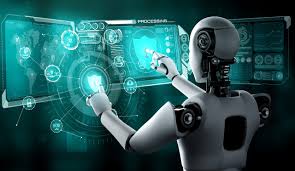
Impact of AI Advancements on Various Sectors
-
Business and Automation
AI is revolutionizing the business landscape by automating repetitive tasks, optimizing supply chains, and enabling data-driven decision-making. Machine learning algorithms can analyze customer preferences, predict market trends, and streamline operations, allowing businesses to become more efficient and competitive. AI-powered tools, such as robotic process automation (RPA), are also helping companies reduce operational costs by automating administrative tasks. The future of business will likely see AI playing an even more central role in driving innovation, improving customer experiences, and enhancing productivity. -
Education
AI is transforming education by personalizing learning experiences for students. AI-powered platforms can analyze students' learning patterns and adapt to their needs, offering customized lesson plans and assessments. Intelligent tutoring systems and AI-based virtual assistants are helping students with individualized support, providing real-time feedback and answering questions. Furthermore, AI in education is improving administrative processes, such as grading and scheduling, enabling educators to focus more on teaching and less on administrative tasks. -
Finance
AI is also making waves in the finance industry, where it is being used to analyze financial data, predict market trends, and automate trading. AI algorithms can identify patterns in large datasets, allowing financial institutions to assess risks and make more informed investment decisions. In personal finance, AI-powered tools are helping individuals manage their finances by offering budget recommendations and investment advice based on their financial behavior. Additionally, AI is playing a vital role in fraud detection, helping banks and financial institutions detect suspicious activity and prevent financial crimes. -
Entertainment and Media
AI is reshaping the entertainment and media industries by enhancing content creation and consumption. Streaming services like Netflix and Spotify use AI to analyze user preferences and recommend personalized content. In video games, AI algorithms are being used to create more realistic in-game environments and behaviors. Furthermore, AI-generated art, music, and writing are gaining traction, with tools that can create realistic visual art and music compositions based on specific inputs. AI is also enabling content creators to automate editing, post-production, and special effects, streamlining the production process. -

Benefits of AI Advancements
-
Improved Efficiency
AI’s ability to automate repetitive tasks and analyze vast amounts of data at high speeds improves efficiency across industries. In manufacturing, AI-powered robots can perform tasks with high precision, reducing errors and increasing productivity. In healthcare, AI algorithms can assist doctors in diagnosing diseases more accurately, leading to faster and more effective treatments. By automating time-consuming tasks, AI frees up human workers to focus on more complex, creative, and high-value activities. -
Enhanced Decision-Making
AI's data processing capabilities enable better decision-making by providing insights based on large datasets. Machine learning algorithms can identify trends, make predictions, and suggest optimal courses of action, allowing businesses, governments, and individuals to make more informed decisions. In sectors like finance, AI helps in making investment decisions, while in healthcare, AI provides actionable insights to improve patient care. -
Economic Growth and Job Creation
Despite concerns about AI replacing human jobs, AI advancements are expected to create new opportunities for workers, especially in fields related to technology, data analysis, and AI development. Additionally, AI is likely to stimulate economic growth by improving productivity, enabling businesses to scale and innovate. As AI technology evolves, it will foster the creation of entirely new industries and job roles, ranging from AI specialists to robotics engineers and data scientists. -

Challenges and Ethical Considerations
While AI offers numerous benefits, it also presents challenges. One concern is the potential for job displacement due to automation, particularly in industries where tasks can be easily automated. Additionally, AI systems often rely on large datasets, which raises privacy and data security concerns. There is also the risk of algorithmic bias, where AI systems may make decisions based on biased data, leading to unfair or discriminatory outcomes.
Ethical considerations around AI include the need for transparency and accountability in decision-making, particularly in areas like healthcare, criminal justice, and finance. As AI becomes more integrated into society, it is crucial to ensure that it is used responsibly and that the technology benefits all members of society.

Conclusion
The rapid advancements in AI are transforming technology and society in profound ways. From healthcare to business, AI is improving efficiency, decision-making, and innovation across industries. However, as AI continues to evolve, it is essential to address the challenges and ethical considerations that come with it. With responsible development, AI has the potential to create a brighter, more efficient future, enhancing our quality of life and reshaping the world as we know it.







Comments 0
Sign in to join the conversation.
No comments yet. Be the first to say something.