


Kidney cancer is one of the most challenging cancers to treat, but recent advances in research are offering hope for patients and healthcare providers alike. Five prominent doctors in the field of oncology and nephrology have shared their insights into the latest developments in kidney cancer research. These advancements range from innovative treatment options like immunotherapy and targeted therapies to breakthroughs in early detection and the role of artificial intelligence. Together, they paint a picture of a future where kidney cancer may be more treatable and manageable than ever before.
1. Immunotherapy: A New Era in Kidney Cancer Treatment
Dr. Sarah Thompson, a leading oncologist specializing in kidney cancer at a renowned cancer center, highlights the groundbreaking role of immunotherapy in the treatment of metastatic kidney cancer. Immunotherapy works by stimulating the body’s immune system to recognize and attack cancer cells more effectively.
Dr. Thompson explains, “In the past, treatments for kidney cancer, especially advanced forms, were limited and often ineffective. Now, immunotherapies like checkpoint inhibitors have transformed how we approach the disease.” These therapies work by targeting specific proteins, such as PD-1 and PD-L1, that allow cancer cells to evade the immune system. By blocking these proteins, immunotherapies enable the immune system to recognize and destroy cancer cells more effectively.
In clinical trials, drugs such as nivolumab (Opdivo) and pembrolizumab (Keytruda) have shown impressive results in patients with advanced kidney cancer, offering longer survival rates and improved quality of life. Dr. Thompson emphasizes that combination therapies, involving immunotherapy and targeted treatments, are showing particularly promising results. “These combinations are providing better outcomes than we ever thought possible,” she adds.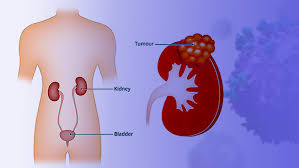
2. Targeted Therapies: Precision Medicine for Kidney Cancer
Dr. David Harris, a researcher and clinician at a major academic medical center, focuses on the role of targeted therapies in kidney cancer treatment. Unlike traditional chemotherapy, which affects both healthy and cancerous cells, targeted therapies are designed to specifically target the genetic mutations and molecular changes that drive cancer growth.
“Targeted therapies work by blocking the signaling pathways that tumors need to grow and survive,” Dr. Harris explains. One of the most well-known examples is the use of tyrosine kinase inhibitors (TKIs), such as sunitinib (Sutent) and sorafenib (Nexavar), which target the blood vessels that supply tumors with nutrients. By cutting off the blood supply, these drugs inhibit the growth of cancer cells.
Dr. Harris adds that the development of more advanced and specific targeted therapies, such as vascular endothelial growth factor (VEGF) inhibitors, is a significant step forward. “We are able to personalize treatment based on the genetic profile of the tumor, which leads to more effective treatments with fewer side effects.” This personalization is a key factor in improving treatment outcomes for patients with kidney cancer.
3. Early Detection: The Promise of Biomarkers
Early detection of kidney cancer is crucial for improving survival rates, as the disease often remains asymptomatic until it has progressed to more advanced stages. Dr. Emily Rodriguez, a molecular biologist specializing in kidney cancer, is working on identifying biomarkers—molecules that can signal the presence of cancer in the body—before the disease becomes symptomatic.
“Biomarkers are key to detecting kidney cancer in its earliest stages, when it’s most treatable,” Dr. Rodriguez says. Recent research has identified several promising biomarkers, including proteins and genetic mutations, that can be detected through blood tests, urine samples, or imaging. These biomarkers have the potential to significantly reduce the reliance on invasive procedures like biopsies.
Additionally, advancements in liquid biopsy techniques, which involve analyzing blood or urine samples for cancer-related genetic material, are revolutionizing early detection. Dr. Rodriguez mentions that these non-invasive methods not only detect kidney cancer but can also provide valuable insights into the tumor’s genetic makeup, allowing for more personalized treatment strategies. “We are moving toward a future where we can diagnose kidney cancer at a much earlier stage, improving survival rates dramatically.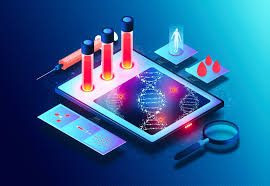 ”
”
4. Artificial Intelligence: Revolutionizing Treatment Planning
Dr. Michael Lee, a leading expert in the application of artificial intelligence (AI) in oncology, is excited about the potential of AI to revolutionize kidney cancer research and treatment. AI can analyze vast amounts of patient data—such as medical imaging, genetic information, and treatment outcomes—to identify patterns and make predictions that would be impossible for humans to discern on their own.
“AI is already being used to improve imaging techniques for kidney cancer,” Dr. Lee explains. “For example, machine learning algorithms can analyze CT scans and MRIs to detect tumors with higher accuracy than traditional methods. This can help us identify cancer at earlier stages and tailor treatment more effectively.”
In addition to improving diagnostic capabilities, AI is also being used to predict how patients will respond to different treatments. By analyzing historical data from similar patients, AI can help doctors select the most effective therapy, potentially reducing trial-and-error treatment approaches. “We are beginning to see AI’s potential in predicting which treatments will be most effective for each patient, allowing us to customize therapy to maximize success,” says Dr. Lee.
Moreover, AI is playing an important role in the development of new drugs. Machine learning algorithms can analyze vast libraries of compounds to predict which might have the potential to target kidney cancer cells. This could lead to the discovery of novel therapies more quickly than traditional methods.
5. Genetic Research: Unlocking the Secrets of Kidney Cancer
Dr. James Kim, a geneticist and researcher focused on kidney cancer, emphasizes the importance of genetic research in understanding the underlying causes of the disease. “We know that kidney cancer is driven by a variety of genetic mutations, and we are now uncovering more about these mutations thanks to advances in genomic sequencing,” Dr. Kim explains.
One of the most notable discoveries in recent years has been the identification of mutations in the VHL (von Hippel-Lindau) gene, which plays a significant role in the development of kidney cancer. This discovery has paved the way for targeted treatments that specifically address the genetic abnormalities caused by the VHL mutation.
Additionally, Dr. Kim points to the ongoing research into the genetic and molecular underpinnings of kidney cancer, which is helping to identify new targets for therapy. “By understanding how these genetic mutations drive cancer progression, we can develop drugs that specifically target these pathways, improving treatment outcomes.”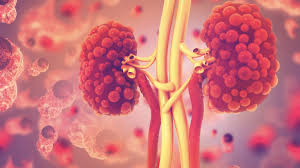
Conclusion
The five doctors featured in this article represent just a fraction of the exciting progress being made in kidney cancer research. From the promise of immunotherapy and targeted therapies to the advancements in early detection through biomarkers and AI, the future of kidney cancer treatment looks brighter than ever. With continued research and collaboration, we are moving closer to a world where kidney cancer can be diagnosed earlier, treated more effectively, and ultimately, overcome.






Comments 0
Sign in to join the conversation.
No comments yet. Be the first to say something.