

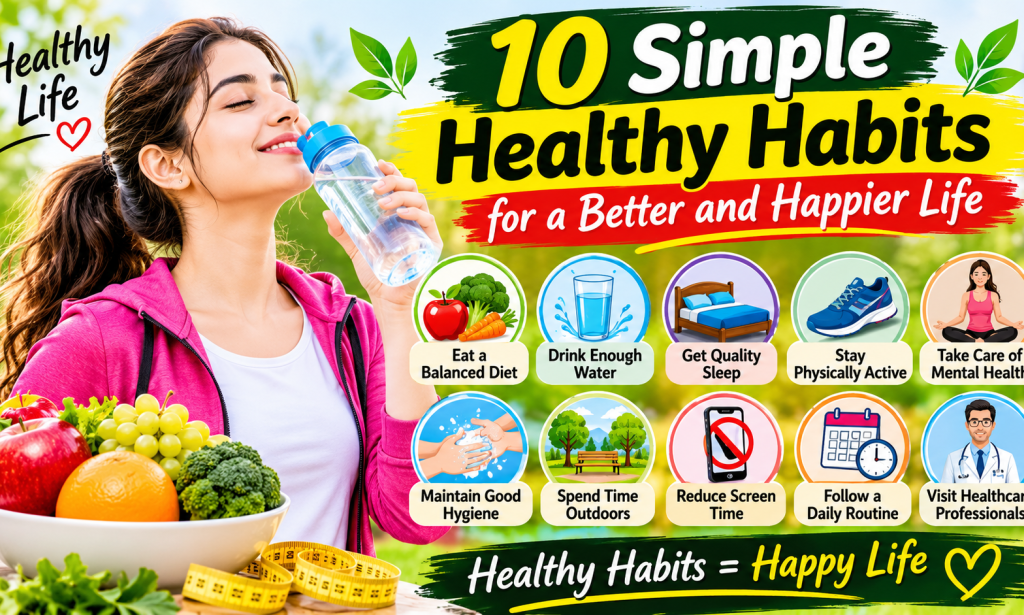
10 Simple Healthy Habits for a Better and Happier life
Introduction
Good health is one of the most important parts of a happy life. Everyone wants to feel active, energetic, and comfortable in their daily routine. However, maintaining good health does not always require expensive products, complicated plans, or major lifestyle changes.
Small daily habits can make a positive difference over time. Eating balanced meals, drinking enough water, getting quality sleep, staying physically active, and managing stress are some simple ways to support overall well-being.
In today's busy world, many people spend long hours working, studying, or using mobile phones. These activities can sometimes affect their daily routines. Developing healthy habits can help create a better balance between work, rest, and personal life.
Here are ten simple habits that can help you build a healthier lifestyle.
1. Eat a Balanced Diet

Healthy eating is an important part of maintaining overall health. Your body needs different nutrients to function properly. A balanced diet includes fruits, vegetables, whole grains, protein-rich foods, and healthy fats.
Try to include different types of foods in your daily meals. Vegetables provide important vitamins and minerals, while fruits offer fiber and other beneficial nutrients.
You can also include foods such as eggs, beans, fish, milk, yogurt, and nuts as part of a balanced eating routine.
Instead of focusing on one particular food, aim for variety and balance. Eating regular, nutritious meals can help support your body's daily needs.
2. Drink Enough Water
Water plays an important role in the human body. It supports digestion, helps regulate body temperature, and allows different organs to function properly.
Make drinking water a regular part of your daily routine. Keep a water bottle nearby, especially when studying, working, or spending time outdoors.
Your water needs may change depending on the weather, activity level, and individual health conditions.
Choose water regularly instead of relying mainly on sugary drinks. Staying hydrated is a simple habit that supports general well-being.
3. Get Quality Sleep
Sleep is essential for both physical and mental health. During sleep, the body rests and carries out important processes that support memory, concentration, and recovery.
Try to maintain a regular sleeping schedule. Going to bed and waking up at similar times can help establish a healthy routine.
Make your sleeping environment comfortable, quiet, and relaxing. Avoid using mobile phones immediately before bedtime if they make it difficult to relax.
Most adults need around seven to nine hours of sleep each night, while teenagers generally need eight to ten hours.
Good sleep can help improve mood, attention, and everyday performance.
4. Stay Physically Active
Physical activity is beneficial for people of different ages. Regular movement supports heart health, strengthens muscles and bones, and can improve mood.
You do not need expensive gym equipment to stay active. Walking, cycling, dancing, playing outdoor games, and other enjoyable activities can help you move more during the day.
Try to reduce long periods of sitting by taking short movement breaks.
Choose activities that you enjoy and that are suitable for your age and abilities. Consistency is more important than following complicated exercise routines.
5. Take Care of Your Mental Health
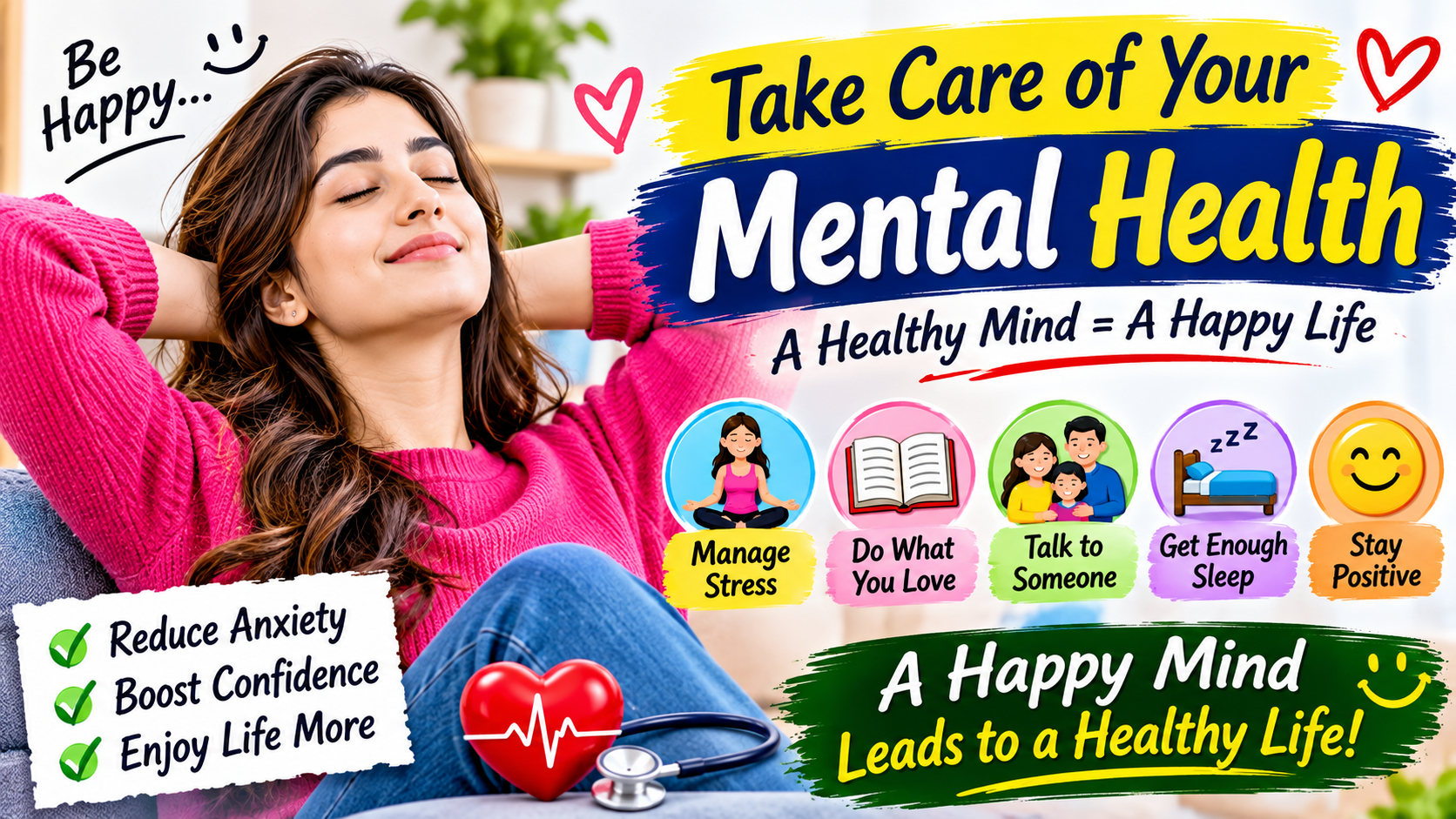
Mental health is just as important as physical health. Daily responsibilities, school, work, and personal challenges can sometimes create stress.
Take time for activities that help you relax. Reading, listening to music, spending time with family, enjoying nature, and practicing simple breathing exercises may help you feel calmer.
Talk to someone you trust when you are facing difficulties. You do not have to manage every challenge alone.
Maintaining healthy relationships and making time for yourself can support emotional well-being.
6. Maintain Good Personal Hygiene
Personal hygiene helps protect your health and supports a clean environment.
Wash your hands regularly, especially before eating and after using the bathroom. Brush your teeth twice a day and maintain regular dental checkups.
Take regular baths or showers, wear clean clothes, and keep your surroundings tidy.
These simple habits can help reduce the spread of germs and support everyday health.
7. Spend Time Outdoors
Spending time outdoors can be a refreshing part of a healthy lifestyle. Walking in a park, gardening, or enjoying fresh air can help you take a break from indoor activities.
Natural daylight also helps regulate the body's internal clock and supports healthy sleep patterns.
Remember to protect yourself from excessive sun exposure by using shade, suitable clothing, and sunscreen when appropriate.
Even a short outdoor break can make your daily routine more enjoyable.
8. Reduce Excessive Screen Time
Technology is useful for education, communication, and entertainment. However, spending too much time on screens may affect sleep, concentration, and daily activities.
Try to take regular breaks when using a computer or mobile phone.
Avoid unnecessary phone use during meals and before bedtime. Make time for hobbies, outdoor activities, reading, and conversations with family members.
A healthy balance between technology and other activities can improve your daily routine.
9. Build a Consistent Daily Routine
A simple daily routine can make healthy choices easier. Plan time for meals, work, study, physical activity, relaxation, and sleep.
You do not need to change everything in one day. Start with one or two habits and gradually add more.
For example, you can begin by drinking water after waking up, eating a balanced breakfast, and taking a short walk.
Small, realistic changes are often easier to maintain than sudden lifestyle changes.
10. Visit Healthcare Professionals Regularly
Taking care of your health also means seeking professional advice when needed.
Regular health checkups can help identify potential health concerns. Follow appropriate vaccination recommendations and consult qualified healthcare professionals if you experience unusual or ongoing symptoms.
Avoid believing every health tip you see on social media. Not all online information is accurate or suitable for everyone.
Reliable medical advice should come from qualified healthcare professionals and trusted health organizations.
Conclusion
Living a healthy life does not require perfection. It starts with simple daily decisions that support your physical and mental well-being.
Eating balanced meals, drinking enough water, sleeping properly, staying active, maintaining hygiene, and managing stress are useful habits to develop.
Remember that everyone's health needs are different. Choose realistic habits that suit your lifestyle and seek professional guidance when necessary.
Start with small positive changes today. Over time, these habits can help you create a healthier, more balanced, and happier life.









Comments 0
Sign in to join the conversation.
No comments yet. Be the first to say something.