

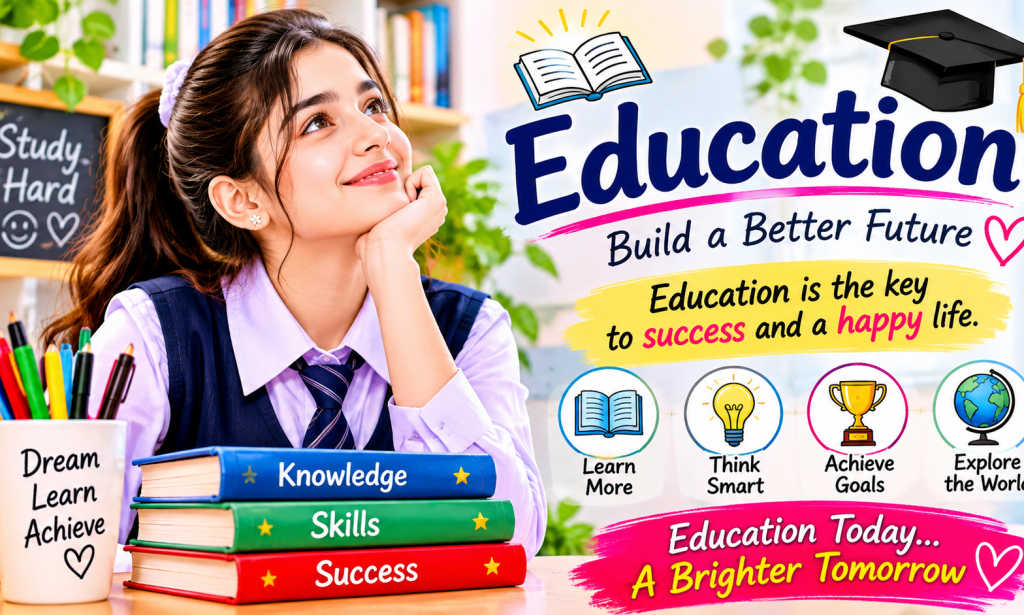
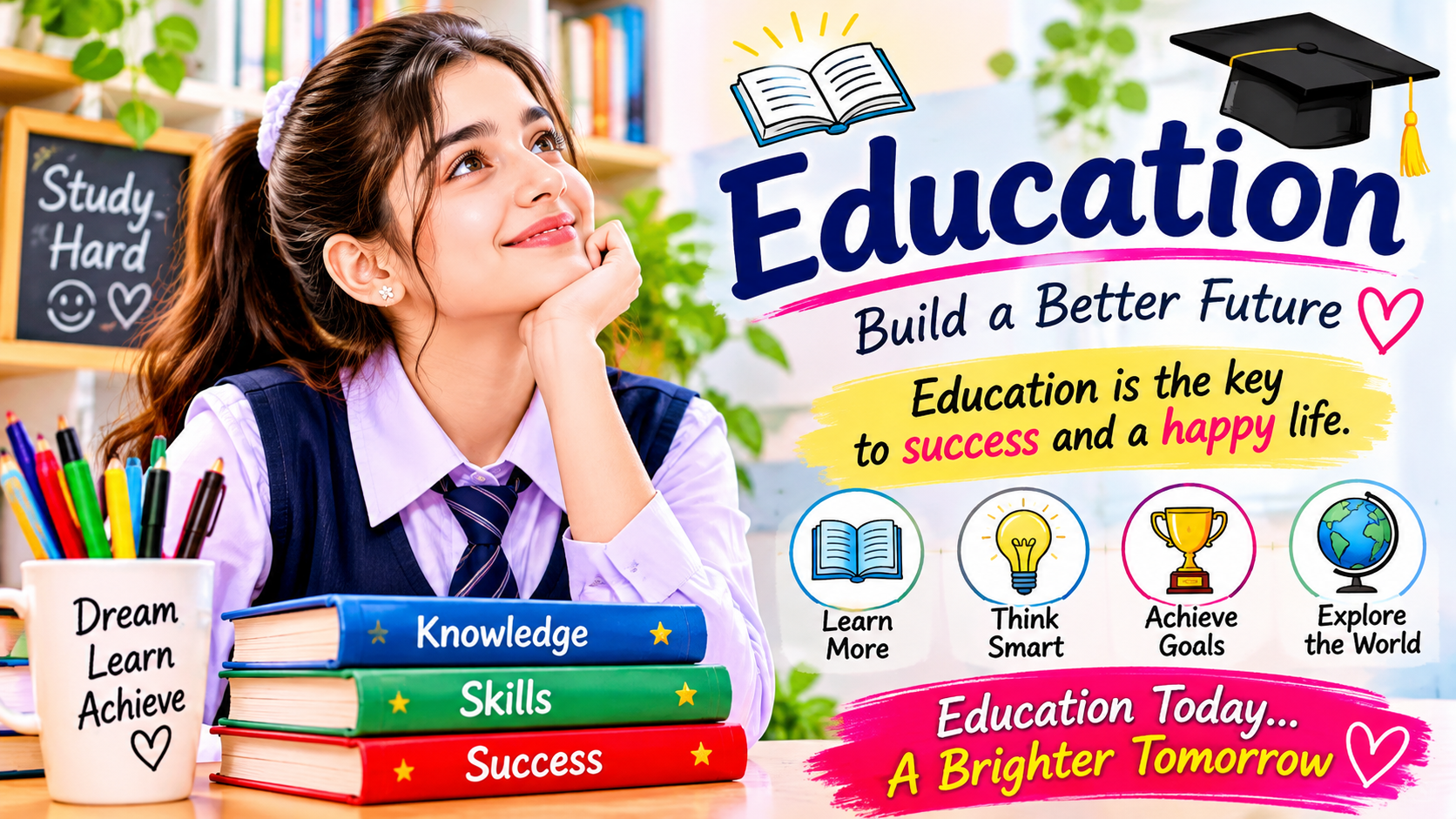
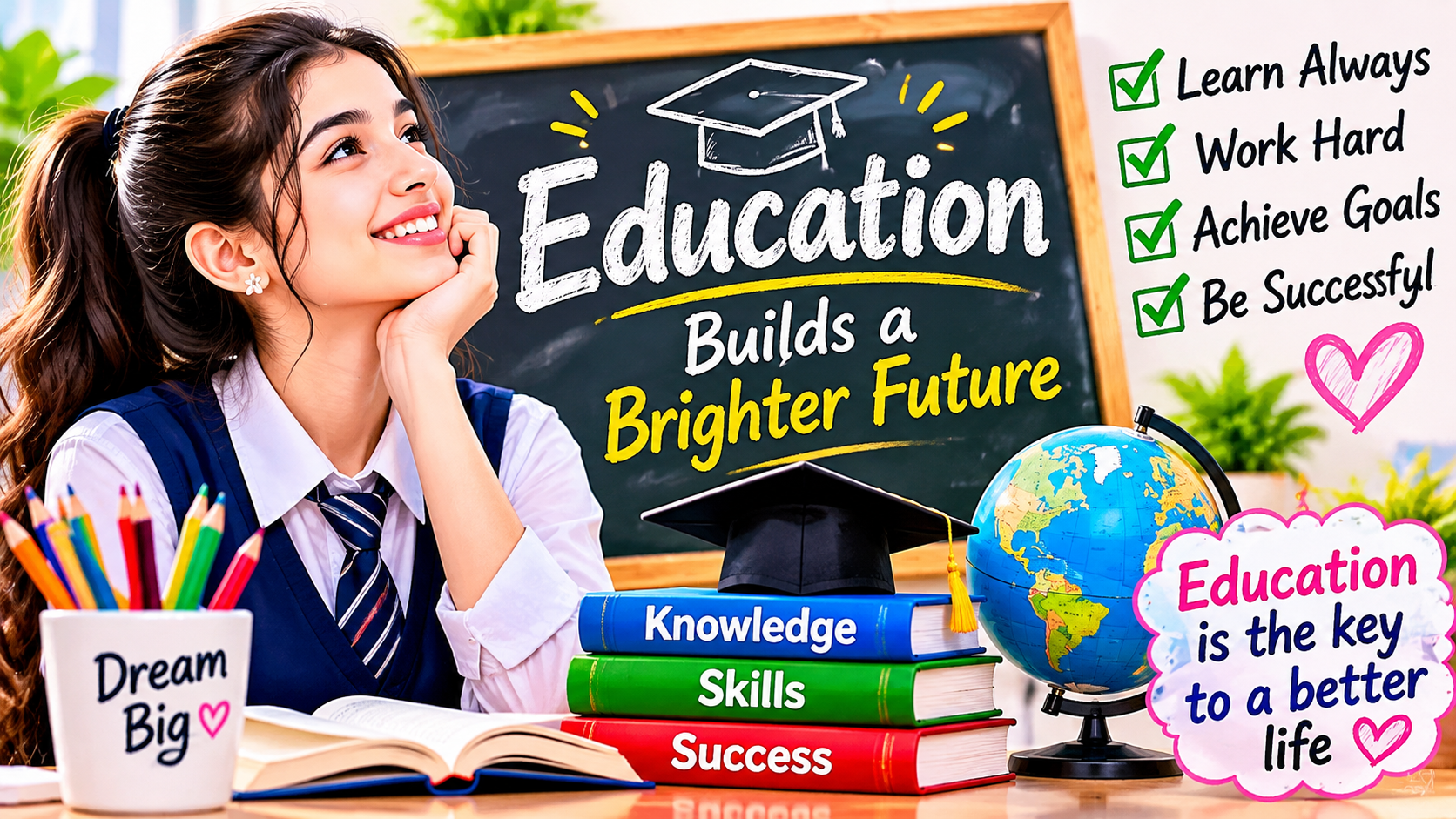
Education is one of the most important parts of human life. It gives us knowledge, teaches us valuable skills, and helps us understand the world around us. Education is not only about reading books, passing examinations, or getting good marks. It is also about learning good values, developing confidence, improving our thinking, and becoming responsible members of society.
Every person deserves the opportunity to receive a good education. It helps people build a better future and creates opportunities for personal and professional growth. Education is a powerful tool that can change lives and make society stronger
1. Importance of Education
Education plays an important role in shaping our lives. It helps us understand different subjects, solve problems, and make better decisions. An educated person can understand situations more clearly and deal with everyday challenges.
Education also teaches us discipline, patience, honesty, and responsibility. These qualities help us become better human beings. It gives us the confidence to express our opinions and communicate with others.
Without education, many opportunities can become difficult to achieve. Therefore, everyone should understand its value and try to learn something new throughout life.
2. Building a Better Future
A good education can open many doors to success. It helps students discover their interests and choose suitable careers. Some students want to become doctors, teachers, engineers, scientists, or business owners. Education provides the basic knowledge and skills needed to follow these dreams.
Education also helps people become independent. When people gain knowledge and professional skills, they can find better opportunities and support themselves and their families.
A successful future does not depend only on educational certificates. Hard work, practical experience, confidence, and continuous learning are also important.Role of Teacher
3. Role of teacher
Teachers play a valuable role in every student's life. They do more than explain lessons from textbooks. They guide students, answer their questions, encourage their efforts, and help them understand difficult topics.
A good teacher inspires students to work hard and believe in themselves. Teachers also teach important values such as respect, kindness, honesty, and cooperation.
Students should respect their teachers, listen carefully, complete their assignments, and ask questions whenever they need help. A positive relationship between teachers and students makes learning more enjoyable and effective.
4. Education for All
Education is equally important for girls and boys. Every child should have the right to learn, develop skills, and achieve personal goals.
Educated girls can contribute to their families, communities, and the economy. Education helps women become confident, independent, and aware of their rights and responsibilities.
Boys also benefit from education because it prepares them to become responsible adults and contribute positively to society.
When both girls and boys receive equal educational opportunities, families and communities become stronger.
5. Confidence and communication
Education helps people become more confident. Students learn how to express their thoughts, share ideas, and communicate with different people.
Reading, writing, speaking, and participating in classroom activities can improve communication skills. These skills are useful in schools, workplaces, and everyday life.
Confidence helps people face challenges without giving up easily. Education also teaches students to respect different opinions and listen to others.
6. Technology in Education
Technology has changed the way people learn. Today, students can use computers, smartphones, educational websites, and online courses to gain knowledge.
Online learning makes educational resources available to people in different places. Students can watch lessons, read digital books, attend online classes, and practice new skills.
However, technology should be used wisely. Students should avoid unnecessary distractions and focus on educational activities. Parents and teachers can guide children towards safe and useful internet resources.
Technology cannot completely replace teachers, but it can make learning easier and more interesting.
7. Personal Development
Education helps people improve their personalities and develop positive habits. It teaches them to think independently, understand different situations, and solve problems.
Students learn the importance of time management, teamwork, patience, and responsibility. These qualities are useful not only in education but also in professional and personal life.
Education also encourages creativity. When students read books, ask questions, and explore new ideas, they develop their imagination and discover their abilities.
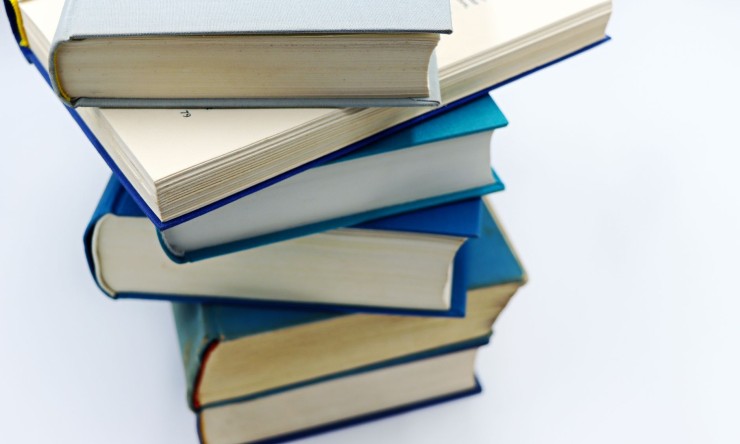
8. Value of Reading Books
Reading is one of the best habits for improving knowledge. Books introduce us to new ideas, cultures, experiences, and information.
Reading regularly improves vocabulary, writing skills, concentration, and general understanding. Students who read books often find it easier to understand different subjects.
People can read storybooks, science books, history books, newspapers, and educational articles according to their interests.
Even reading for a few minutes every day can create a positive learning habit.
9. Reducing Poverty
Education can help reduce poverty by creating better employment and business opportunities. People with useful knowledge and skills may have more options to earn a living and improve their financial situations.
Education also helps people understand financial decisions, manage resources, and plan for the future.
When more people receive quality education, communities can develop stronger businesses, better services, and more opportunities for everyone.
However, education alone cannot solve every economic problem. Equal opportunities, employment, and community support are also necessary.
10. Role of Parents
Parents are a child's first teachers. They play an important role in developing learning habits and encouraging children to study.
Parents can support their children by providing a peaceful study environment, helping them manage time, and showing interest in their progress.
They should encourage children instead of putting unnecessary pressure on them. Every child learns at a different speed, so patience and support are important.
When parents and teachers work together, students can receive better guidance and support.
11. Educational Challenges
Many children around the world face difficulties in receiving quality education. Some families cannot afford school expenses, while others live in areas where schools and educational facilities are limited.
Poverty, lack of transportation, insufficient learning materials, and limited access to technology can also create problems.
Governments, schools, communities, and organizations should work together to improve educational opportunities.
Providing affordable schools, trained teachers, books, scholarships, and safe classrooms can help more children continue their education.
12. Practical Skills
Education should not be limited to theoretical knowledge. Practical skills are also important for preparing students for real-life situations.
Students should learn computer skills, communication, problem-solving, teamwork, and creative thinking.
Practical activities, experiments, projects, and internships can help students understand how knowledge is used in everyday life.
Learning useful skills can also help young people become entrepreneurs and create employment opportunities.
13. Better Society
Education helps build a peaceful, responsible, and developed society. Educated people can better understand social problems and take part in finding solutions.
It teaches respect for others, equality, cooperation, and responsibility. Education can also help people understand the importance of cleanliness, environmental protection, and public health.
When individuals use their knowledge to help others, the whole community benefits.
14. Student Success
Students can improve their educational performance by following simple habits. They should attend classes regularly, listen carefully, complete assignments, and revise their lessons.
Making a daily timetable can help students manage their time. They should also take breaks, ask questions, and seek help when they do not understand something.
Success requires patience and consistent effort. Students should not lose hope after making mistakes because mistakes are a natural part of learning.
15. Conclusion
Education is the foundation of knowledge, confidence, personal growth, and success. It helps people understand the world, develop useful skills, and create better opportunities for themselves and others.
Every child deserves access to quality education, regardless of gender, background, or financial situation. Parents, teachers, governments, and communities should work together to support learning.
We should never stop learning because education is a lifelong journey. Remember, education is not only about earning certificates; it is about becoming knowledgeable, responsible, confident, and helpful human beings.
Education today can create a brighter and better tomorrow.






Comments 0
Sign in to join the conversation.
No comments yet. Be the first to say something.