

Introduction
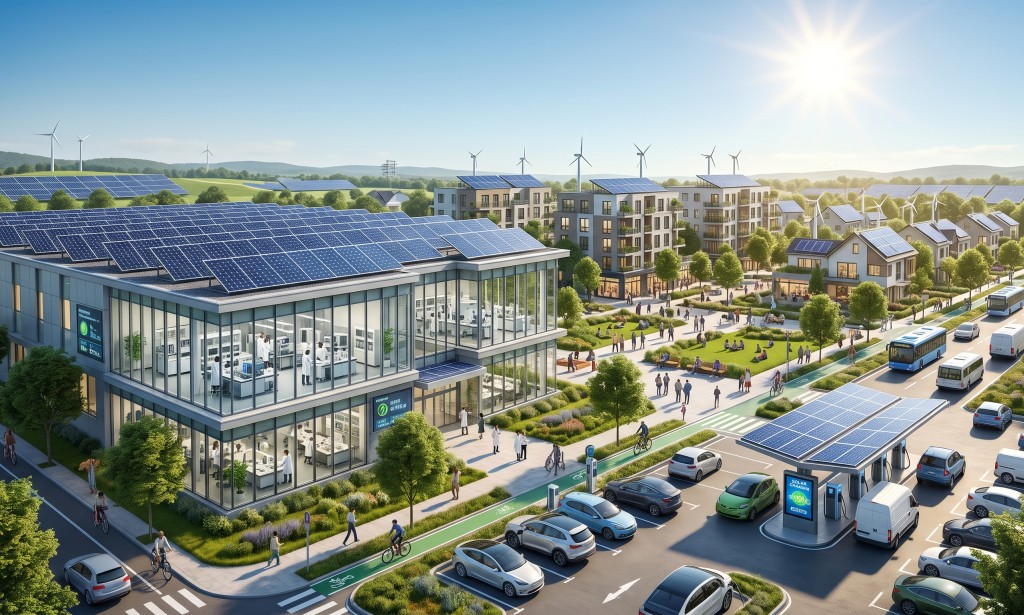
Imagine a world where homes generate their own electricity, schools continue operating during power outages, and remote villages have access to modern technology without depending entirely on traditional electricity networks. This vision is gradually becoming a reality through solar energy. As scientists search for cleaner and more sustainable ways to meet increasing energy demands, sunlight has emerged as one of the most promising natural resources.
Solar energy is the energy received from the Sun in the form of electromagnetic radiation. Although humans have used sunlight for heating and agriculture for centuries, modern scientific developments allow us to transform it directly into electricity. This achievement has created new opportunities in engineering, environmental protection, education, healthcare, and everyday living.
Understanding how solar energy works helps explain why it is becoming an important part of modern society.
The Science Behind Solar Energy
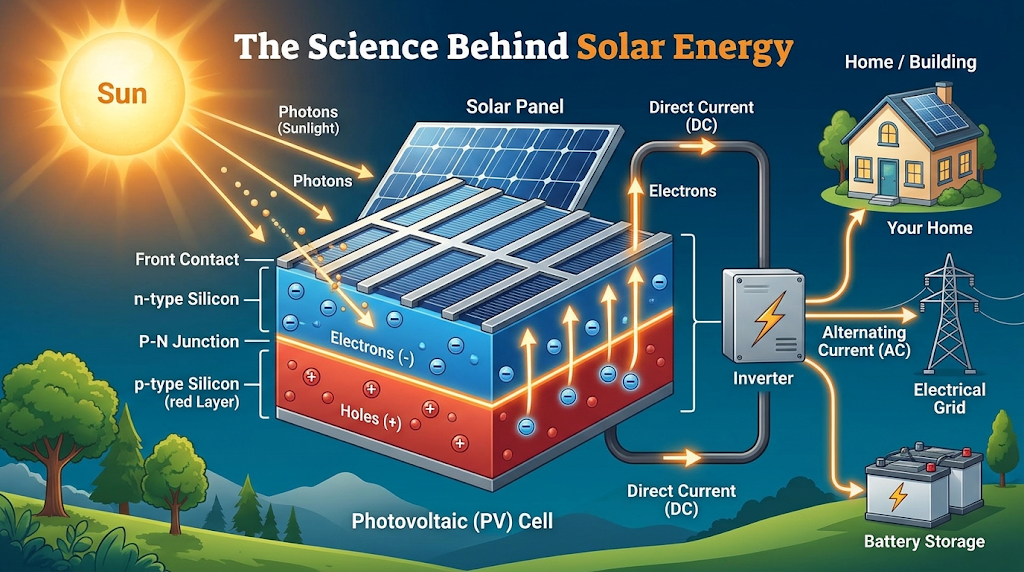
Solar electricity is primarily generated through a process known as the photovoltaic effect. Solar panels contain photovoltaic cells, commonly manufactured using silicon, a semiconductor material.
When sunlight reaches a solar cell, photons transfer energy to electrons within the semiconductor. This energy can create mobile electrical charges. The internal electric field of the solar cell helps separate these charges, allowing electricity to flow through an external circuit.
The electricity produced by photovoltaic panels is direct current (DC). However, most household appliances operate using alternating current (AC). An inverter converts DC electricity into AC electricity, making solar energy suitable for everyday applications.
The amount of electricity generated depends on several factors, including sunlight intensity, panel orientation, temperature, shading, and system efficiency.
Researchers continue improving solar-cell materials and manufacturing techniques to increase electricity production while reducing costs.
[Insert Article Image 1 Here: How Solar Panels Convert Sunlight into Electricity]
Why Solar Energy Matters for the Environment
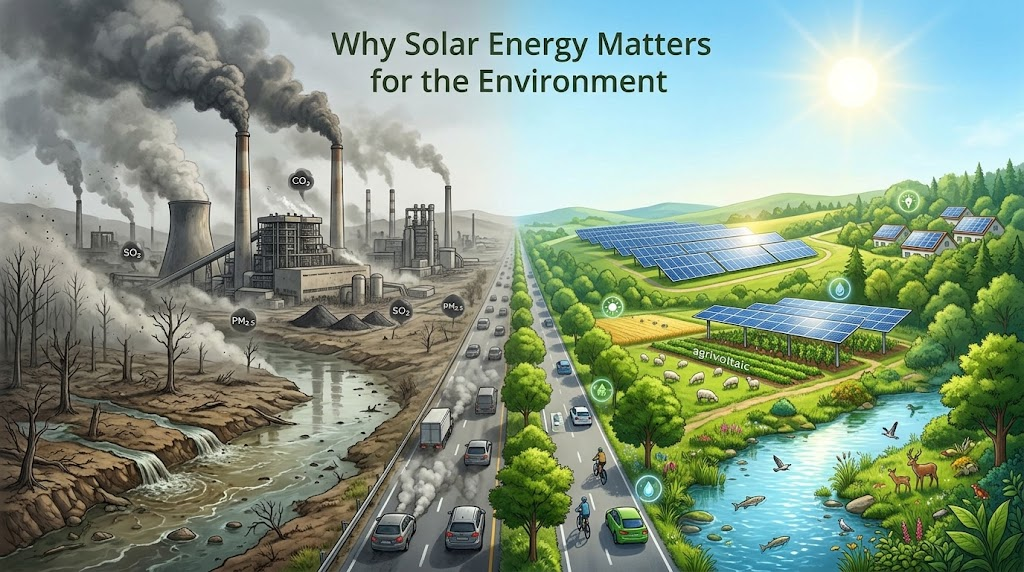
One of the greatest advantages of solar energy is its ability to generate electricity without directly burning fossil fuels.
Traditional power plants that burn coal, oil, or natural gas release greenhouse gases during electricity generation. Carbon dioxide contributes to global warming by trapping heat within Earth's atmosphere.
Solar photovoltaic systems produce electricity without direct combustion emissions during operation. When solar electricity replaces fossil-fuel-based generation, it can reduce greenhouse gas emissions and certain forms of air pollution.
However, solar technology is not completely free from environmental impacts. Manufacturing photovoltaic panels requires raw materials, industrial processing, transportation, and energy. Batteries and other equipment also have environmental footprints.
Scientists therefore study the complete life cycle of solar technologies, from material extraction and manufacturing to operation, recycling, and disposal.
Responsible manufacturing, improved recycling systems, and longer equipment lifetimes can make solar technology more environmentally sustainable.
Solar Energy in Everyday Life
Solar technology is no longer limited to large power stations. It is increasingly used in homes, businesses, agricultural systems, and public facilities.
Residential solar installations allow households to generate electricity during daylight hours. Depending on the system design and local regulations, excess electricity may be exported to the grid or stored in batteries.
Solar-powered water pumps offer another practical application, especially in agricultural communities. Farmers can use sunlight to pump water for irrigation, reducing dependence on diesel-powered pumping equipment.
Solar streetlights can provide outdoor illumination in areas where extending electricity infrastructure is expensive. These systems commonly combine photovoltaic panels, rechargeable batteries, and energy-efficient LED lights.
Small solar devices are also useful for charging mobile phones, operating communication equipment, and providing emergency lighting.
Nevertheless, solar installations require appropriate design, maintenance, and electrical protection to operate safely and reliably.
The Role of Solar Energy in Education and Healthcare
Reliable electricity is essential for modern education. Schools need energy for lighting, computers, internet equipment, laboratory instruments, and ventilation.
In locations where electricity supplies are unreliable, appropriately designed solar systems can support educational activities. Battery storage can help operate selected equipment when sunlight is unavailable.
Solar-powered educational facilities may also provide practical opportunities for students to understand renewable energy, electronics, and environmental science.
Healthcare facilities can benefit from reliable electricity as well. Medical refrigerators, lighting systems, communication devices, and certain diagnostic instruments depend on continuous power.
Solar installations combined with properly sized energy storage and backup arrangements may improve electricity reliability in remote healthcare settings.
However, critical medical equipment requires carefully engineered systems. Solar panels alone cannot guarantee uninterrupted electricity because production varies with weather conditions and the time of day.
[Insert Article Image 2 Here: Solar-Powered School and Battery Storage]
Can Solar Energy Work at Night?
A common misunderstanding is that solar panels generate electricity throughout the night. Conventional photovoltaic panels require light to produce useful electrical power and do not generate meaningful electricity in darkness.
Scientists and engineers address this limitation through energy storage and electricity network integration.
During sunny periods, surplus solar electricity can charge batteries. The stored energy can then supply electricity after sunset or during periods of reduced sunlight.
Lithium-ion batteries are widely used in many modern energy storage applications because of their relatively high energy density and rechargeable design.
Other technologies, including pumped hydroelectric storage and thermal energy storage, can also help balance energy supply and demand.
Energy storage introduces additional costs and requires suitable safety systems. Consequently, the most effective solar solution depends on electricity demand, available sunlight, local infrastructure, and economic conditions.
New Scientific Discoveries in Solar Technology
Modern solar research focuses on improving efficiency, reducing material consumption, and developing new applications.
One promising research area involves perovskite solar cells. These materials can absorb sunlight effectively and may be manufactured using processes different from those used for conventional silicon cells.
Scientists are also investigating tandem solar cells, which combine materials designed to absorb different portions of the solar spectrum. This approach can capture sunlight more effectively than a single absorbing layer under suitable conditions.
Flexible photovoltaic materials represent another developing technology. Researchers are exploring lightweight solar devices that could potentially be integrated into building surfaces, portable electronics, and specialized equipment.
Despite these advances, emerging solar technologies face challenges involving durability, manufacturing consistency, long-term performance, and environmental safety.
Scientific progress depends not only on achieving high laboratory efficiency but also on developing products that remain reliable under real operating conditions.
Challenges Facing Solar Energy
Although solar technology offers important advantages, several challenges remain.
The first is intermittency. Electricity generation changes throughout the day and is influenced by clouds, seasonal conditions, and geographical location.
The second challenge involves installation costs. Solar systems can reduce electricity purchases over time, but initial investments may be difficult for low-income households and small organizations.
Another concern is the availability of suitable installation space. Rooftop systems require adequate structural strength, appropriate orientation, and limited shading.
Large solar facilities must also consider land use, local ecosystems, and connections to electricity networks.
Finally, aging solar panels and batteries create a growing need for effective recycling and waste-management systems.
Addressing these issues requires cooperation among scientists, governments, manufacturers, electricity providers, and communities.
The Future of Solar Energy
The future of solar energy is closely connected to advances in materials science, artificial intelligence, battery technology, and electricity network management.
Smart energy management systems can help coordinate solar generation, battery charging, and electricity consumption. Forecasting methods can estimate expected solar production using weather information.
Artificial intelligence may support fault detection, maintenance planning, and improved operation of renewable energy systems.
Solar technology also has opportunities beyond conventional electricity generation. Solar thermal systems can provide heat, while solar-powered processes may support water treatment and selected industrial applications.
In developing countries, decentralized solar systems may offer additional options for communities facing unreliable electricity access. Their success, however, depends on financing, maintenance services, appropriate policies, and community needs.
No single technology can solve every energy problem. Solar electricity works best as part of a broader strategy involving energy efficiency, reliable grids, storage technologies, and other suitable energy sources.
Conclusion
Solar energy demonstrates how scientific knowledge can transform an abundant natural resource into useful electricity. Through the photovoltaic effect, sunlight can power homes, schools, communication systems, agricultural equipment, and many other applications.
Its environmental advantages make it an important technology for reducing dependence on fossil fuels, although manufacturing impacts, intermittency, and recycling challenges must also be considered.
As scientific research continues, better solar materials, improved storage technologies, and intelligent energy systems could make solar electricity increasingly practical and accessible. The long-term value of solar energy lies not only in producing electricity but also in supporting a cleaner, more resilient, and technologically advanced future.










Comments 0
Sign in to join the conversation.
No comments yet. Be the first to say something.