
The Beauty of Pakistani Culture: Traditions, Heritage, and Modern Life
Summary:
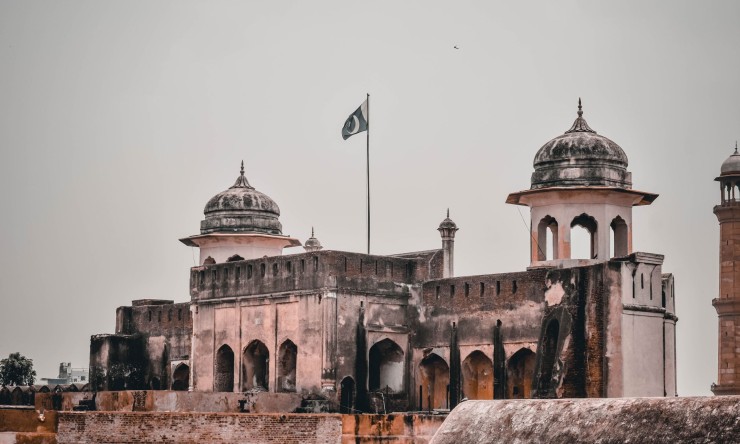
Pakistani culture is a beautiful combination of traditions, languages, clothing, food, music, festivals, and values. Its rich heritage reflects unity, hospitality, respect, and diversity, making it an important part of the country's identity.
The Beauty of Pakistani Culture: A Rich Heritage of Traditions and Values
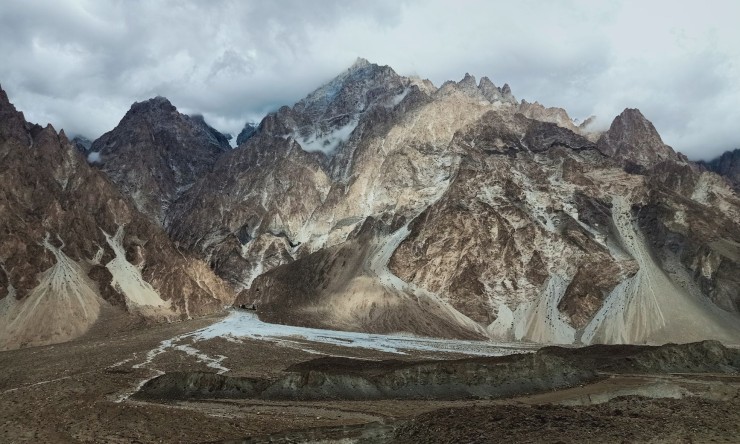
Culture is an important part of every society because it represents the identity, history, traditions, and lifestyle of its people. Pakistani culture is one of the most diverse and fascinating cultures in the world. It reflects centuries of history, different regional traditions, beautiful languages, traditional clothing, delicious food, music, and strong family values. Pakistan is home to several ethnic communities, including Punjabis, Sindhis, Pashtuns, Baloch, and people from Gilgit-Baltistan, each contributing something unique to the country's cultural identity. Despite their differences, these communities share many common values, including hospitality, respect for elders, generosity, and a strong connection to family.
Traditional Clothing and Cultural Identity
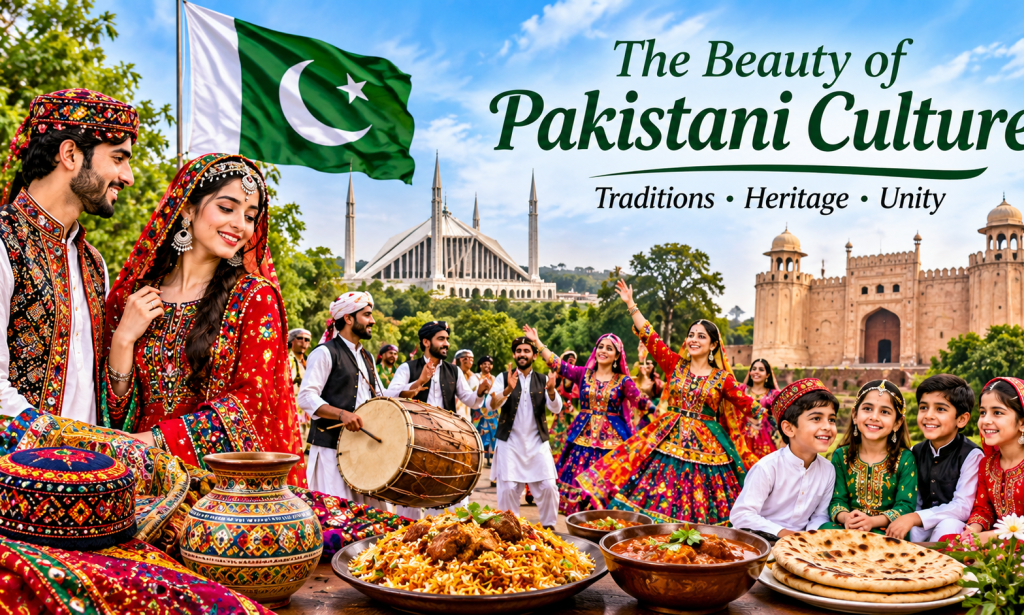
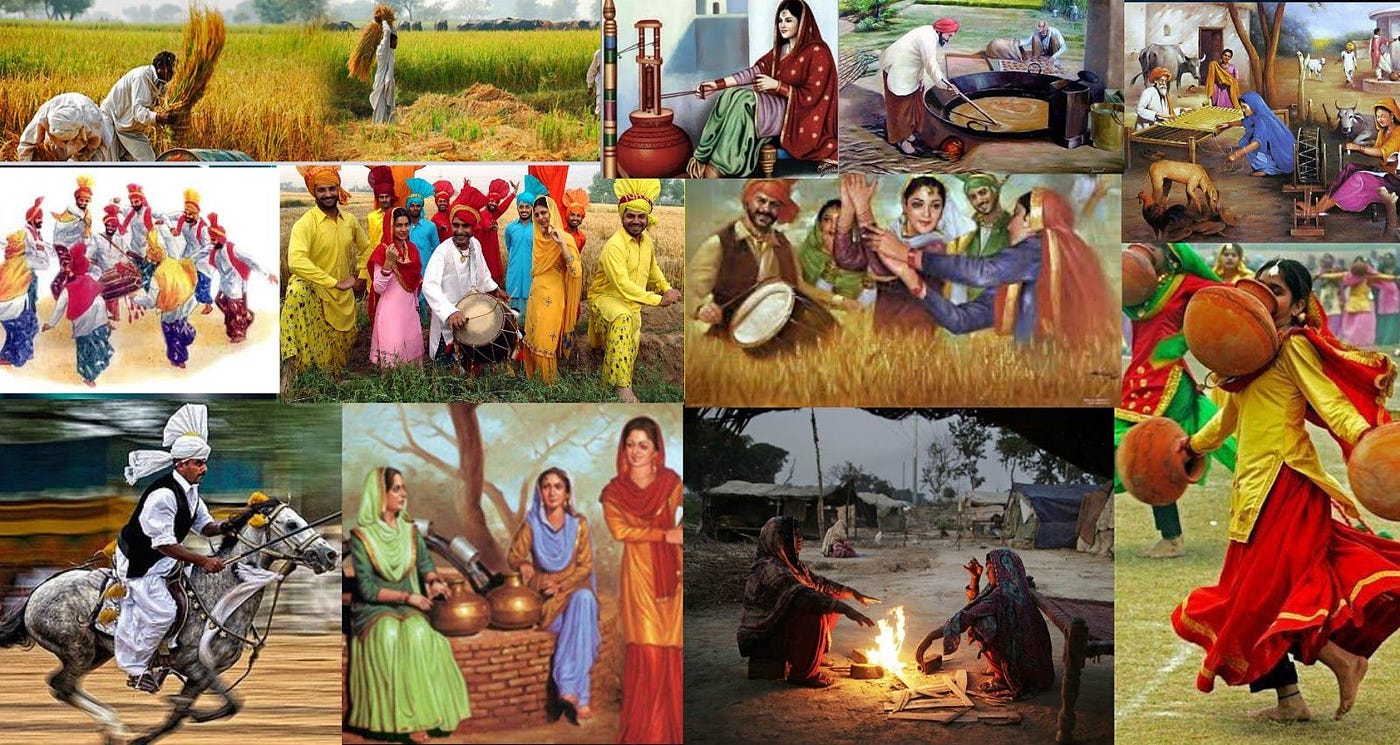
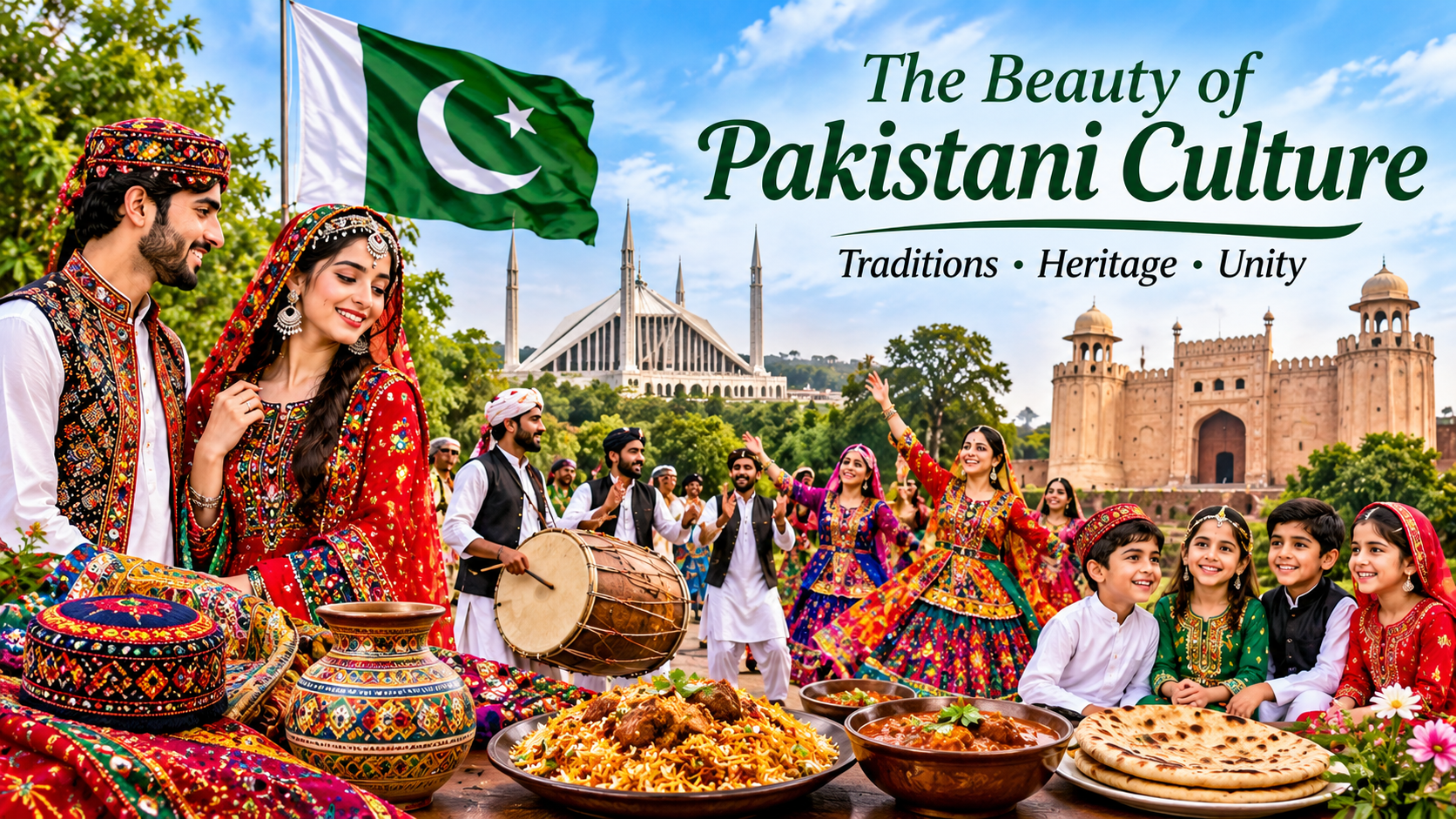
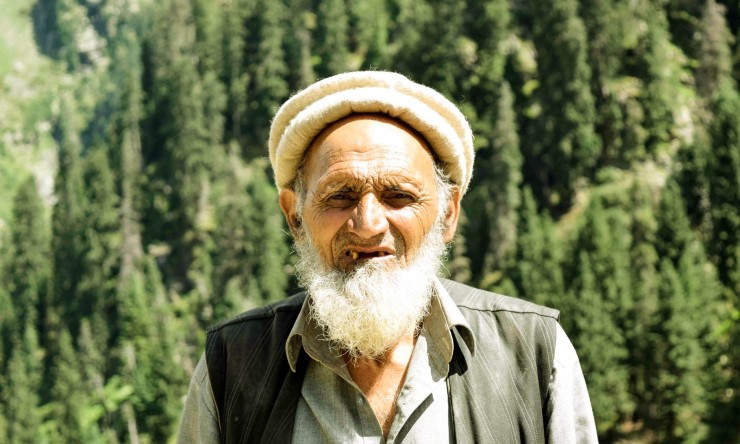
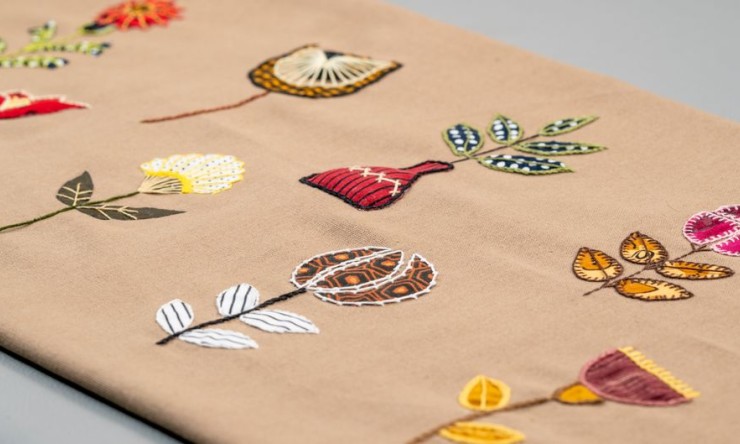
Traditional clothing is one of the most visible expressions of Pakistani culture. The shalwar kameez is widely worn by both men and women and is recognized as Pakistan's national dress. However, clothing styles vary across different regions. In Punjab, colorful embroidered dresses and traditional turbans are popular. Sindhi culture is famous for its beautiful Ajrak and Sindhi topi, which represent regional identity and artistic heritage. Pashtun clothing often includes traditional loose garments, while Balochi dresses are known for their detailed embroidery and distinctive designs. These traditional outfits are especially visible during weddings, cultural festivals, and national celebrations.
Pakistani Food and Traditional Hospitality
Food plays an essential role in Pakistani culture. Pakistani cuisine is famous for its rich flavors, traditional spices, and variety of dishes. Popular foods include biryani, nihari, karahi, haleem, chapli kebab, and various types of traditional bread. Every region has its own special dishes and cooking methods that reflect local history and traditions. Food is also closely connected to hospitality. In Pakistani society, guests are treated with great respect, and serving delicious meals is considered a way of showing kindness and generosity. Family gatherings, weddings, and festivals are often celebrated with traditional dishes that bring people together.
Languages, Music, and Traditional Arts
Pakistan is a multilingual country with several regional languages, including Punjabi, Sindhi, Pashto, Balochi, Saraiki, and many others. Urdu serves as the national language and plays an important role in connecting people from different regions. Music is another important part of Pakistani cultural heritage. Traditional instruments such as the dhol, tabla, rubab, and flute are used in different musical styles. Folk music, classical music, and regional dances reflect the history and emotions of local communities. Pakistani handicrafts, including pottery, embroidery, carpet weaving, woodwork, and truck art, also demonstrate the creativity and artistic skills of local people.
Festivals and Cultural Celebrations
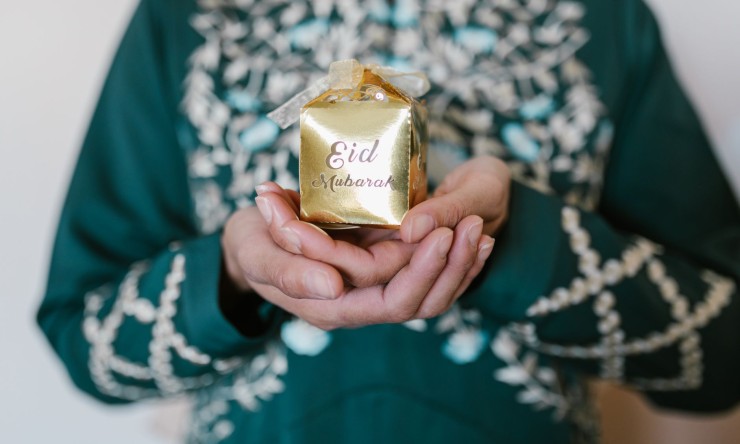
Festivals are an important part of Pakistani social life. Eid-ul-Fitr and Eid-ul-Adha are among the most widely celebrated occasions, bringing families and communities together through prayers, meals, gifts, and acts of kindness. Pakistan Day and Independence Day are also celebrated with enthusiasm through national flags, cultural performances, decorations, and public events. Different regions organize cultural festivals that showcase traditional music, dances, clothing, handicrafts, and local food. These celebrations help younger generations understand their heritage and develop a stronger connection with their cultural roots.
The Importance of Preserving Pakistani Culture
In the modern world, technology, social media, and globalization are changing people's lifestyles. While modern development brings many opportunities, preserving cultural traditions remains important. Young generations should learn regional languages, respect traditional values, support local artists, and participate in cultural activities. Schools, families, museums, and cultural organizations can play an important role in protecting historical traditions and promoting awareness about Pakistan's heritage. Modern lifestyles and cultural traditions can exist together when people appreciate their history while welcoming positive changes.
Conclusion
Pakistani culture is a valuable national treasure that represents diversity, unity, creativity, and strong social values. Its traditional clothing, delicious food, regional languages, music, festivals, and hospitality make it unique and meaningful. Preserving this heritage is not only the responsibility of the government but also of every citizen. By respecting traditions and passing cultural knowledge to future generations, Pakistan can protect its identity and continue celebrating the beauty of its rich cultural heritage.Culture: The Heart of Our Society
Culture is an important part of human life. It represents the traditions, values, beliefs, languages, customs, and lifestyles of people. Every country and community has its own unique culture that makes it special. Culture connects people with their history and teaches them how to live together with respect and kindness.
Pakistan is a country with a rich and beautiful culture. It has different traditions, languages, foods, dresses, and festivals. People in Punjab, Sindh, Balochistan, Khyber Pakhtunkhwa, and other regions celebrate their cultural identities in different ways. Traditional clothes like shalwar kameez, colorful dresses, and beautiful embroidery are important parts of Pakistani culture.
Food is also a major part of culture. Pakistani people enjoy delicious dishes such as biryani, nihari, karahi, and many traditional sweets. Families often gather to share meals and celebrate special occasions together.
Festivals also play an important role in cultural life. Eid-ul-Fitr and Eid-ul-Adha are celebrated with happiness, prayers, delicious food, and family gatherings. People wear new clothes, visit relatives, and share gifts with one another.
Language is another important part of culture. Pakistan has several languages, including Urdu, Punjabi, Sindhi, Pashto, and Balochi. These languages represent the beauty and diversity of our nation.
Culture also teaches us good manners, respect for elders, hospitality, honesty, and love for others. It helps younger generations understand their roots and appreciate their traditions.
However, culture is not only about old traditions. It also changes with time. Modern education, technology, and new ideas influence our lifestyles. We should welcome positive changes while protecting our valuable traditions.
In conclusion, culture is the identity of a nation. It brings people together, creates unity, and preserves history. We should respect other cultures and feel proud of our own culture because it makes our society beautiful, peaceful, and unique.



Comments 0
Sign in to join the conversation.
No comments yet. Be the first to say something.